 English
Views: 0 Author: Site Editor Publish Time: 2026-08-14 Origin: Site
By 2026, the agricultural sector has firmly moved past the early adoption phase. We are now navigating an era defined by fleet optimization and strategic replacement cycles. You no longer need to ask if you should deploy agriculture drones for spraying across your fields. Instead, you must determine which specific model architecture matches your unique acreage, local terrain profile, and evolving compliance mandates. Buyers currently face an overwhelming market filled with highly specialized units. Choosing an incompatible platform creates operational bottlenecks that can easily ruin field efficiency.
Many new operators incorrectly assume a massive payload automatically guarantees higher profitability. They often ignore how larger tanks demand heavy-duty battery infrastructure, complex transport logistics, and significant regulatory oversight. In this guide, we break down exactly how to match drone capacity to your farm's reality. You will learn how compliance rules dictate brand choices and why modular hardware designs offer superior seasonal flexibility.
Capacity dictates infrastructure: A 50L agricultural UAV requires significantly more battery management and transport logistics than a 10L system.
Compliance is a dealbreaker: US buyers must weigh industry-standard platforms (like DJI) against NDAA-compliant/Blue sUAS alternatives due to evolving data security regulations.
Liquid vs. Solid flexibility: The top 2026 models separate themselves by how quickly they can hot-swap between pesticide spraying and granular fertilizer spreading.
TCO > Purchase Price: True ROI relies heavily on battery lifecycle costs, parts availability, and localized dealer support networks.
Before buying new hardware, we must perform a strict audit of your field conditions. Your farm topography directly dictates your equipment strategy. Flat-land row crops demand high volume and raw speed. You want machines that cover maximum acres per hour. Conversely, terraced orchards and hillside vineyards require extreme precision over raw speed. High-volume setups routinely fail in tight orchard rows because they lack maneuverability. Small units waste precious operational time on endless cornfields. You need to match the machine directly to the mission.
Next, you should examine your specific payload requirements. Will you apply liquid pesticides exclusively? Or do you need to broadcast solid granular fertilizers as well? Switching between liquid nozzles and solid spreaders introduces significant hardware wear. Modern modular designs allow rapid field swaps. However, granular materials consistently generate abrasive dust. This fine dust degrades motors if rubber seals fail. You must assess your hardware durability before planning aggressive dual-use missions across varied seasons.
Finally, carefully evaluate your operator capabilities. Consider exactly how you will deploy the fleet. You generally have three main approaches:
Single Pilot Setup: A solo operator manages one drone and handles manual battery swaps. This keeps labor costs low but limits daily acreage.
Swarm Operations: One pilot commands multiple drones simultaneously. You must aggressively verify local legal permissions for swarm flights before investing.
Custom Outsourcing: You hire specialized contractors instead of owning the hardware internally. This eliminates maintenance burdens entirely.
Your available labor pool ultimately limits your operational scale. Complex setups require highly trained personnel. Do not buy a massive system if you lack the ground crew to support it.
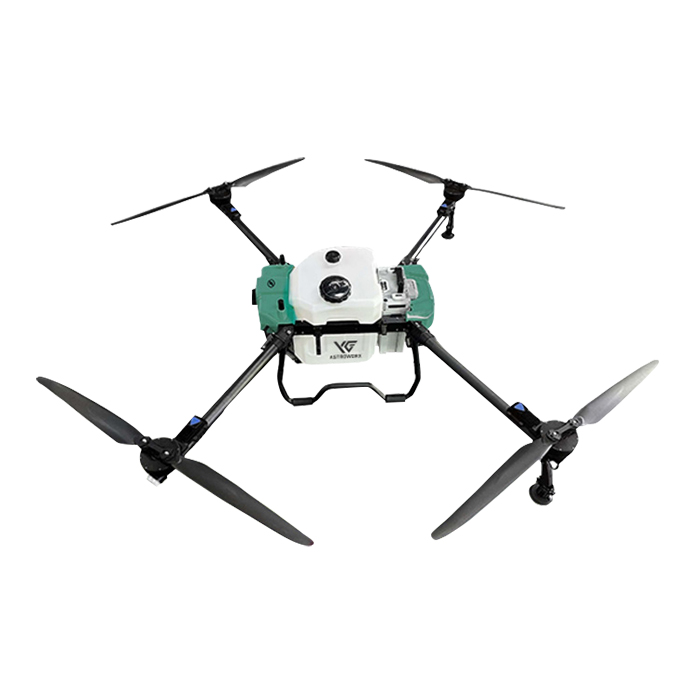
Conducting a detailed spraying capacity comparison prevents costly procurement mistakes. Bigger does not always mean better in aerial application. We categorize these systems by payload volume. Each specific size class presents distinct logistical realities and ground support requirements.
A 10L spraying drone serves as an agile, highly precise tool. We recommend this size class for steep terrain, tight orchards, and small family farms. It excels brilliantly at spot-spraying persistent weed patches. You can maneuver it through complex obstacles effortlessly.
Implementation Reality: This model offers much lower operational overhead. It remains highly portable across rough terrain. You can transport it safely in a standard pickup truck. You never need a heavy-duty trailer. A single operator handles the entire workflow easily. However, this capacity shows limited viability for broad-acre coverage. You will spend far too much time refilling the tank on large fields.
The 30L farm drone represents the ultimate versatile middle ground. We strongly suggest this tier for medium-sized operations. Custom applicators favor this size heavily. It strikes a perfect balance between field efficiency and road transportability.
Implementation Reality: This class hits the absolute sweet spot for battery management. A two-person crew manages continuous flight cycles comfortably. One person flies while the other mixes chemicals and swaps batteries. You can still transport these units using standard field vehicles. The charging power demands remain highly reasonable. It generally avoids the massive industrial generator requirements of larger enterprise systems.
Deploying a 50L agricultural UAV changes your entire farm workflow. This heavy-duty model targets massive large-scale row crops. Enterprise fleets use these powerful units to replace traditional ground tractors entirely. They push incredible volumes of liquid per hour.
Implementation Reality: You achieve maximum field coverage efficiency. However, you introduce heavy logistical burdens simultaneously. These machines require dedicated, high-output generator setups. You must enable rapid battery charging in remote fields without grid access. Transporting them demands specialized flatbed trailers. Furthermore, operating at this massive weight requires strict adherence to commercial aviation regulations.
Table 1: 2026 Drone Payload Sizing Matrix
Capacity Class | Ideal Farm Environment | Crew Requirement | Transport Logistics |
|---|---|---|---|
10 Liters | Steep terrain, small orchards, spot treatments | 1 Operator | Standard pickup truck, no trailer needed |
30 Liters | Medium operations, mixed-use custom applications | 2 Operators | Standard truck, moderate battery staging |
50 Liters | Large-scale row crops, enterprise fleet replacements | 2-3 Operators | Dedicated flatbed trailer, heavy generator required |
Evaluating specific brands requires looking far beyond the marketing spec sheet. You must assess software ecosystems, geopolitical compliance, and specialized engineering applications. A drone is only as good as the software flying it.
Massive global brands dominate the baseline market worldwide. They set the technical standard for modern aerial application.
Evaluation Lenses: These platforms offer unmatched software maturity. Their real-time obstacle avoidance algorithms lead the industry. They utilize advanced binocular vision and multidirectional radar. You benefit from an extensive, highly accessible parts ecosystem. Replacements often ship overnight.
Drawbacks: These models face increasing regulatory friction in certain global regions. Federal agencies actively cite data security concerns regarding foreign servers. You might lose lucrative government-subsidized application contracts if you operate non-compliant hardware.
Alternative platforms address modern security demands directly. They provide viable paths for heavily regulated industries.
Evaluation Lenses: NDAA compliance remains vital for strict data security mandates. If your farm relies on federal funding restrictions, you absolutely need these platforms. They often feature highly customizable ground control software. US-based engineering teams design this software specifically for domestic agricultural workflows.
Drawbacks: These secure platforms typically carry a higher initial price point. You will also notice varying levels of local dealer availability. A massive global brand might have a repair shop in your town. A niche domestic brand might require shipping broken parts across the country.
Certain high-value crops demand radically different hardware architectures. We cannot treat a flat cornfield and a dense apple orchard equally.
Evaluation Lenses: Manufacturers now optimize specific drones strictly for orchard canopy penetration. These models utilize specialized downdraft rotors. The powerful downward thrust pushes chemicals deep into dense foliage. Conversely, standard row-crop models focus entirely on uniform field mapping. Make sure your chosen model fits your specific crop canopy profile.
Ignoring aviation regulations guarantees heavy fines and legally grounded fleets. In the US market, compliance forms the foundation of sustainable aerial application. You must navigate federal and environmental rules carefully.
Flying a chemical payload requires multi-layered federal approval. You must satisfy FAA Part 137 requirements before dispensing any agricultural chemicals from an aircraft. This rigorous process demands detailed operational manuals and specific pilot testing. Additionally, the FAA Part 89 Remote ID mandate enforces real-time digital tracking. Your hardware must broadcast its location continuously during every single flight. You cannot bypass this tracking requirement.
Payload capacity directly affects your legal standing. Standard commercial rules cover drones weighing under 55 lbs at takeoff. Fully loaded 30L and 50L models easily exceed this legal limit. Operating these heavy-duty units requires specific heavy-drone exemptions. You must secure a 49 U.S.C. § 44807 exemption to fly legally. Filing this dense paperwork takes time. Do not buy a massive unit expecting to fly it commercially tomorrow.
Aviation laws only cover the aircraft itself. Environmental laws dictate the actual spray application. Not all agricultural chemicals hold legal approval for aerial drone application. You must read the specific EPA chemical labels meticulously. Drift mitigation remains a critical priority for local regulators. Your nozzle selection determines the exact droplet size. Fine droplets drift easily into neighboring fields. You must align your droplet strategy with local agricultural laws to prevent severe ecological damage.
Selecting the perfect platform requires a systematic and ruthless elimination process. You cannot let aggressive marketing hype drive your procurement strategy. Field reality must dictate your purchasing decisions.
Here are the critical next-step actions for your operation:
Apply Shortlisting Logic: Eliminate models first by regulatory compliance. Next, filter them by payload capacity based on your transport logistics. Finally, make your ultimate choice based on local dealer support.
Demand a Test Flight: We highly recommend scheduling a localized flight demo. Request the dealer to load the payload entirely with water.
Verify Real-World Drain: Measure the actual battery drain during this water test. Heavy payloads behave very differently in humid or windy field conditions.
Audit the Software: Test the ground control software usability yourself. Ensure your team can map a complex field efficiently before issuing a final purchase order.
A: Practical flight times typically range between 8 to 15 minutes per battery set when the tank is fully loaded. Because heavy payloads drain batteries rapidly, operators must maintain a continuous charge-and-swap operational loop using high-capacity field generators.
A: Yes, most 2026 top-tier models feature modular tanks. However, swapping between liquid pumps and solid spreaders requires physical effort. In the field, it generally takes a trained crew 10 to 15 minutes to clean and hot-swap these systems safely.
A: Yes. In the US, you need a standard commercial drone license (FAA Part 107). Additionally, you must secure specific agricultural dispensing certifications, including an FAA Part 137 certificate and a state-level commercial pesticide applicator license.


