 English
Views: 0 Author: Site Editor Publish Time: 2026-06-10 Origin: Site
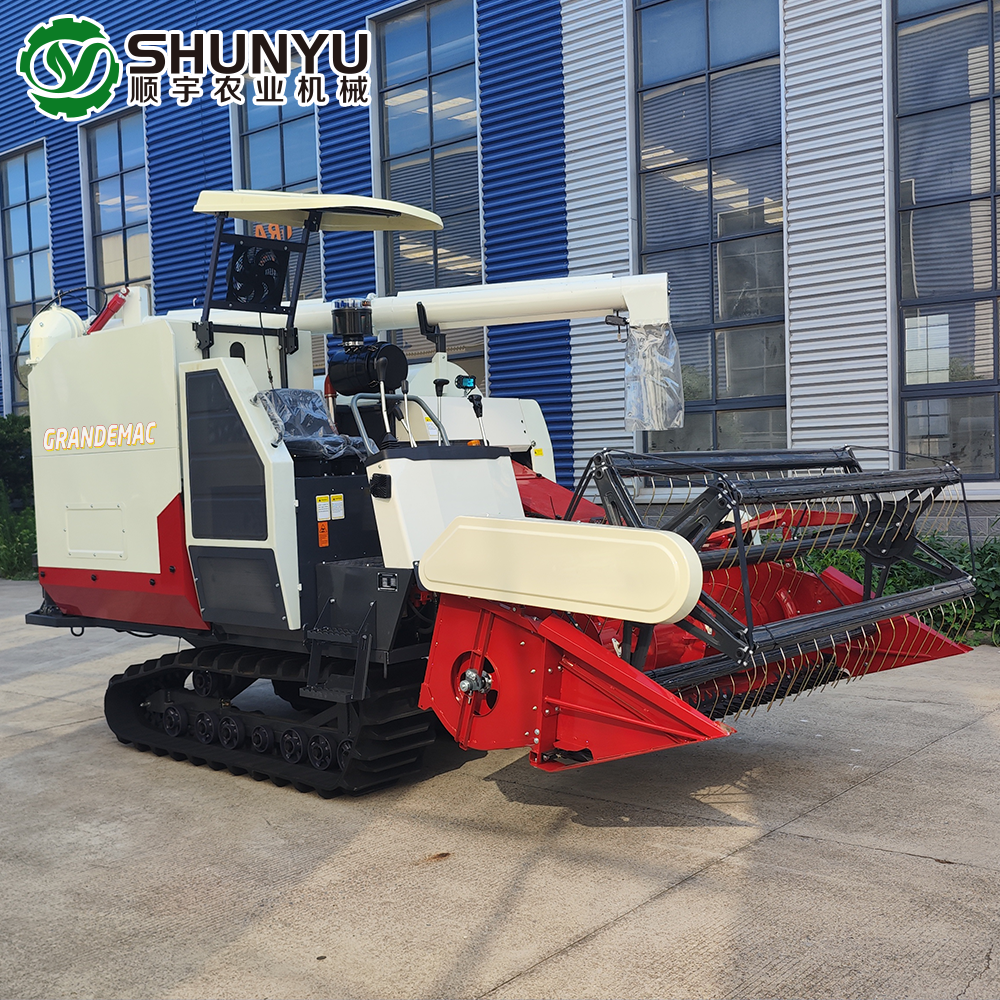
Harvesting in high-moisture, deep-mud paddy fields creates a brutal operational reality. Conventional wheeled equipment simply cannot cope. Heavy tractors sink deep into wet soils. They destroy fragile soil structures and cause severe operational delays. Every minute stuck in the mud costs you precious time and grain. We must rethink how we tackle these compromised terrains. Enter the crawler combine harvester. It stands as the definitive solution for continuous, high-efficiency harvesting in severe conditions. These robust machines float over the mud. They keep your harvest on schedule.
In this comprehensive guide, we provide a complete technical and commercial evaluation framework. You will learn exactly how to select a dual-use track-based harvester. We cover essential machine specifications, practical maintenance realities, and major procurement risks. By the end, you will understand how to evaluate your next heavy equipment investment effectively.
Terrain Capability: Wide rubber tracks distribute weight, reducing ground pressure to operate effectively in mud depths exceeding 30–40 cm without bogging down.
Asset Utilization: A purpose-built rice wheat machine increases seasonal ROI by requiring only minor header and concave adjustments to switch between crops.
Evaluation Priority: Beyond engine horsepower, buyer focus must center on track durability (pitch/width), grain loss rates (<3%), and field-side maintainability.
Procurement Reality: Total cost of ownership is dictated primarily by aftermarket parts availability (belts, blades, undercarriage components) rather than the initial purchase price.
Wheeled harvesters fail spectacularly in wet conditions. Wheels exert massive point pressure onto a very small surface area. They slice through the topsoil instantly. This intense compaction damages the delicate field ecology. Deep rutting follows immediately. The tires spin helplessly in wet clay. Eventually, complete immobilization occurs. You must then deploy secondary tractors to drag the stuck harvester out. This wastes fuel, labor, and precious daylight. Agricultural teams cannot afford these unpredictable stoppages during critical harvest windows.
Physics dictate field success. crawler agricultural equipment uses wide rubber tracks. These tracks distribute the immense machine weight across a massive surface area. More surface contact directly equals lower pounds per square inch (PSI) of ground pressure. A tracked vehicle often exerts less ground pressure than a human foot. This weight dispersion maintains constant traction. It also protects the crucial hardpan layer of the paddy. Protecting the hardpan prevents future sinking. It ensures the field remains viable for subsequent planting seasons.
How do we measure a successful harvest deployment? You must track specific performance indicators. A highly successful operation meets these exact criteria:
Tons Harvested Per Hour: The machine must maintain a steady processing rate regardless of mud depth.
Minimal Crop Lodging Losses: The header must successfully lift fallen crops to maximize yield.
Uninterrupted Operation: The machine must run continuously during narrow, weather-dependent harvest windows.
Achieving these goals requires precise equipment selection. You cannot rely on trial and error.
The undercarriage dictates mobility. You must evaluate track width carefully. Standard tracks measure around 400mm. High-performance models upgrade to 500mm or wider. Wider tracks offer superior flotation in deep mud. You also need deep-tread patterns to grip slick clay. High ground clearance prevents the chassis from dragging across the mud surface.
Next, assess the transmission. Hydrostatic transmission (HST) systems are non-negotiable. HST allows smooth, clutchless directional changes. Operators can maneuver easily in heavy mud. Manual transmissions cause jerky movements. Jerky movements break traction and cause sinking.
Evaluate header widths based on your specific field geometry. Large fields benefit from wide headers. However, transport constraints often limit header size. If you transport equipment down narrow rural roads, a narrower header prevents logistical nightmares.
Analyze the performance of lifting guards. Rain and wind often flatten mature crops. We call this lodging. Standard headers simply roll over lodged crops. You lose that grain entirely. Specialized lifting guards reach under the fallen stalks. They lift the crop into the cutter bar. This simple attachment saves thousands of dollars in lost yield.
Internal threshing mechanics determine grain quality. Examine the longitudinal axial flow cylinders. These cylinders process the crop mass along the length of the rotor. They balance high throughput seamlessly. The gentle rubbing action ensures extremely low grain breakage.
You must demand strict performance metrics from your equipment supplier. Set clear baseline acceptable standards. Require an impurity rate below 2%. Demand an overall grain loss rate below 3%. Anything worse directly impacts your bottom line.
Component | Baseline Metric | High-Performance Standard |
|---|---|---|
Track Width | 400 mm | 500+ mm |
Impurity Rate | < 3% | < 2% |
Grain Loss Rate | < 5% | < 3% |
Transmission Type | Manual Gearbox | Hydrostatic (HST) |
Your diesel engine horsepower must match the machine's processing capacity. Small headers function fine on 70HP. Large headers and deep mud demand 100+HP. Processing heavy, wet crop loads strains the entire system. An underpowered engine will bog down instantly. The threshing cylinder slows. Grain loss spikes. Always prioritize a power unit capable of maintaining consistent RPMs under heavy loads.
A purpose-built rice wheat machine offers massive versatility. You can transition from wet rice to dry wheat easily. The conversion process requires specific mechanical calibrations. First, you must alter the cylinder speed. Wheat requires higher threshing speeds than rice. Next, adjust the fan baffles. Wheat chaff is lighter. You need different airflow dynamics to blow it away. Finally, change the sieve spacing. Wheat kernels are smaller. Tighter sieves prevent grain from falling into the tailings return.
Conversion Steps Timeline Chart | ||
Time Allocation | Task Description | Action Required |
|---|---|---|
Hour 1 | Internal Cleaning | Remove all wet mud, rice straw, and residue from the chassis. |
Hour 2 | Cylinder Calibration | Adjust rotor speeds and modify threshing clearance. |
Hour 3 | Airflow Adjustment | Reset blower speeds and adjust fan baffles. |
Hour 4 | Sieve & Header Prep | Change sieve spacing and inspect cutter blades. |
Utilizing a single machine across multiple harvest seasons changes your business trajectory. Single-crop machines sit idle for eight months a year. They depreciate while gathering dust. A dual-crop machine works continuously. You harvest rice in the autumn. You harvest wheat in the summer. You accelerate depreciation recovery significantly. Your equipment generates revenue twice a year.
Dual-use efficiency brings specific challenges. Wet rice harvesting is highly abrasive. Mud acts like liquid sandpaper. It causes significantly faster wear on all moving parts. You must acknowledge this reality. Comprehensive preventive maintenance must occur before the wheat season begins. Ignoring this maintenance guarantees breakdowns during the summer harvest.
Abrasive mud environments destroy components quickly. You must understand realistic lifespan expectations. Rubber tracks typically last between 1,000 and 1,500 hours. This depends heavily on soil composition and operator driving habits. Sharp rocks tear rubber treads. Hard turns on dry ground snap internal steel cables. Idlers and bogie wheels face similar threats. Mud forces its way into bearing seals. Once mud enters a bearing, catastrophic failure follows swiftly. Plan your replacement schedules accordingly.
Daily cleaning is an absolute necessity. You cannot skip this step. Wet chaff builds up inside the chassis. It hardens like concrete overnight. This buildup restricts airflow and causes overheating. Furthermore, lingering moisture induces rapid bearing failure. It also accelerates belt degradation. Your operators must power-wash the machine every evening. They must blow out the radiators with compressed air.
Ignoring grease points hidden behind safety shields.
Leaving wet crop residue inside the grain tank overnight.
Failing to check track tension daily.
Using cheap, unsealed bearings in the undercarriage.
Breakdowns happen. How fast you recover defines your success. Field-side repairability is crucial. Your track type harvester must feature standardized, easily accessible grease points. Mechanics should not need to disassemble major components just to lubricate a shaft. Furthermore, prioritize user-replaceable belts and blades. If a belt snaps in the field, the operator should fix it within thirty minutes. Machines requiring specialized factory tools for basic belt changes cause costly downtime.
Do not buy agricultural equipment based on brochure specifications alone. A shiny brochure harvests zero grain. Mandate proof of local parts availability. Ask the supplier where they stock high-wear consumables. Where are the replacement belts? Where are the cutter blades? If they must ship parts from overseas during your harvest, you lose. Demand fast-ship guarantees for all undercarriage components.
Evaluate warranty terms with intense scrutiny. Standard warranties often contain hidden exclusions. Ensure the warranty specifically covers the HST, the diesel engine, and the structural chassis. These represent the most expensive components. A cracked chassis ends a machine's life. Also, check for regional emissions compliance. Environmental regulations change frequently. Buying a non-compliant machine risks heavy fines or operational bans.
Importing paddy field machinery carries distinct risks. Assess the delivery method carefully. Completely Knocked Down (CKD) shipping saves freight costs. However, CKD requires massive technical competence for local commissioning. You must rebuild the machine from crates. If your local technicians lack training, they will make errors. Improper assembly voids warranties. Fully assembled shipping costs more upfront. Yet, it guarantees factory-level construction and immediate field readiness.
Selecting a track-based harvesting machine is a high-stakes exercise. You must balance extreme terrain capability with long-term mechanical reliability. Do not let impressive horsepower figures distract you from the fundamentals. Evaluate the track design, the threshing efficiency, and the ease of maintenance. Your operators need equipment they can fix in the dirt.
Audit your specific field conditions today. Measure your average mud depth. Calculate your typical crop density. Then, prioritize machines backed by robust local parts supply. A slightly slower machine running continuously always beats a fast machine waiting a week for a replacement belt. Make your procurement decisions based on uptime, durability, and practical field realities.
A: These machines typically operate in mud depths of 30 to 40 cm. Actual performance depends heavily on the specific track width, the tread pattern, and the chassis ground clearance. Machines equipped with 500mm tracks handle deeper mud than standard models.
A: The conversion process takes roughly two to four hours. Operators must clean out all wet residue first. Next, they adjust the internal threshing clearance. Finally, they reset the blower speeds and swap the sieves to accommodate smaller wheat kernels.
A: Rubber tracks generally last between 1,000 and 1,500 operating hours. However, abrasive soil composition drastically reduces this lifespan. Aggressive driving habits, sharp rocks, and poor tensioning also cause premature track failure.
A: Yes, they handle lodged crops very well. The machine must feature specialized crop lifters on the header. Operators should also reduce their forward speed to give the lifters time to untangle and elevate the fallen stalks smoothly.


