 English
Views: 0 Author: Site Editor Publish Time: 2026-08-17 Origin: Site
We are finally moving from theoretical ag-tech hype into operational reality. An agriculture drone sprayer operates as a highly specialized precision tool. It is not a blanket replacement for traditional ground rigs. Farm managers and agronomists face rapidly narrowing application windows every season. They frequently battle severe soil compaction risks when driving heavy machinery over wet ground. Rising chemical costs also force an urgent need for extreme precision and targeted applications.
Selecting the ideal unmanned system requires you to look past flashy marketing claims. You must carefully evaluate strict operational metrics before deploying these assets on your land. We will explore how to analyze actual field coverage and manage heavy power demands. Ultimately, you will learn how to verify true application efficacy. This process guarantees successful crop protection across your entire agricultural operation.
Payload vs. Productivity: Maximum payload capacity does not directly equal highest daily acreage; efficiency is dictated by battery cycling and turnaround speed.
Volume Limitations: Drone sprayers operate primarily on Low-Volume (LV) or Ultra-Low Volume (ULV) principles, requiring specific chemical label approvals.
Application Specificity: Success hinges on matching nozzle types and spray widths to specific farm applications (e.g., row crops vs. high-density orchards).
Regulatory Reality: Commercial deployment requires strict adherence to aviation and pesticide application legal frameworks (e.g., FAA Part 137 in the US) and localized drift management protocols.
Buyers often over-index on tank size when initially researching equipment. They assume larger tanks always yield better operational efficiency. This mindset frequently ignores the logistical bottlenecks of battery power and refill times. Analyzing drone sprayer specifications requires a balanced approach. You must consider how support logistics impact your daily acreage.
Current market standards typically feature systems ranging from 10-liter to 50-liter tanks. A common assumption suggests buying the largest possible drone. However, an inverse relationship exists between heavy liquids and flight duration. Heavier payloads drain batteries exponentially faster during flight.
A massive 40L or 50L drone is not always superior for small-scale or highly fragmented fields. Transporting these massive systems requires larger trailers and specialized handling. They also demand immense charging infrastructure to keep batteries cycled. You must evaluate your true payload capacity needs. Smaller 10L or 20L drones often outpace larger models on fragmented terrain. They deploy faster, transport easier, and require less generator power.
Your equipment's spray width directly dictates field pass intervals. A wider swath reduces the total flight distance per acre. This reduction saves battery life and decreases total application time. However, a wider swath demands precise altitude control to maintain uniform coverage.
Nozzle technology determines how chemicals reach the target. Rotary atomizers use spinning discs to shear liquid into uniform droplets. Operators can adjust the droplet size mid-flight by changing the disc rotation speed. This flexibility proves excellent for varying weather conditions. Conversely, standard pressure nozzles operate using traditional fluid dynamics. They remain simpler to maintain and feel very familiar to experienced ground-rig operators.
Achieving maximum acreage requires implementing a "Continuous Operation Framework." A drone resting on the ground applies zero chemicals. You must build a robust support ecosystem to eliminate downtime.
To maintain continuous flight, operators typically need the following setup:
Multi-Battery Configurations: You need at least three to four sets of smart batteries per drone.
Active Cooling Stations: Batteries generate intense heat during flight and charging. Water-cooled heat sinks or forced-air cooling bins prevent thermal lockouts.
High-Capacity Field Generators: Charging massive drone batteries in minutes requires serious wattage. Industrial-grade inverter generators form the backbone of your mobile operation.
Agitation and Mixing Tanks: Pre-mixing chemicals in an automated batch tank reduces refill times from minutes to seconds.
Many new operators struggle to demystify liquid volume capabilities. Ground rigs often apply chemicals at 15 to 20 gallons per acre (GPA). Replicating this massive volume from the air remains entirely impractical. You must set realistic success criteria based on specialized aerial application methods.
A common buyer friction point involves accepting lower GPA outputs. Drones cannot realistically spray 20 GPA across broadacre fields efficiently. The constant refilling would destroy any operational efficiency. Instead, drone sprayers rely on Low-Volume (LV) and Ultra-Low Volume (ULV) application principles.
Realistic parameters typically fall between 1.5 to 3 GPA for standard row crops. Specialty crops and dense orchards usually require 3 to 5 GPA. Drones achieve efficacy at these low volumes by generating highly concentrated, uniform droplets. The aggressive downward rotor wash pushes these fine droplets deep into the plant canopy.
Common GPA Targets by Equipment Type
Equipment Type | Typical GPA (Row Crops) | Typical GPA (Orchards) | Primary Droplet Penetration Method |
|---|---|---|---|
Traditional Ground Rig | 15 - 20 GPA | 50 - 100+ GPA | High Liquid Volume / High Pressure |
Crop Duster (Airplane) | 2 - 5 GPA | Not typically used | Gravity / Forward Speed Wake |
Agricultural Drone | 1.5 - 3 GPA | 3 - 5 GPA | Targeted Rotor Downdraft Wash |
Operating in a ULV paradigm introduces strict legal and chemical requirements. You must verify your target chemicals hold legal labels for ULV aerial application. Using a chemical off-label violates federal regulations and risks severe crop damage.
Fine droplets generated during ULV spraying remain highly susceptible to rapid evaporation. Hot, dry weather can vaporize the mixture before it reaches the leaves. You must incorporate high-quality adjuvants into your tank mix. These specialized additives reduce evaporation rates and increase droplet adhesion. They ensure the concentrated chemical impacts the leaf surface and stays there.
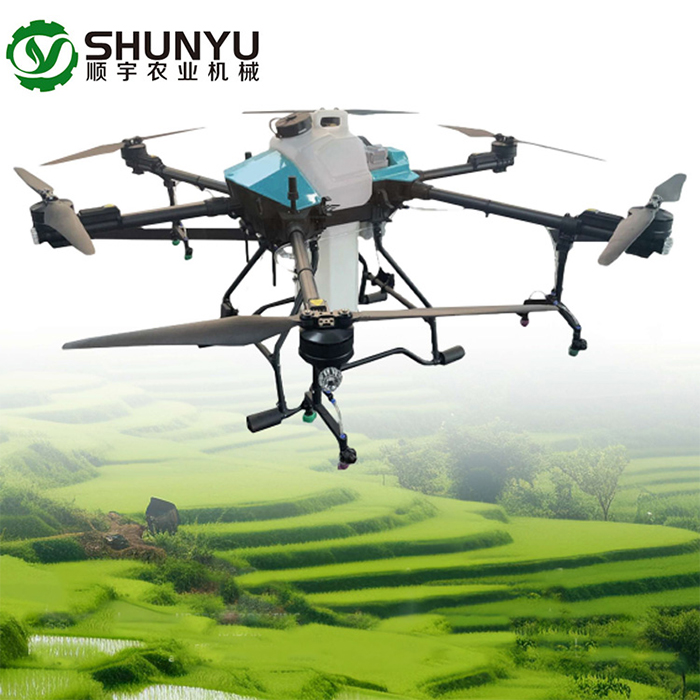
Aligning equipment specifications with distinct agronomic environments is crucial. Different farm applications demand completely different flight parameters. You cannot treat a cornfield and an apple orchard using the same methodology.
Row crops like corn, soybeans, and wheat present ideal environments for autonomous flight. Drones excel in several specific row crop scenarios.
Late-season fungicide applications represent a massive advantage. Tall corn stalks prevent ground rigs from entering the field without causing severe trampling damage. Drones fly cleanly above the canopy, applying fungicides without destroying crop yield.
Post-rain weed control is another excellent use case. Heavy tractors cause severe soil compaction on wet ground. Drones hover above the mud, allowing you to hit aggressive weed windows without ruining soil structure.
Finally, precise spot-spraying transforms chemical budgets. By importing multispectral drone maps, you can program the sprayer to only target specific weed patches. This methodology slashes chemical usage drastically compared to blanket broadcasting.
Orchards and vineyards introduce complex three-dimensional challenges. You are no longer spraying a flat, uniform surface. You must penetrate dense, vertical canopies to reach pests hiding under leaves.
Drones utilize physics to solve this problem. The intense downdraft from the rotors violently shakes the canopy. This turbulence flips the leaves upward, exposing their undersides to the chemical mist. This underside coverage proves critical for eliminating stubborn pests and fungal infections.
Hardware specifications must match this terrain. Orchard flights require advanced terrain-following radar. The drone must automatically adjust its altitude as it climbs hills or descends into valleys. Furthermore, 3D flight path mapping allows the drone to navigate around individual tree crowns perfectly. This prevents collisions while maximizing chemical penetration into the thickest foliage.
Entering the aerial application space involves real operational friction. You must acknowledge the legal barriers to entry before purchasing equipment. Ensuring absolute safety and compliance builds trustworthiness across your community.
Commercial deployment requires strict, multi-agency compliance. You cannot simply buy a drone and start spraying a client's field. In the United States, the regulatory pathway involves several distinct hurdles.
First, operators need a basic commercial drone license, commonly known as an FAA Part 107 certificate. Second, applying chemicals via aircraft requires an FAA Part 137 exemption. This intensive process governs agricultural aircraft operations. Finally, you must obtain state-level Department of Agriculture pesticide applicator licenses. These state exams verify you understand local chemical safety laws, mixing procedures, and environmental protections. Skipping any of these steps invites massive federal fines.
Chemical drift remains the highest liability for any aerial applicator. Drones are incredibly susceptible to changing wind conditions. A sudden gust can carry fine droplets onto neighboring properties, organic farms, or waterways. You must rely on verifiable limits and strict hardware controls.
Mitigating drift requires integrating several protective measures:
Automatic Wind-Speed Grounding: Advanced software monitors real-time wind speeds. If gusts exceed legal label limits, the drone automatically pauses the mission and returns home.
Intelligent Boundary Buffering: Operators program digital geofences around the field. The software physically prevents the drone from spraying within a designated buffer zone near sensitive areas.
Coarse-Droplet Nozzle Selection: During marginal weather, operators must swap to specific nozzles. Generating larger, heavier droplets ensures the chemical falls straight down rather than floating away.
Altitude Restrictions: Flying too high allows wind to catch the chemical wake. Keeping the drone strictly within 8 to 12 feet above the canopy minimizes drift exposure.
An agricultural drone sprayer serves as a highly effective precision tool. It delivers incredible value provided your agronomic needs align with the technology's inherent volume and battery constraints. Success requires understanding ULV chemical principles and building a seamless field charging infrastructure. You must also commit fully to local aviation and pesticide compliance laws to protect your operation.
Your next step involves mapping these capabilities against your unique terrain. Start by analyzing your most difficult application windows, such as late-season treatments or wet-ground scenarios. We encourage you to download our specific equipment comparison matrix. You can also schedule a live field demo to see the downdraft penetration firsthand. Reach out to request a custom coverage evaluation based on your specific acreage and crop type today.
A: A typical 30L drone covers between 20 and 30 acres per hour. This realistic range factors in the necessary downtime for battery swaps and chemical tank refills. Total hourly acreage heavily depends on your target Gallons Per Acre (GPA) and the efficiency of your ground support crew.
A: Standard field and row crops typically require 1.5 to 3 GPA. This low volume relies on fine droplets for even coverage. Orchard crops demand higher volumes, usually between 3 to 5 GPA. The drone must fly slower over orchards to allow the rotor wash to penetrate dense tree canopies.
A: Yes. Commercial operation requires multiple licenses. In the US, you need an FAA Part 107 commercial drone license and an FAA Part 137 agricultural aircraft certificate. Additionally, you must hold a state-issued commercial pesticide applicator license specific to aerial chemical dispersal.
A: Yes, drones can operate at night if equipped with FAA-compliant anti-collision lighting. Night spraying offers immense agronomic benefits. Wind speeds typically drop after dusk, reducing drift risks. Additionally, cooler night temperatures prevent rapid droplet evaporation, increasing overall chemical efficacy on the plants.


