 English
Views: 0 Author: Site Editor Publish Time: 2026-08-22 Origin: Site
Agricultural technology has officially shifted. Drones have moved past the initial hype phase. Today, they operate as viable commercial tools for large-scale and specialized farming. Farm operators currently face intense operational challenges. Chemical costs continue rising every season, squeezing profit margins. Soil compaction severely impacts overall yield, and finding reliable field labor remains incredibly difficult. You need practical solutions to maintain profitable harvests. This article provides an evidence-based, objective evaluation. We will explore whether transitioning to an agriculture uav drone makes financial and operational sense for your specific terrain. You will learn how these agile systems target crops efficiently. We also outline realistic payload limitations and essential regulatory steps. Proper evaluation prevents costly mistakes. We aim to equip you with clear data to make strategic purchasing decisions. Let us dive into the mechanics of aerial agriculture and discover how it transforms field management.
Targeted Efficiency: Drones drastically reduce chemical and water usage by utilizing precision spraying systems and advanced downwash aerodynamics.
Operational Agility: UAVs access steep, muddy, or tightly planted terrains where traditional boom sprayers or heavy tractors cause crop damage or soil compaction.
Clear Limitations: Payload constraints and battery life remain real bottlenecks; success requires strategic field-side logistics and realistic ROI timelines.
Regulatory Imperative: Legal operation requires strict adherence to local aviation authorities (e.g., FAA Part 137 in the US) and pesticide application licensing.
Operators must look closely at standard methods versus aerial innovation. We compare the modern agricultural UAV directly against established machinery. Boom sprayers and airblast systems cover flat, open acreage quickly. Crop-dusting planes manage massive regional blocks with high speeds. However, these traditional tools carry distinct operational penalties. Ground applications require wide tramlines. Aerial applications via plane lack pinpoint accuracy.
Heavy machinery requires significant fuel consumption and constant mechanical upkeep. Large diesel engines need regular servicing, oil changes, and expensive replacement parts. You also must hire highly skilled operators to drive massive ground rigs safely across uneven terrain. Conversely, a drone fleet shifts your operational expenses toward lithium batteries and electrical charging infrastructure. You pay for licensed drone pilots and dedicated field technicians. Electrical energy generally costs significantly less per acre than diesel fuel. Still, you must budget carefully for battery replacement cycles. Batteries degrade over time and require eventual replacement to maintain optimal flight times.
Ground rigs carry a hidden financial penalty. Heavy wheeled tractors crush healthy plants during application passes. They create permanent tramplines across your fields. This mechanical crop damage directly reduces your final harvest totals. Furthermore, heavy machinery causes severe soil compaction over time. Compressed soil blocks essential root growth and limits crucial water absorption. Drones eliminate this ground pressure entirely. They fly smoothly above the canopy, keeping your soil structure completely intact and healthy.
Timing often dictates overall agricultural success. Ground rigs simply cannot enter muddy fields safely. If you experience heavy rains, traditional sprayers sit idle at the barn. Pests and rapid fungal diseases spread quickly during these wet periods. Drones deploy immediately after rainfall. They fly effortlessly over waterlogged soil without getting stuck or creating deep ruts. This incredible flexibility ensures timely intervention exactly when your crops need urgent protection most.
Chart: Traditional Ground Rigs vs. Unmanned Aerial Systems
Operational Aspect | Traditional Ground Rigs | Aerial Drones |
|---|---|---|
Field Access | Severely limited by deep mud and steep slopes. | Unhindered by ground conditions; flies over obstacles. |
Soil Compaction | High impact due to heavy machinery weight. | Zero impact; entirely airborne operation. |
Crop Damage | Creates permanent tramplines and crushes outer plants. | Zero mechanical contact with the crop. |
Energy Source | Relies on expensive diesel fuel. | Utilizes rechargeable lithium-polymer batteries. |
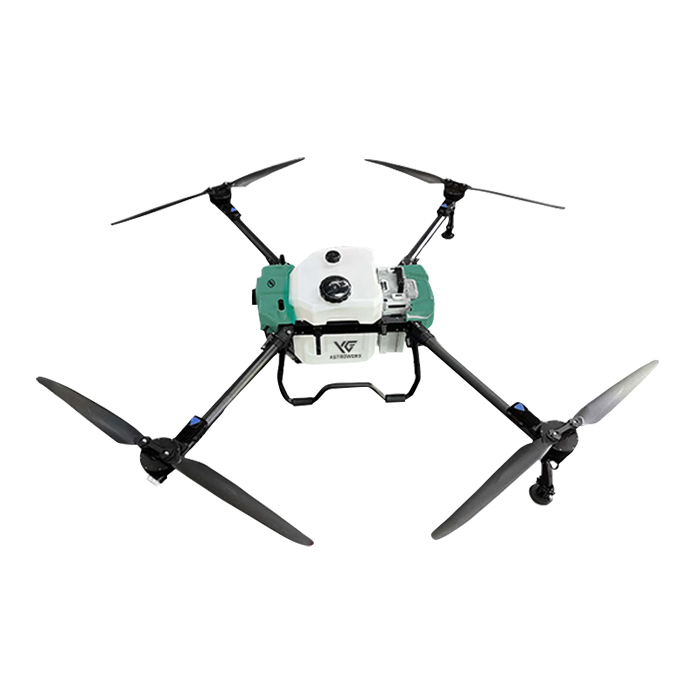
Choosing the right equipment requires understanding nuanced technical tradeoffs. You must evaluate a precision spraying system based on actual field capabilities rather than marketing promises. Proper evaluation prevents operational bottlenecks during your busiest seasons.
First, consider the payload versus battery reality transparently. Tank sizes generally range from compact 10L units up to massive 50L models. A heavier payload means fewer chemical refill stops. However, lifting 50 liters of liquid drains batteries incredibly fast due to the extreme weight. Flight times drop sharply as payload weight increases. Continuous field operation demands a meticulously orchestrated workflow. You need a dedicated charging station positioned right at the field edge. Technicians must swap depleted batteries and refill tanks within mere minutes. Without this smooth logistics chain, your daily acreage coverage drops sharply, negating the efficiency of a larger tank.
Next, look deeply at atomization and nozzle technology. A high-quality plant protection drone utilizes powerful rotor downdraft effectively. The spinning propellers push air downward aggressively. This turbulent air flips plant leaves and forces chemicals deep into the dense crop canopy. Rotary nozzles spin rapidly to create highly uniform droplet sizes. Pressure nozzles force liquid through tiny orifices to achieve similar results. Both systems benefit immensely from the downwash effect, ensuring complete foliage coverage on both the top and underside of leaves.
Pump and flow management ensure consistent application rates. Reliable pump integration prevents clogging and uneven chemical distribution. Fluid management industry standards dictate extremely tight flow tolerances for agricultural equipment. Whether you apply liquid pesticides or switch modular attachments for UAV fertilizer spraying, the pump must deliver exact volumes per second. Inconsistent flow leads directly to burnt crops or dangerously untreated patches. Precision flowmeters guarantee correct dosing.
Finally, strictly assess obstacle avoidance and terrain following features. Modern drones fly autonomously at very low altitudes. They need advanced, redundant sensors to survive complex environments. Radar and RTK (Real-Time Kinematic) GPS provide crucial centimeter-level accuracy. RTK prevents overlapping spray paths, which wastes expensive chemicals and harms crops. Terrain-following radar keeps the drone at a constant, safe height above undulating ground. This technology prevents devastating, expensive crashes into hidden hillsides, power lines, or tall trees.
Drones provide compelling financial returns when operators deploy them strategically. Industry consensus and extensive academic field trials highlight massive input savings. Targeted spot-spraying applies chemicals only where weeds or pests exist. You stop broadcasting expensive herbicides over empty soil. This precision frequently reduces chemical and water volume by huge margins, directly improving your bottom line.
Consider the targeted use cases through the "Four Ways" Framework:
Spot Treatment: Drones identify and target specific weed patches. You treat small problem zones precisely rather than broadcasting chemicals across the entire field.
High-Clearance Needs: Late-season corn grows incredibly tall. Ground rigs snap stalks and destroy yields. Drones fly cleanly above the mature canopy to apply vital late-season fungicides.
Complex Topography: Orchards, terraced fields, and steep vineyards pose extreme dangers for conventional tractors. Drones navigate these complex vertical landscapes safely and efficiently.
Desiccation and Defoliation: Pre-harvest applications require precise timing and coverage. Drones apply desiccants accurately to prepare crops for a unified, predictable harvest schedule.
To model your breakeven timeline accurately, calculate a few specific variables. Document your total farm size and your overall crop value. Next, review your current custom-application fees. High-value crops like vineyard grapes or specialized vegetables offer faster financial returns. If you currently pay premium rates for helicopter spraying, a drone system pays for itself rapidly. Operators should build realistic payback models based on their unique regional costs and labor rates.
We must address the skepticism surrounding this technology honestly. Some operators view drones as over-rated gadgets. We validate these concerns openly. Drones are not a magic bullet. They cannot currently replace massive ground rigs for flat, 10,000-acre broadcast spraying. Payload limitations make drones too slow for those specific mega-farm scenarios. Recognize where the technology excels and where it falls short.
Regulatory mapping requires strict attention. Commercial operation demands serious legal compliance. In the United States, you must navigate FAA Part 137 rules. This specific regulation governs agricultural aircraft operations. Heavy drones weighing over 55 pounds require special aviation exemptions. Furthermore, pilots need valid agricultural chemical applicator licenses from local state agencies. Ignore these rules, and you face massive fines and operational shutdowns.
Managing spray drift presents another critical barrier. Drone spray drift relies on specific physics. High flight altitudes and strong winds push chemical droplets off-target easily. This creates severe environmental and compliance risks. Modern software helps mitigate these dangers automatically. Operators must set optimal flight speeds and strict height parameters in the control app. Managing droplet size also reduces drift significantly. Larger, heavier droplets fall faster and resist wind currents much better than fine mists.
Transitioning to aerial application requires a structured, logical rollout plan. Follow these steps to ensure a smooth, profitable integration.
Analyze your acreage, crop type, and terrain carefully. Determine if your operation justifies an in-house equipment purchase immediately. Sometimes, hiring a custom drone application service serves as a smarter first step. A contracted service lets you test the results without any upfront capital risk. You can evaluate the spray quality before buying hardware.
Evaluate manufacturers carefully. Look far beyond the initial specification sheet. Prioritize local dealer support above all else. You need replacement parts immediately when something breaks mid-season. Assess the software ecosystem thoroughly. Ensure the flight planning applications integrate smoothly with your existing farm management platforms.
Prepare your field-side support vehicle properly. You need a dedicated trailer or truck bed. Install precise mixing tanks for safe, rapid chemical handling. Purchase high-capacity generators to run multiple battery chargers simultaneously. Add battery cooling stations. Hot batteries will not charge. Active cooling fans keep your workflow moving rapidly throughout the day.
Establish strict standard operating procedures (SOPs). Train your pilots on safe chemical handling and emergency avoidance maneuvers. Standardize your field mapping processes to avoid errors. Maintain rigorous flight logs to satisfy aviation authorities during audits. Safety always dictates the pace of your daily operations.
Operators need reliable frameworks to make smart equipment choices. An aerial system represents a highly effective, specialized tool. It maximizes yield potential while drastically minimizing chemical waste. You see the best results when deploying the technology in complex terrain or specific spot-treatment scenarios.
We strongly advise operators to start small. Launch a limited pilot program first. Test a specific high-value use case, such as applying late-season fungicide to mature corn. This allows you to validate your field logistics and charging workflows before attempting to scale across thousands of acres.
Take action today to optimize your farming practices. Consult with a precision agriculture specialist to assess your unique terrain. Request a localized ROI calculation based on your specific crop inputs. Download an aviation compliance checklist to understand your local regulatory requirements clearly.
A: Drones offer superior efficiency in specific scenarios. While traditional ground rigs cover large, flat acres faster, drones excel in zero-compaction applications. They penetrate steep, wet, or tightly planted terrain where tractors cannot go. Drones eliminate mechanical crop damage and access muddy fields immediately after heavy rains.
A: Modern industry benchmarks place maximum payloads around 40 to 50 liters for heavy-duty models. However, operators face a strict inverse relationship between payload weight and flight duration. Heavier tanks require massive energy to lift, significantly reducing battery life. Max payload models require highly efficient field-side battery swapping logistics.
A: Aerial systems utilize powerful rotor downwash to penetrate dense foliage. The downward aerodynamic thrust generated by the propellers forcefully moves the air. This turbulent air flips thick leaves and pushes chemical droplets deep into tall crops like corn. This ensures thorough coverage on both the top and underside of leaves.
A: Yes, modern systems feature highly modular designs. Operators can quickly swap out standard liquid tanks for specialized granular spreader attachments. This allows the same aircraft to perform liquid pesticide applications and subsequent granular fertilizer spreading. This versatility maximizes your hardware investment across different seasonal field tasks.


