 English
Views: 0 Author: Site Editor Publish Time: 2026-06-08 Origin: Site
High-yield rice farming leaves no room for operational delays. Narrow harvest windows and unpredictable weather make equipment reliability the primary driver of profitability. You need robust machines ready to perform on demand during critical seasons. For large-scale operations, upgrading to a high-capacity rice combine harvester is not just a standard equipment purchase. It acts as a vital strategic investment to mitigate severe labor shortages. The right machinery helps you reduce devastating grain loss and accelerate field-to-storage timelines dramatically. This guide provides a definitive, evidence-based evaluation framework for selecting commercial-grade tools. We focus closely on machine architecture, specific terrain adaptability, and essential vendor support requirements. You will learn how to evaluate specifications against your unique field conditions properly. Applying these principles ensures you maximize seasonal yields and maintain high grain quality.
Architecture Matching: Selecting between half-feed and full-feed systems dictates grain quality and straw utilization based on specific regional crop conditions.
Terrain Constraints: High-efficiency harvesting in wet paddy fields requires specialized crawler tracks with optimized ground pressure to prevent getting bogged down.
Precision Gains: Integrating yield monitoring and GPS guidance reduces overlap and lowers operating costs per hectare.
Every single day you delay the harvest, financial risks multiply rapidly. Shattering loss occurs naturally when overripe grains fall from the panicle into the mud. Weather damage poses another severe threat during the autumn transition. Sudden heavy rains can flatten and ruin an entire crop overnight. Elevator facilities also impose strict moisture penalties upon delivery. If your grain arrives too wet due to delayed field clearing, drying fees eat into your margins immediately. Inefficiency directly destroys crop value before it ever reaches the market.
Large-scale operations face persistent, seasonal labor shortages globally. Finding skilled manual labor during the brief harvest window is increasingly difficult. You must offset this manpower shortage using high-capacity machinery. Mechanization drastically reduces your dependency on manual field clearing crews. A fast, reliable machine secures the crop long before the weather turns sour. We see operators cutting their harvest timelines in half simply by upgrading their primary threshing units.
However, equipment mismatches introduce severe operational risks into your workflow. Deploying multi-crop units in specialized rice environments often leads to failure. Wheeled units sink instantly in deep paddy mud. Undersized machines clog easily when handling high-moisture green stalks. They also cause excessive grain damage when pushed beyond their design limits. You need specialized agricultural harvesting equipment designed specifically for demanding wetland environments to avoid these specific pitfalls.
Let us discuss full-feed systems first to understand their primary applications. The entire crop enters the threshing cylinder simultaneously. The machine processes the stalks, leaves, and grain heads together in one aggressive motion. This specific mechanism suits high-volume, dry conditions perfectly. Operations prioritizing rapid acreage coverage generally prefer full-feed models. You choose this architecture when straw preservation remains entirely unnecessary for your business model. It offers impressive forward speed across vast, uniform fields.
We must acknowledge the mechanical trade-offs of full-feed designs. Processing the whole plant requires significantly higher continuous power consumption. High-moisture conditions increase the potential for broken grains during the aggressive threshing phase. The internal sieves handle much more biomass, which occasionally leads to separation bottlenecks.
Next, we evaluate half-feed systems for specialized applications. Only the panicle enters the active threshing drum. The machine firmly holds the lower stalk outside the primary cylinder. Consequently, the straw remains completely intact after processing. This careful architecture is best for premium grain markets. It handles lodged or fallen crops exceptionally well using specialized pickup reels. Farms selling intact straw for industrial use require this specific design.
These systems feature distinct mechanical trade-offs as well. They are mechanically complex and require precise field calibration. They usually feature a lower top-end speed compared to full-feed units. You essentially sacrifice sheer speed to protect superior grain quality. A rice harvester machine must align perfectly with your specific end-market requirements.
Architecture Type | Threshing Mechanism | Ideal Field Conditions | Primary Drawback |
|---|---|---|---|
Full-Feed | Processes entire plant (stalk and grain) | Dry crops, high volume, uniform standing plants | Higher grain damage risk in wet conditions |
Half-Feed | Processes only the grain head (panicle) | High moisture, lodged crops, premium markets | Slower operating speeds, higher mechanical complexity |
Feeding capacity strictly dictates your maximum daily field throughput. We measure this critical metric in kilograms per second (kg/s). You must match the feeding rate to your field dimensions carefully. Expected crop yield density heavily influences this engineering choice. A massive header width looks highly impressive on specification sheets. Yet, if the internal cylinder cannot handle the biomass, threshing bottlenecks occur rapidly. A standard 5.0 kg/s machine suits moderate yield densities well. High-density hybrid paddies demand 6.0 kg/s or higher to prevent internal clogging.
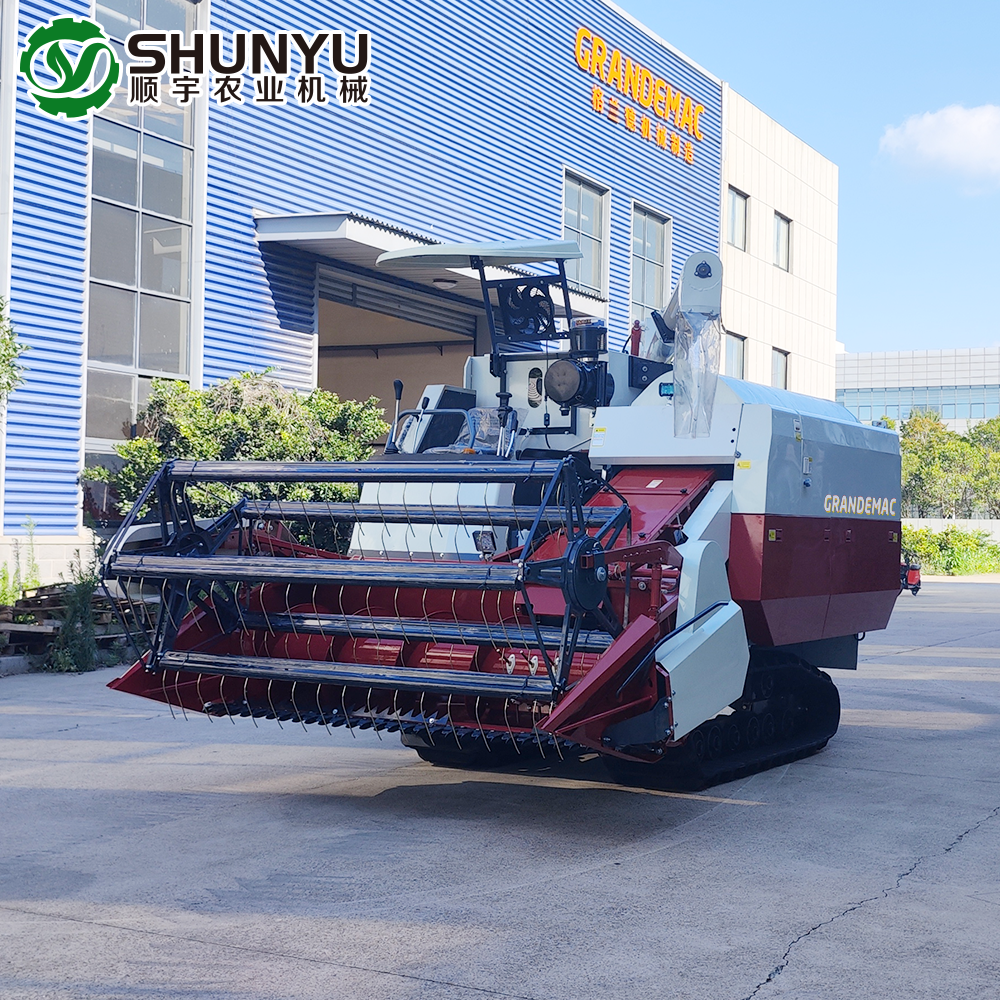
Terrain adaptability requires thorough evaluation before deployment. Wet paddy fields demand specialized crawler track designs exclusively. You must evaluate the track width and calculate ground contact pressure. Engineers measure ground pressure in kilopascals (kPa). Lower kPa means significantly less sinkage into the mud. Deep-mud capabilities are absolute necessities for flooded or poorly drained environments. High chassis clearance prevents the undercarriage from dragging heavily in the mud. A standard wheeled grain combine harvester will fail catastrophically in these environments.
Next, analyze both threshing and separation efficiency. Multi-cylinder threshing systems process tough, green crops much better. Oscillating sieve designs separate clean grain from unwanted chaff effectively. You must balance the "cleanliness rate" against the "grain loss rate" constantly. Acceptable commercial thresholds strictly require less than 2-3% total grain loss. Anything higher means you leave valuable money rotting in the field.
Finally, assess the overall power-to-weight ratio. Evaluate the engine horsepower against the machine's true operational weight. Heavy machines sink quickly if they remain underpowered. Ensure sufficient engine torque to navigate deep, muddy terrain smoothly. Avoid causing severe subsoil compaction during passes. Compacted soil ruins the root development phase for your next planting cycle.
Precision technology transforms modern agricultural practices fundamentally. Upgrading your electronic systems yields immediate, measurable field benefits. Here are the core technologies driving modern efficiency:
Automated Guidance and Auto-Steer: These systems provide massive ergonomic benefits instantly. They reduce operator fatigue during grueling fourteen-hour shifts. Auto-steer eliminates human pass overlaps almost entirely. You save expensive diesel fuel and highly valuable time. Consistent passes mean the header operates at absolute peak capacity always.
Yield Monitoring Systems: These sensors map your exact field performance in real-time. They utilize advanced onboard moisture sensors and optical grain flow meters. These sensors capture precise yield data point-by-point continuously. You export this crucial data directly to farm management software. It enables targeted variable-rate fertilizer application for the next planting season. You apply expensive inputs strictly where needed most.
Telematics and Preventive Diagnostics: Fleet management tools monitor machine health continuously from the cloud. They alert operators to abnormal drive belt wear instantly. They track dangerous engine load anomalies across varying terrain. The system warns you days before scheduled maintenance limits arrive. This proactive data prevents catastrophic field failures entirely. Advanced field machinery keeps you intimately connected to your fleet's vital signs.
Service level agreements tightly determine your seasonal success. Assess the regional vendor service infrastructure very carefully before signing contracts. Parts availability represents the ultimate peak-season operational risk. A snapped header belt might halt harvesting operations immediately. Waiting three agonizing days for a replacement part remains completely unacceptable. You lose crop quality and face moisture penalties every single day. Confirm local dealers stock critical wear components nearby.
Operator training requirements demand your strict attention. Transitioning from basic legacy machines to highly automated units requires structured onboarding programs. Modern cabs feature highly complex digital interface screens. Untrained operators induce severe mechanical breakdowns frequently. They often configure internal throughput settings incorrectly. This user error causes sieves to overload and clean grain to spill backward. Proper, certified training optimizes daily machine performance.
Let us review the exact shortlisting next steps:
Audit your current field conditions thoroughly before calling vendors.
Measure average mud depth and assess historical crop lodging patterns.
Define acceptable grain loss limits based strictly on your buyer contracts.
Request demonstrator trials in your own specific paddies.
Verify the local parts inventory directly inside the dealer's warehouse.
Evaluating high-capacity equipment requires deeply practical field knowledge. You must successfully balance theoretical throughput numbers against harsh actual conditions. High moisture levels, deep mud profiles, and lodged crops change everything fundamentally. Prioritize the regional dealer support network heavily over minor specification differences. Ensure chassis and track suitability match your worst-case field scenarios. Uptime during the extremely narrow harvest window strictly dictates your seasonal success. Take time to audit your paddies properly today. Match the machine architecture to your exact crop end-use requirements. Finally, embrace available precision tools to maximize your daily harvested acreage safely.
A: A 500-hectare operation requires a machine processing at least 6.0 kg/s to 7.0 kg/s. You calculate this by dividing total expected yield by your available harvest days and daily operating hours. High capacity prevents bottlenecks when weather suddenly shortens your available window.
A: Modifying wheeled combines usually fails in deep mud. Wet paddies require purpose-built crawler chassis with ground pressure under 25 kPa. Retrofitting tracks onto standard wheeled frames often creates severe weight distribution issues and damages the transmission under heavy load.
A: They use specialized, elongated pickup reels and distinct header angles. The tines gently comb and lift the fallen stalks upright before cutting. By keeping the stalk intact and outside the main cylinder, the machine prevents tangled biomass from overwhelming the separation sieves.
A: Quality rubber tracks typically last between 1,500 and 2,500 operating hours. Frequent roading on hard asphalt accelerates tread wear drastically. Deep mud actually lubricates the track, extending its life, provided sharp debris does not puncture the internal steel cables.


