 English
Views: 0 Author: Site Editor Publish Time: 2026-06-15 Origin: Site
Adopting a drone for agricultural spraying is not just a simple equipment purchase. It requires integrating a complex aviation and chemical application system directly into your existing farm workflows. Many operators fall for vendor hype without understanding the steep logistical realities. You need a pragmatic, evidence-based framework to evaluate, legally deploy, and accurately measure the return on investment of these aerial spray systems.
Without proper planning, costly hardware ends up grounded by regulatory tape or poor battery management. This guide is built specifically for farm owners, agronomists, and aspiring custom application service providers who are assessing fleet integration. We will explore payload limitations, flight software necessity, and compliance requirements. You will walk away knowing exactly how to evaluate this technology for your unique acreage and implement it successfully.
Hardware realities: Payload capacity directly dictates battery consumption and fieldwork logistics (charging, water hauling).
The regulatory bottleneck: Legal operation requires significant lead time for compliance (e.g., FAA Part 107 and Part 137 in the US), alongside state-level chemical application licenses.
Proven use cases: UAVs excel in mitigating soil compaction, accessing difficult terrain, and performing precision spot-spraying, rather than replacing broadacre ground rigs 1:1.
Heavy tractors and self-propelled sprayers dominate modern agriculture. They cover massive ground quickly. However, they carry a heavy operational footprint. Massive tires cause severe soil compaction. This compaction stunts root growth and reduces water infiltration. Wide booms trample healthy crops on every pass. Diesel engines burn through expensive fuel daily. We must compare this heavy footprint against nimble aerial application.
When does an aerial system objectively outperform a ground rig? You will see clear advantages in specific scenarios. Post-rain muddy fields ground heavy machinery entirely. If you wait for the soil to dry, you often miss the optimal spraying window. A UAV crop sprayer flies right over mud. Steep inclines and uneven topographies pose rollover risks for tractors. Aerial systems navigate these hazards safely. Tall canopy crops like late-season corn make ground application nearly impossible without severe crop damage. Aerial platforms drop chemicals effortlessly from above.
You must set realistic expectations on daily acreage capabilities. Do not expect a drone to replace a massive ground rig equally. Ground sprayers deliver high volume at high speeds across broad acres. Drones deliver lower volume with high precision. They target specific zones rather than blanketing an entire field wastefully. The two systems serve different operational purposes.
Operational Metric | Traditional Ground Rig | Aerial Spray System |
|---|---|---|
Soil Compaction | High (Heavy machinery compresses soil) | Zero (Operates entirely in the air) |
Crop Damage | 2% - 5% yield loss from wheel tracks | Zero (No physical contact with crops) |
Volume Capacity | High (Hundreds of gallons per tank) | Low/Precision (Typically 10 to 40 liters) |
Terrain Capability | Limited by mud, steep hills, and wet soil | Excels over mud, water, and steep inclines |
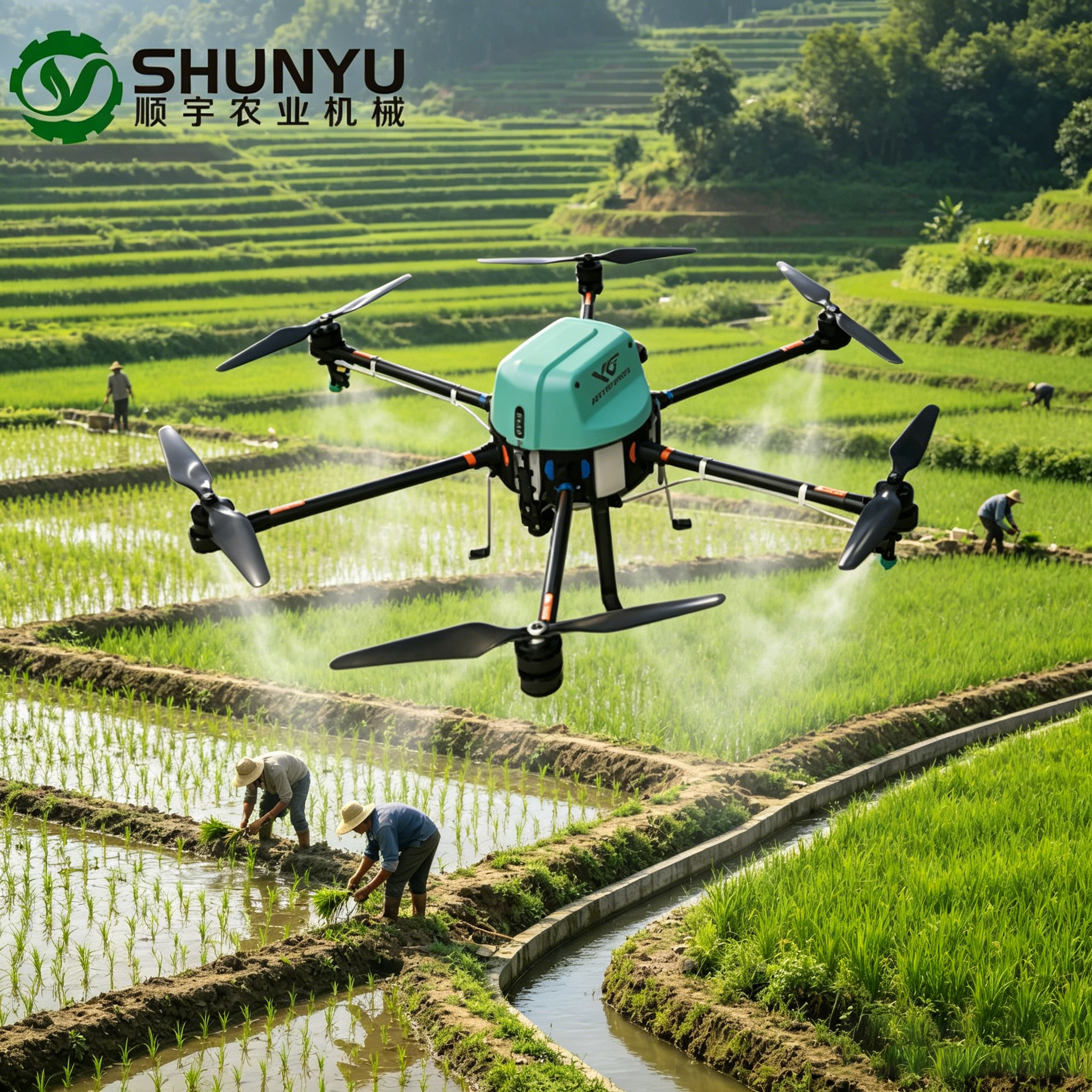
You must evaluate the tier list of an agricultural spraying drone carefully before purchasing. Capacities generally range from 10L models up to 30L and 40L heavy-lifters. An inverse relationship exists between liquid payload and battery life. Carrying heavier liquid dramatically reduces flight time. A 40L drone covers more ground per pass but drains batteries incredibly fast. A 10L model flies longer but requires constant tank refills. You must match the capacity to your specific field sizes.
Pump systems define your application quality. Rotary atomizers use spinning discs to create highly uniform droplets. You can adjust the droplet size simply by changing the disc spin speed. Pressure nozzles push liquid through tiny orifices, relying on pump pressure. Both systems have distinct advantages depending on the chemical used. You also benefit immensely from rotor downwash. The propellers push air downward at high velocity. This airflow flips leaves over, exposing the undersides where pests and fungal diseases often hide. It effectively coats the entire plant canopy.
Many operators completely overlook the reality of continuous operation. You cannot simply buy a drone and start spraying all day. You need a rigorous field support ecosystem. Flying non-stop requires multiple battery sets in constant rotation. Hot batteries cannot accept a charge safely. You will need cooling tanks or specialized air-chillers to reduce battery temperatures immediately after flight. Fast chargers are absolutely essential. Heavy-duty field generators provide the immense off-grid power required. Dedicated mixing tanks keep the workflow moving while the drone is in the air.
You might think a pilot actively flies these machines with a manual joystick. This is a common industry myth. Modern systems operate entirely differently. A crop protection UAV relies heavily on pre-programmed, automated flight paths. The pilot monitors the system telemetry, but the software executes the grid pattern autonomously.
Standard GPS is not accurate enough for professional farming. You need Real-Time Kinematic (RTK) technology. RTK uses a stationary base station to correct satellite signals in real-time. It provides centimeter-level positioning accuracy. This level of precision is strictly non-negotiable for modern agriculture.
Boundary marking: Ensures you stay perfectly within property lines and avoid restricted zones.
Obstacle avoidance: Prevents catastrophic collisions with power lines, silos, or tall trees.
Application accuracy: Eliminates dangerous chemical overlap and prevents unsprayed skips in the field.
Drones truly excel at Variable Rate Application (VRA). You can integrate them with multispectral imaging maps. A smaller scouting drone flies over your field first. It creates a detailed health map using near-infrared light. The spray software imports this data. The machine then applies chemicals only where disease or pest pressure actively exists. This targeted variable rate application significantly reduces chemical waste and saves substantial money over the season.
You must follow a strict legal framework to operate safely. Federal and state laws heavily regulate aerial chemical application. Many beginners buy equipment first and investigate the laws later. This mistake leads to grounded equipment and severe fines. You must navigate a complex web of certifications.
Federal Aviation Authorizations: In the US, operators face a dual requirement. First, you need an FAA Part 107 Remote Pilot Certificate. This licenses you generally as a commercial drone pilot. Second, you need an FAA Part 137 Agricultural Aircraft Operations certificate. This specifically authorizes you to dispense chemicals safely from an aircraft.
Heavy Drone Exemptions: Standard aviation rules limit drones to 55 lbs at takeoff. A fully loaded spray machine easily exceeds this weight limit. You must secure a specific exemption. The Section 44807 exemption allows you to operate these heavy machines legally in national airspace.
Chemical Handling Licenses: Federal aviation approval is only half the battle. State-level departments of agriculture regulate the actual pesticides. You strictly need a commercial pesticide applicator license. Most states also require a specific aerial application endorsement added to your license.
Implementation risk is high due to administrative delays. Paperwork processing takes considerable time. These approvals do not happen overnight. Expect lead times spanning several months. If you purchase equipment in May, you likely will not fly legally until August. Plan your deployment timeline well in advance to avoid missing the spray season.
You need a realistic pricing framework for a complete farm sprayer drone package. Expect to spend between $15,000 and $50,000 or more. Beginners often assume the drone is the only major expense. In reality, the drone itself represents only about half of your total capital expenditure (CapEx). You must budget for the entire support ecosystem. Extra smart batteries are highly expensive. Fast charging hubs add up quickly. You also need a customized transport trailer to move the equipment safely between fields.
Daily operations incur ongoing operational expenditure (OpEx). Batteries degrade steadily over time. You must track how many charge cycles a battery handles before it needs replacement. This is your largest recurring cost. Nozzle maintenance requires frequent attention to prevent chemical clogs. Your heavy-duty field generator will also consume substantial diesel or gasoline during a long workday.
You calculate your financial return through several distinct variables. Precision spot-application drastically reduces your overall chemical usage. You spend significantly less on diesel fuel compared to running a heavy tractor all day. Finally, you eliminate yield loss from wheel tracks. Ground rigs typically crush 2% to 5% of a planted field. Avoiding this destruction adds hard-dollar value directly back to your annual bottom line.
Financial Metric Component | Impact on ROI |
|---|---|
Chemical Savings | High (Targeted VRA reduces wasted pesticide volume) |
Fuel Cost Reduction | Medium (Generator fuel costs less than tractor diesel) |
Yield Preservation | High (Recovering 2-5% of trampled crops directly boosts revenue) |
Battery Replacement | Negative (Requires periodic capital reinvestment) |
These aerial machines are highly effective precision tools. They offer massive advantages for modern crop management. However, they demand rigorous logistical planning and strict regulatory adherence. You cannot simply buy one online and start flying it over your fields the next day. The support ecosystem and legal paperwork require dedicated attention.
We advise you to audit your local regulatory environment before making any purchases. Calculate your exact daily acreage requirements to determine the correct payload tier. Always request a physical field demo before committing to a specific brand. Seeing the continuous battery swapping workflow in person will drastically change your perspective.
Consult your local aviation authorities to understand your specific licensing timeline. Connect with a certified dealer today for a customized financial assessment based on your specific crop type, terrain challenges, and acreage demands.
A: Most aerial systems safely operate in winds up to 10-15 mph. Exceeding these wind-speed thresholds severely compromises application accuracy. High winds exponentially increase the risk of pesticide drift onto neighboring properties. Always monitor real-time weather data and ground the machine if gusts exceed the manufacturer's safety limits.
A: You can expect realistic flight times of 8 to 15 minutes per payload cycle. Carrying heavy liquid drains batteries rapidly. To maintain continuous operation, you must establish a swapping workflow. While the drone flies, you charge depleted batteries on a heavy-duty generator, rotating them constantly throughout the day.
A: Yes, but it requires strict dual compliance. You must adhere to federal aviation laws governing airspace and heavy aircraft operations. Simultaneously, you must follow state-level agricultural chemical regulations. This typically involves securing a commercial pesticide applicator license with a specific aerial endorsement from your state.
A: Standard farm policies almost always exclude unmanned aerial chemical application. You must purchase specialized aviation hull and liability insurance. Hull insurance covers physical damage to the equipment if it crashes. Liability insurance protects you financially against chemical drift claims, property damage, and potential injury caused during flight.


