 English
Views: 0 Author: Site Editor Publish Time: 2026-06-18 Origin: Site
Transitioning from traditional application methods to aerial spraying represents a major capital decision. The current market presents numerous options. You will see countless models promising perfect results. However, selecting the right platform requires looking strictly past marketing hype. You must evaluate real-world performance metrics.
Farm managers and agricultural service providers face a critical crossroad at the purchasing stage. The initial evaluation must shift quickly. We no longer ask, "Do drones work?" The technology is proven. Instead, you must ask, "Which specific configuration delivers reliable returns for our exact acreage and crop type?" Equipment must match your specific agronomic realities.
This guide outlines the critical, evidence-based criteria you need today. We explore everything from payload logistics to hidden operational infrastructure. You will also learn how to navigate complex regulatory landscapes. Our framework prepares you to evaluate aerial systems effectively and maximize your operational efficiency.
Payload dictates operational scale: Tank size must align with your typical acreage and application rates; bigger isn't always better for small or highly fragmented farms.
Infrastructure matters: The true farm drone price includes essential support equipment like charging stations, cooling systems, and chemical mixing rigs.
Compliance is non-negotiable: Operating legally requires specific certifications (e.g., FAA Part 137 & Part 107 in the US) and appropriate liability insurance.
Vendor support trumps base specs: Fast access to replacement parts and localized dealer support minimizes critical downtime during short spraying windows.
You must match your equipment directly to your farm size. Tank sizes dictate your entire workflow. Small or highly fragmented farms benefit greatly from nimble 10L to 20L tanks. These smaller units navigate tight corners easily. They also require significantly less logistical support. Conversely, broad-acre row crops demand 30L to 50L+ capacities. Commercial spraying businesses rely on these massive tanks to cover ground quickly.
Before purchasing a UAV sprayer for sale, you must confront field realities. Larger payloads sound appealing on paper. However, they require much heavier batteries. Charging times increase drastically. Furthermore, drones weighing over 55 pounds trigger stricter regulatory waivers. You must balance tank volume against these heavy logistical burdens.
Farm/Operation Type | Recommended Tank Size | Ideal Application Scenarios | Regulatory & Logistical Impact |
|---|---|---|---|
Small / Specialty Farms | 10L – 20L | Spot-spraying weeds, vineyards, steep orchards. | Standard commercial licenses; manageable battery logistics. |
Broad-Acre Row Crops | 30L – 40L | Targeted fungicide runs, late-season canopy treatments. | Requires heavy-drone waivers; demands robust generators. |
Commercial Ag-Services | 50L+ | High-volume broadcast runs across multiple client fields. | Complex exemption filing; requires custom transport trailers. |
Assess how the machine handles high-volume application requirements. Applying two or more gallons per acre drains a tank rapidly. You must compare this against ultra-low volume (ULV) capabilities. ULV spraying extends flight times considerably. It allows the drone to stay airborne longer while delivering concentrated chemicals.
Avoid relying solely on manufacturer flight-time claims. Optimal continuous flight times rarely happen in real fields. You must calculate realistic acres-per-hour output. Factor in mandatory battery swaps. Include the time needed for tank refilling and chemical mixing. True operational efficiency depends on continuous rotation, not just raw airspeed.
Atomization technology determines your chemical efficacy. You must evaluate the nozzle system carefully. Standard pressure nozzles provide familiar calibration protocols. Most ground-rig operators already understand them. They deliver excellent droplet uniformity for thin liquids. However, they frequently clog when processing thick suspensions or powder-based chemicals.
Centrifugal nozzles solve this clogging issue entirely. They utilize rapidly spinning discs to shear the liquid into fine droplets. This technology easily handles thick fungicide suspensions. It provides highly consistent droplet sizes across varying flow rates. A reliable crop protection UAV often features advanced centrifugal systems for maximum versatility.
Accurate terrain following prevents catastrophic crashes. Uneven topography presents serious flight risks. Orchards feature wildly varying canopy heights. You cannot rely on basic barometric sensors here. Assess the quality of the onboard radar and LiDAR systems. High-quality LiDAR reads the terrain continuously. It adjusts flight altitude in milliseconds.
Obstacle avoidance keeps your investment safe. Modern systems detect power lines, tree branches, and fences automatically. The drone will halt or reroute around the hazard. Reliable sensor arrays ensure consistent spray distance above the crop canopy. This maintains uniform chemical coverage across rolling hills.
Your spray application is only as good as your pump system. Look for hardware guaranteeing consistent pressure. Fluctuating pressure creates uneven chemical distribution. You need reliable flow rates from a full tank down to the very last drop. Consider these vital pump evaluation criteria:
Chemical Resistance: Ensure pump seals withstand highly corrosive fertilizers and abrasive powder solutions.
Consistent Flow Maintenance: The system must automatically adjust pump speed to match flight speed, ensuring even application per acre.
Ease of Field Maintenance: You should easily access and clean pump filters without disassembling the entire drone chassis.
IP Rating: Pumps require high water and dust resistance (IP67 or higher) for daily washdowns.
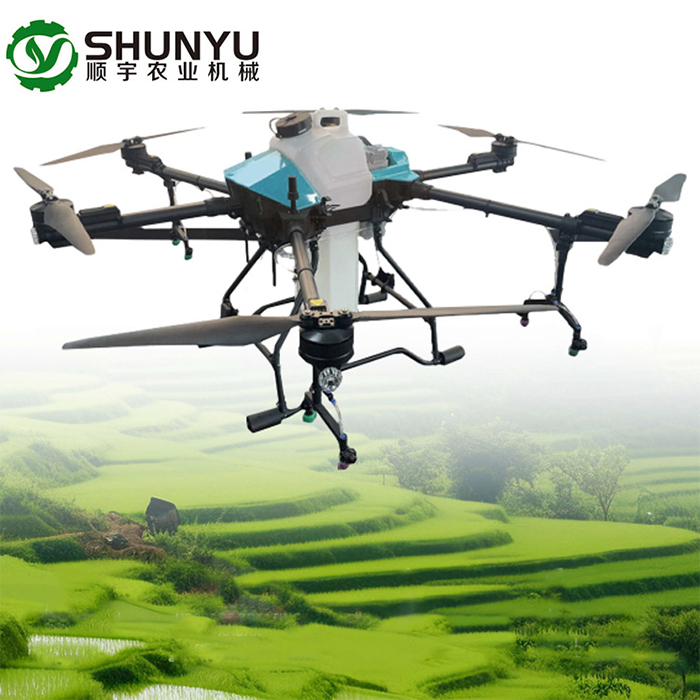
Break down your true financial commitment early. A base unit price usually excludes vital operational infrastructure. Manufacturers frequently advertise the bare drone cost. This creates unrealistic budget expectations. When calculating the final farm drone price, you must incorporate every piece of supporting hardware required to fly continuously.
Real-world operations demand extensive off-board equipment. High-capacity field generators are absolutely mandatory. You cannot charge massive industrial batteries from a standard truck outlet. You need robust generators capable of running continuous high-wattage cycles. Furthermore, you must purchase multiple smart batteries. Continuous field rotation requires a minimum of three to four batteries per drone.
Cooling stations represent another hidden necessity. Batteries generate extreme heat during flight. You must cool them down rapidly before plugging them into a charger. Water-cooling bins or forced-air chillers handle this task. Finally, custom trailers and agitated chemical mixing tanks complete a professional setup. You must transport the system safely and mix chemicals efficiently on-site.
Measure your return on investment through concrete operational savings. Yield preservation stands out as the biggest financial win. Heavy high-clearance tractors destroy crops during turns. Drones operate completely above the canopy. They eliminate soil compaction entirely. They ensure zero crop trampling. Preserving those previously crushed rows translates directly into harvested profit.
You also achieve massive chemical reductions. Precision spot-spraying targets specific weed patches. You stop wasting expensive chemicals on bare soil. Evaluate your labor efficiency improvements. Calculate the diesel fuel savings achieved by grounding heavy machinery during specialized application runs.
ROI Impact Summary Chart | |||
Financial Metric | Traditional Ground Rig | Aerial Spray Drone | Impact on Bottom Line |
|---|---|---|---|
Soil Compaction | High (Requires deep tillage to fix) | Zero | Preserves long-term soil health. |
Crop Trampling | 2% - 4% Yield Loss | Zero | Direct increase in harvestable bushels. |
Chemical Usage | High (Blanket broadcast) | Low (Precision spot-spraying) | Drastic reduction in input costs. |
Fuel Consumption | High (Diesel-heavy) | Low (Electricity/Gas Generator) | Lowers daily operational overhead. |
Acknowledge regulatory hurdles before making a purchase. Buying an agricultural spray drone for sale requires parallel investments in legal readiness. Operating outside the law invites severe financial penalties. Regulators monitor agricultural airspace closely.
In the United States, compliance involves several distinct layers. You must secure commercial and agricultural operating licenses. Consider these mandatory compliance steps:
FAA Part 107 Certificate: The foundational commercial drone pilot license required for all commercial operations.
FAA Part 137 Certificate: The specific authorization required for dispensing agricultural chemicals from an aircraft.
49 U.S.C. § 44807 Exemption: Necessary waivers for flying aircraft weighing over 55 pounds at takeoff.
Pesticide Applicator Licenses: State-level certifications required for handling and applying restricted-use chemicals.
Commercial service providers and enterprise farms generate highly sensitive agronomic data. Flight logs, field boundaries, and application rates hold immense value. You must evaluate where the system stores your field data. Ask manufacturers about their server locations. Avoid platforms enforcing ambiguous data-sharing policies. Secure software environments protect your proprietary farming strategies from unauthorized access.
Off-target chemical drift causes massive legal liability. Regulators strictly enforce drift standards. You must evaluate the drone's software controls carefully. The system should feature active wind-speed monitoring. It must manage droplet sizes dynamically to prevent misting. Advanced platforms include automated buffer zone programming. These boundaries automatically shut off nozzles near waterways or neighboring properties. Reliable drift mitigation protects your business and the surrounding environment.
In agriculture, spraying windows close rapidly. Weather patterns shift. Pests multiply overnight. You cannot afford extended equipment failures. A cheaper initial purchase becomes a massive liability if parts take weeks to arrive. A grounded drone destroys your field timeline. You must prioritize operational uptime over slight discounts on the base unit.
Your relationship with the dealer dictates your long-term success. Prioritize vendors operating localized repair centers. You need rapid access to specialized replacement parts. Ask potential vendors about their loaner equipment programs. Exceptional dealers provide backup drones while your unit undergoes maintenance. When evaluating agricultural spray drones for sale, you are ultimately buying into a support ecosystem. Robust training programs ensure your operators fly safely and efficiently.
Hardware represents only half of the equation. Route-planning and mapping software drive the actual field operations. You must clarify the software pricing structure early. Determine if the mapping platform requires ongoing annual subscription fees. Unexpected software costs drain operational budgets quickly.
Ensure the manufacturer's software integrates seamlessly with your existing farm management software (FMS). You want fluid data transfers between platforms. The software should also communicate easily with multispectral mapping drones. Integrating crop-health maps directly into your spray drone software allows for truly autonomous spot-spraying missions.
Purchasing an ag drone requires a systems-level integration mindset, rather than a simple hardware acquisition. Long-term success depends entirely on balancing payload efficiency against logistical realities. You must ensure absolute legal readiness before taking flight. Most importantly, robust dealer support will save your operation during critical narrow spraying windows.
Before making a final purchase, map out your typical application rates and field sizes. Consult directly with a certified local dealer for a comprehensive field demonstration. Initiate the regulatory licensing process immediately, as paperwork processing takes several months. Preparing your infrastructure now ensures you are ready to spray the moment your new equipment arrives.
A: Acreage coverage varies heavily by tank size, application rate, and battery rotation efficiency. A 40L drone typically covers 25–40 acres per hour under optimal logistical conditions. You must maintain continuous battery swaps to achieve this rate. Terrain complexity also impacts flight speed. Flat row crops allow faster passes. Orchards require slower, precise navigation. Calculate your true output based on your specific field geometry and logistical setup.
A: Yes. In the US, commercial operation requires an FAA Part 107 commercial drone license. You also need a Part 137 agricultural dispensing certificate. Drones weighing over 55 pounds require a special heavy-drone exemption under 49 U.S.C. § 44807. Operators must also hold state-level pesticide applicator licenses. Navigating these requirements takes months. We highly recommend starting the compliance process long before purchasing your equipment to avoid costly operational delays.
A: Not usually for large-scale, high-volume broadcast spraying. Drones operate best as complementary tools. They excel in wet-field access situations where heavy tractors get stuck. They handle precise spot-treatments effortlessly. Aerial systems perform exceptionally well on steep terrain and during late-season applications where ground rigs would destroy mature crop canopies. Keep your tractor for massive broadcast jobs. Use your drone for precision interventions and challenging environments.


