 English
Views: 0 Author: Site Editor Publish Time: 2026-03-13 Origin: Site
The agricultural industry is continuously evolving with the help of technological advancements, and one of the most impactful innovations in recent years is the use of drones. These unmanned aerial vehicles (UAVs), often referred to as agriculture drones, are transforming the way farmers approach various tasks such as crop monitoring, spraying, planting, and livestock management. In this article, we will explore the many applications of drones in agriculture, highlighting their benefits, efficiency, and the critical role they play in modernizing farming practices.
One of the most valuable uses of agriculture drones is their ability to monitor crop health across large fields with unmatched precision. Drones equipped with advanced sensors and cameras can capture high-resolution images and multispectral data that provide farmers with a detailed view of their crops' condition.
Agriculture drones use multispectral sensors to capture light at different wavelengths. This allows them to detect signs of crop stress, nutrient deficiencies, and pest infestations long before they become visible to the naked eye. For example, infrared sensors can assess plant chlorophyll levels, helping to identify early signs of disease or drought stress.
Early detection of issues: Drones can detect pests, diseases, or nutrient deficiencies early, allowing farmers to take action before problems spread.
Accurate data collection: The detailed data provided by drones helps farmers make informed decisions about crop care, leading to healthier crops and improved yields.
Time-saving: Drones can cover large fields in a fraction of the time it would take to manually inspect the crops, thus saving labor and improving overall efficiency.
Drones offer a cost-effective, non-invasive solution to monitoring crop health, making it easier for farmers to manage their fields proactively.
Another crucial function of agriculture drones is precision spraying. Drones are able to apply pesticides, herbicides, and fertilizers directly to the crops with high accuracy. This has significant advantages over traditional spraying methods, such as reduced chemical waste, better crop protection, and minimal environmental impact.
Drones are equipped with GPS and automated flight systems that allow them to follow predetermined flight paths. This means that the drone can target specific areas of the field that require treatment, ensuring no over-spraying and reducing the amount of chemicals needed. For instance, drones can spray only areas affected by pests or diseases, rather than applying chemicals across the entire field.
Reduced chemical use: Drones apply the precise amount of pesticide or fertilizer needed, which minimizes waste and reduces environmental harm.
More efficient application: With drones, farmers can achieve consistent coverage without the variability introduced by manual spraying.
Lower operational costs: By using less chemicals and improving the efficiency of spraying, drones help reduce the overall cost of crop management.
With agriculture drones, farmers can reduce the negative environmental impact of traditional farming methods, while also ensuring that crops receive the treatment they need to grow effectively.
Agriculture drones also play a significant role in field mapping and soil analysis. By using high-resolution cameras and multispectral sensors, drones create detailed maps that help farmers understand their fields' terrain, soil composition, and moisture levels. These maps provide valuable insights that help optimize field management practices.
Drones can collect data on soil properties such as pH levels, moisture content, and organic matter, which are crucial for determining irrigation needs and selecting the appropriate fertilizer for different parts of the field. With this information, farmers can make data-driven decisions to improve soil fertility and enhance crop growth.
Increased efficiency: Drones allow farmers to quickly map and analyze large fields without having to manually survey each section.
Precision irrigation: By understanding soil moisture levels, farmers can better manage water resources, ensuring that crops receive the right amount of water.
Improved crop yield: Soil analysis helps identify areas in the field that may need special attention, leading to better overall crop health and productivity.
Field mapping and soil analysis are essential tools for farmers to optimize their use of land and resources, and drones make this process faster and more accurate.
In addition to monitoring and spraying, agriculture drones are also increasingly used for planting and seeding. This application is particularly useful for planting in hard-to-reach or unfavorable terrains where traditional machinery may struggle to operate.
Drones equipped with specialized planting systems can drop seeds or nutrients into the soil with high precision. These drones typically use aerial seeding technology to spread seeds evenly over large areas, providing better coverage compared to manual planting.
Improved planting speed: Drones can plant seeds across vast fields much faster than traditional machinery or manual labor.
Better seed placement: Drones ensure that seeds are placed at the correct depth and spacing, which is crucial for healthy crop growth.
Access to difficult terrain: Drones can easily reach areas with steep slopes or dense vegetation where traditional equipment may be unable to go.
Drones' ability to assist with planting and seeding is a significant step toward reducing labor costs and increasing farming efficiency, especially in challenging environments.
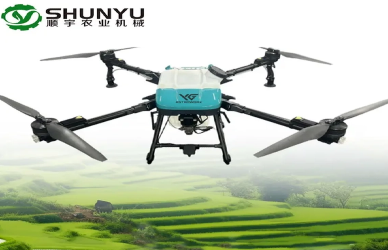
Drones are becoming an increasingly important tool for livestock monitoring, particularly in large-scale farms and ranches. Managing herds across vast areas can be time-consuming and challenging, but with drones, farmers are able to track animal movements, monitor their health, and ensure they remain within designated areas. These drones are equipped with advanced technology to automate and streamline the process, improving farm management efficiency.
Drones equipped with thermal imaging sensors can detect livestock, especially in remote or low-visibility conditions like at night or during poor weather. Thermal cameras can identify stress, injuries, or health issues such as fever or infection. Additionally, drones can monitor animal behavior, alerting farmers to any signs of unusual activity. They also follow predetermined flight paths, covering large areas much faster than traditional methods, reducing the need for manual checks.
Enhanced Animal Welfare: Drones allow for regular monitoring of livestock, ensuring animals' health and safety. Early identification of health issues allows for quick intervention, preventing problems from worsening.
Reduced Labor Costs: Drones automate the process, significantly reducing the need for personnel to manually check large areas, lowering labor costs.
Improved Herd Management: Drones provide real-time data on animal location and health, helping farmers manage herd distribution and prevent animals from straying. This is particularly useful for free-range farms.
Real-Time Data: Drones offer up-to-date insights, enabling farmers to make quick decisions and address any issues promptly, such as a distressed animal needing attention.
Drones have proven to be a valuable asset for farmers aiming to improve animal care and operational efficiency. They promote better health outcomes for livestock while reducing costs and increasing farm productivity. As drone adoption continues, it will revolutionize livestock management, helping farms become more efficient and sustainable.
In agriculture, irrigation management is crucial for optimizing water usage. Drones help farmers assess how water is being distributed across their fields, and identify areas where irrigation needs to be adjusted or improved.
By capturing detailed images of fields with thermal sensors and infrared cameras, drones can highlight areas with excess or insufficient water. This helps farmers adjust irrigation systems to ensure consistent water distribution across the entire field.
Water conservation: Drones help reduce water waste by identifying areas that need more or less water, leading to more efficient irrigation practices.
Increased crop growth: Proper water distribution ensures that crops have the right amount of water for optimal growth.
Cost savings: By optimizing irrigation, drones help farmers reduce energy and water costs associated with irrigation systems.
Drones are an essential tool for improving irrigation efficiency, ensuring that water is used effectively to maximize crop yield and minimize waste.
Drones use multispectral sensors to detect stress, diseases, and nutrient deficiencies in crops, providing farmers with real-time insights for better management.
Yes, drones assess water distribution across fields and help optimize irrigation by identifying areas that need more or less water, ensuring efficient water use.
Yes, drones are equipped with thermal imaging and high-resolution cameras that help monitor livestock health and behavior without disturbing them.
Drones automate tasks like spraying, planting, and monitoring, significantly reducing the need for manual labor, which lowers costs and increases operational efficiency.
Agriculture drones are reshaping the farming landscape by providing precision, efficiency, and sustainability across a variety of agricultural tasks. From crop monitoring and precision spraying to planting, livestock management, and irrigation, drones are enabling farmers to improve crop health, reduce resource usage, and enhance overall farm productivity. As technology continues to evolve, drones will play an even more pivotal role in the future of agriculture, making farming smarter and more sustainable.


