 English
Views: 0 Author: Site Editor Publish Time: 2026-09-30 Origin: Site
Harvesting lodged rice forces the cutter bar to operate directly at ground level. This exposes cutting components to extreme abrasion from soil, mud, and the naturally high silica content of mature rice stalks. Standard cutting components degrade rapidly under these harsh field conditions. This rapid degradation leads to excessive machine downtime. Operators also face increased fuel consumption due to blunt-force tearing and experience significant grain shatter loss at the header. Upgrading to specialized Wear-resistant Blades is a necessary operational decision for any harvest manager. This guide evaluates the metallurgical treatments, system compatibility, and operational efficiency factors necessary to select the right cutting components for severe harvest conditions.
Material Science Dictates Lifespan: Advanced surface treatments (like HVOF-sprayed Tungsten Carbide) significantly outperform traditional flame-hardened steel in high-abrasion lodged rice environments.
System Synergy is Required: Upgrading blades in isolation is ineffective; wear-resistant blades must be precisely matched with the harvester blade guard and the broader combine harvester knife assembly to prevent mechanical binding.
Long-Term Value Over Initial Price: While premium coated blades carry a higher upfront cost, they yield better value by reducing mid-harvest replacement downtime and minimizing grain loss.
Maintenance and Inventory Realities: High-hardness blades are more brittle, requiring precise calibration. Furthermore, strategic pre-season stocking of complementary wear parts is essential for uninterrupted harvesting.
Traditional harvesting methods allow operators to safely cut standing crops 15 to 25 centimeters above ground level. This clearance keeps the cutter bar safely away from soil, rocks, and abrasive debris. Lodged rice presents a completely different mechanical reality. Heavy winds or heavy rains force the crop to lay flat against the earth. To recover the grain, operators must drop the header directly to the soil surface. This action forces the cutter bar into continuous, direct contact with the ground. The cutting components essentially operate inside a mixture of mud, sand, and crop material.
Weather patterns dictate the severity of crop lodging. Heavy late-season rains combined with high winds push the heavy grain panicles down. The stalks bend at the base, creating a tangled mat of vegetation. When the field dries, the mud bakes onto the stalks. This creates a hardened, abrasive crust on the plant material. Harvesting this crust requires immense shearing force. Standard blades simply cannot maintain an edge when cutting through dried mud and high-silica fibers simultaneously. The friction generates heat, which further degrades the temper of standard steel blades.
Mature rice stalks possess exceptionally high silica content. They are also low in moisture and highly fibrous. When you combine this tough, abrasive plant material with ground-level mud and sand intake, the resulting mixture acts as a continuous grinding compound. It aggressively attacks the cutting edges of the header. Standard steel blades lose their sharp edge within hours under these conditions. The silica acts like sandpaper, stripping away the metal at a microscopic level while the fibrous stalks pull and stress the dulled edges.
Dulling blades do more than just execute a poor cut. They change the dynamics of the header. As the blades lose their edge, they stop slicing and start tearing. This tearing action increases the lateral load and vibration across the entire system. The extra stress transfers directly into the combine harvester knife assembly. Over time, this increased resistance leads to the premature failure of drive mechanisms, pitman arms, and wobble boxes. The entire header shakes violently, which causes structural fatigue.
To understand the severity of ground-level harvesting, consider the specific wear factors acting on the header:
Direct Soil Ingestion: Sand and grit enter the shearing zone between the blade and ledger plate, acting as an abrasive paste.
Silica Friction: Rice stalks contain phytoliths (microscopic silica bodies) that wear down carbon steel faster than almost any other crop.
Moisture and Mud: Wet field conditions cause soil to pack around the guards, preventing the self-cleaning action of the cutter bar.
Impact Stress: Operating at ground level guarantees collisions with hidden rocks, levees, and irrigation tracks.
A successful blade upgrade requires meeting specific baseline requirements. First, you need significantly extended wear life to survive the silica and soil abrasion. Second, the blade must maintain its cutting edge geometry over time, rather than rounding off. Finally, the material must resist impact fracturing. Ground-level harvesting means the blades will inevitably strike hidden field debris. The cutting components must absorb these impacts without shattering.
Manufacturers utilize several distinct metallurgical approaches to create heavy-duty agricultural blades. Understanding the science behind these treatments helps operators match the right blade to their specific field conditions. The base metal provides the structural integrity, while the surface treatment dictates the abrasion resistance.
Standard flame-hardened blades offer basic durability for clean, standing crops. However, they fail rapidly in continuous soil-contact scenarios. The hardening process only penetrates a shallow layer of the steel. Once the abrasive rice stalks and soil wear through this thin layer, the softer core metal degrades almost instantly. Hard Chromium (Cr) plated blades provide excellent corrosion resistance, which helps in wet conditions. Yet, chromium plating still lacks the extreme hardness required to withstand the continuous grinding action of high-silica lodged rice.
High-performance operations rely on advanced thermal spray coatings. Plasma-sprayed Al2O3-TiO2 coated blades show excellent results in abrasive environments. For maximum durability, High-Velocity Oxygen Fuel (HVOF) sprayed WC–Co (Tungsten Carbide-Cobalt) treatments are the industry standard. The HVOF process propels tungsten carbide particles at supersonic speeds onto the blade edge. This creates an incredibly dense, hard coating. The tungsten carbide provides extreme abrasion resistance, while the cobalt matrix offers just enough flexibility to prevent the coating from flaking off during operation.
Edge geometry plays a role just as important as the metallurgical composition. Mature rice stalks are highly fibrous and resist clean cuts. Smooth edge blades tend to push, fold, or pinch the stalks against the ledger plate rather than cutting them. This leads to immediate cutter bar clogging. Aggressive, saw-tooth, or serrated slicing action is absolutely mandatory. Serrations actively grip the fibrous material. They pull the stalk into the cutting zone, ensuring a clean, aggressive slice rather than a blunt chop. This geometry keeps the cutter bar clear and maintains a high forward ground speed.
Blade Treatment Type | Abrasion Resistance | Impact Toughness | Best Application |
|---|---|---|---|
Flame-Hardened Steel | Low | High | Standing crops, clean fields, low silica |
Hard Chromium Plated | Medium | Medium | Wet conditions, moderate lodging |
Plasma-Sprayed Al2O3-TiO2 | High | Medium-Low | Abrasive soils, high silica crops |
HVOF Tungsten Carbide | Very High | Low (Brittle) | Severe lodged rice, extreme sand/mud contact |
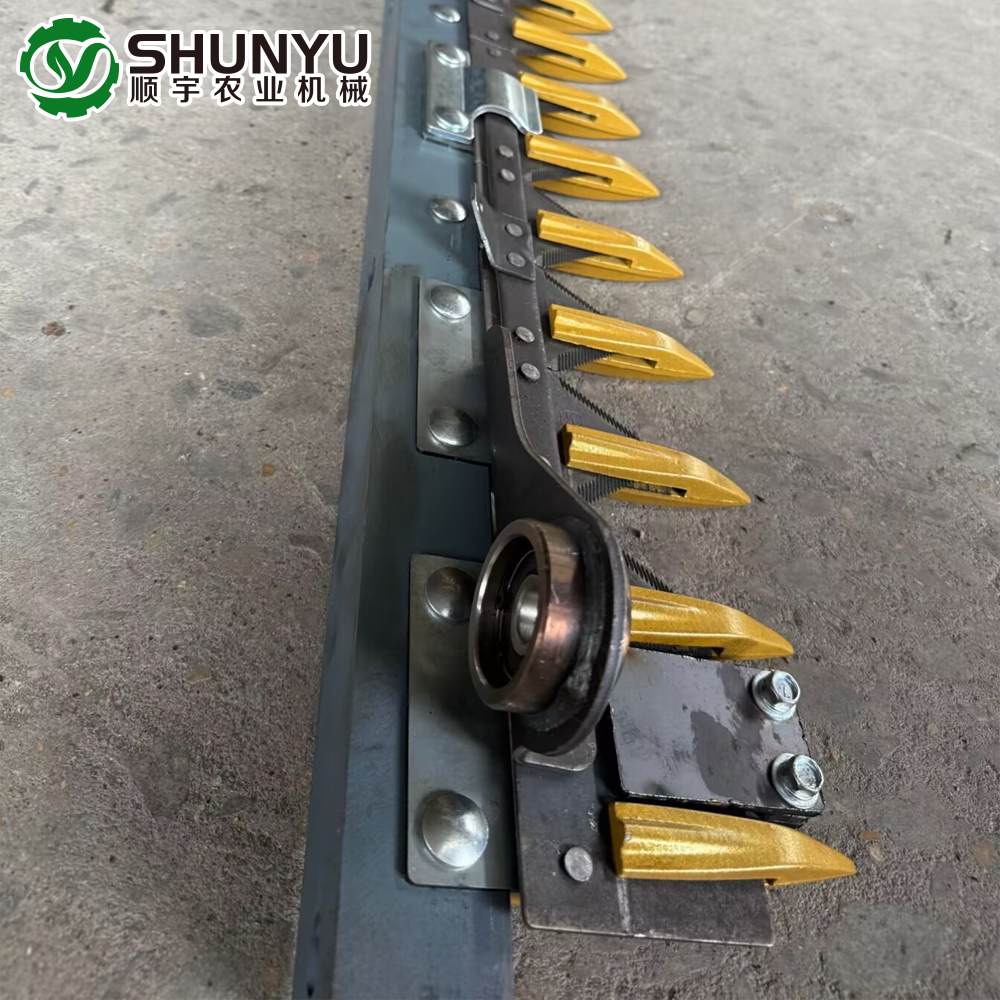
New cutting components must interact correctly with your existing machinery infrastructure. Upgrading one part of the header without evaluating the surrounding components often leads to rapid system failure. You must evaluate the dimensional tolerances and material hardness of the entire cutting system.
Clearance tolerances are the most important factor when installing new blades. You must pair a premium blade with a compatible harvester blade guard. The guard houses the ledger plate, which acts as the stationary half of the scissor mechanism. If you install a high-hardness tungsten carbide blade but retain a soft, worn-out standard guard, the system will fail. The premium blade will rapidly wear away the soft guard material. This increases the gap between the blade and the ledger plate. Once this gap widens, the fibrous rice stalks will fold and jam between the components instead of being cut.
You must also verify integration specifics with the main drive system. Check the stroke length compatibility and review the fastener torque specifications. Heavily coated blades often weigh slightly more than standard steel sections. Your drive motor and pitman arm must handle this increased reciprocating mass without overheating or binding. Ensure the hold-down clips are adjusted to accommodate the specific thickness of the new coated sections. Too tight, and the assembly binds; too loose, and the cutting action degrades.
The cutter bar represents only the first stage of crop flow. Improved cutting efficiency directly impacts the performance of downstream rice combine harvester parts. When blades slice cleanly, the crop feeds evenly into the auger and up the feeder chain. There are no massive clumps of torn, tangled stalks. This even feeding prevents fibrous material from wrapping around the rasp bars. It stops the threshing cylinder from choking and ensures the concaves can effectively separate the grain from the straw.
Clean, sharp cuts also improve post-harvest straw management. When the cutter bar slices the stalks cleanly, the resulting straw residue is uniform in size. Blunt blades leave ragged, torn stalks that tangle easily. Consistent, cleanly cut straw lengths make subsequent field operations much easier. Baling, tilling, and field clearing become significantly more efficient when the residue is uniform and manageable.
Symptom | Probable Cause | Corrective Action |
|---|---|---|
Ragged, torn stubble | Excessive clearance between blade and ledger plate | Adjust hold-down clips; replace worn guards. |
Cutter bar stalling | Blades binding against guards; incorrect torque | Loosen over-tightened clips; check bar straightness. |
Premature blade chipping | Impact with field debris; brittle coating | Raise header slightly; clear field of large rocks. |
Excessive header vibration | Dull blades causing tearing instead of slicing | Replace worn blade sections immediately. |
Evaluating premium wear parts requires looking strictly at field performance and operational efficiency. You must calculate the operational return based on how the components perform under the stress of lodged rice harvesting.
Mid-season replacements destroy harvest timelines. Every hour a machine sits idle in the field for repairs is an hour of lost productivity. Coated blades dramatically reduce the labor hours associated with swapping out dull components. In severe lodged rice conditions, standard blades might require replacement every few days. High-performance coated blades can often last the entire harvest window. This massive reduction in downtime keeps the machines moving and ensures the crop is harvested before weather conditions deteriorate.
Sharp, durable edges also deliver measurable fuel efficiency gains. When blades slice cleanly through thick, wet stalks, the engine experiences less resistance. Blunt blades require the header drive to force the metal through the crop, spiking the engine load. Lower engine load translates directly to reduced fuel consumption per hectare. Over a large harvesting operation, these fuel savings become substantial.
Minimizing grain shatter loss is perhaps the most important performance metric. Lodged rice panicles are extremely fragile. When blunt blades tear at the stalks, they cause excessive header vibration. This violent shaking knocks the mature grain off the panicle before it ever enters the machine. The grain falls directly onto the ground and is lost forever. Clean, low-vibration cutting directly reduces this header loss. Sharp blades slice the stalk smoothly, keeping the panicle intact and putting more grain into the tank.
To illustrate the operational impact, consider the cascading effects of dull blades on harvest efficiency:
Header Loss: Increased vibration shakes loose grain directly onto the soil.
Forward Speed: Operators must slow down to prevent the cutter bar from jamming, reducing daily hectare coverage.
Fuel Burn: The engine works harder to power the header through uncut material, burning more diesel per hour.
Component Fatigue: The wobble box and pitman arm absorb the shock of blunt impacts, leading to premature mechanical failure.
Adopting high-hardness cutting components introduces new practical challenges to your maintenance routine. You must actively manage these risks to extract the full operational benefit from your upgraded header.
The primary challenge is the hardness versus toughness trade-off. Extremely hard coatings, like Tungsten Carbide, resist abrasion perfectly. However, this extreme hardness makes the material brittle. These blades are susceptible to chipping or shattering upon heavy impact. If the header strikes a hidden rock, a steel stake, or a dense stump, the carbide coating can crack. You must select blades that feature a tough, impact-resistant base metal core to absorb these shocks while relying on the surface coating for abrasion resistance.
Proper installation requires a methodical approach. Follow these steps when upgrading your cutting components:
Remove the entire sickle bar from the header and place it on a flat, stable workbench.
Inspect the bare bar for any bends or twists. A warped bar will cause the new blades to bind instantly.
Rivet or bolt the new coated sections onto the bar, starting from the center and working outward to distribute tension evenly.
Install the matching heavy-duty guards onto the header, leaving the bolts slightly loose for final alignment.
Slide the assembled sickle bar into the guards and check the clearance at every single ledger plate.
Tighten the guard bolts to the manufacturer's exact torque specifications, ensuring the bar moves freely by hand.
Proper calibration and installation tolerances are non-negotiable. You cannot simply bolt on premium blades and head into the field. You must set the optimal hold-down clip pressure using a feeler gauge. Align the ledger plates precisely to ensure a zero-clearance shearing action. Incorrect tolerances will cause the new blades to bind, overheat, or wear unevenly. Always use a calibrated torque wrench when securing the sickle sections to the bar to prevent rivet shear.
Implement a modified, rigorous daily inspection schedule. Standard visual checks are not enough. Operators must clean the cutter bar and inspect specifically for micro-fractures in the blade coatings. Look for small chips or missing serrations. Catching these minor defects early prevents catastrophic blade failure during heavy operation. Replace damaged sections immediately to maintain the balance of the knife assembly.
Develop strict pre-season stocking strategies. Do not wait until a breakdown occurs to order specialized parts. Prepare your inventory months before the season begins. Stock matching guards, spare coated blade sections, and heavy-duty rivets or bolts. High-performance components are often subject to supply chain delays during critical harvest windows. Having these specific parts on hand in your farm shop guarantees you can handle any field emergency without losing days of harvesting time.
Audit your current header assembly to identify worn ledger plates, bent cutter bars, and loose hold-down clips before ordering new parts.
Measure the clearance tolerances of your existing guards to ensure they can properly mate with high-hardness coated blades without causing binding.
Order matching wear-resistant guards and spare coated blade sections well ahead of the harvest season to avoid supply chain delays.
Train your operators on the specific torque requirements and daily inspection routines needed to maintain brittle, high-hardness cutting components.
A: Wear-resistant blades utilize advanced metallurgical treatments, such as HVOF-sprayed Tungsten Carbide or plasma-sprayed ceramics. Standard blades are simply flame-hardened steel. Premium blades feature specialized coatings that maintain sharp edge retention and resist extreme abrasion from soil and high-silica crops.
A: Inspection should occur daily due to severe ground contact. Replacement intervals depend on acreage and soil type. Standard assemblies may fail weekly in lodged conditions. Premium coated assemblies can often endure an entire harvest season if properly aligned and maintained.
A: No. Pairing a high-hardness coated blade with a standard, softer guard causes accelerated guard wear. The premium blade will grind away the soft ledger plate, increasing clearance gaps. You must match component hardness to ensure clean shearing action.
A: High-Velocity Oxygen Fuel (HVOF) sprayed Tungsten Carbide is highly recommended. It provides maximum abrasion resistance against the continuous grinding action of silica-rich stalks and ground-level sand intake.
A: Mature rice stalks are highly fibrous and low in moisture. Smooth edges tend to push or fold these tough stalks. Serrated edges aggressively grip and slice the fibrous material, preventing cutter bar clogging and ensuring a clean cut.
A: Yes. Because they are often thicker and more brittle, they require precise hold-down clip clearances and exact ledger plate alignment. Operators must strictly follow torque specifications to prevent binding or cracking the hardened sections.
A: Clean, sharp cutting reduces the strain on the entire machine. It ensures even crop flow, which prevents fibrous wrapping on feeder chains and threshing cylinders. It also produces uniform straw residue, improving post-harvest field management.


