 English
Views: 0 Author: Site Editor Publish Time: 2026-06-15 Origin: Site
Small-to-medium rice operations face a critical bottleneck every planting season. Farmers must constantly balance escalating labor costs against a highly narrow seasonal window for transplanting. Traditional hand planting drains financial resources and severely limits overall yield potential. To bridge this frustrating gap, many farm operators now turn to motorized mechanization. These machines serve as a highly practical intervention. They sit perfectly between labor-intensive hand planting and capital-heavy ride-on machinery.
A compact 6-row system dramatically optimizes field efficiency for smaller paddies. However, successful adoption requires much more than simply purchasing the machine. You must carefully evaluate your terrain compatibility. You must completely overhaul your seedling preparation process. You must also understand the true operational demands of running small farm equipment. When implemented correctly, a reliable walking rice transplanter reshapes your entire planting season. Read on to discover how to properly evaluate, deploy, and maintain these essential farming tools.
Efficiency Gains: A 6-row motorized walking transplanter typically covers 0.8 to 1.2 acres per hour, replacing the output of 15–20 manual laborers.
Ideal Deployment: Best suited for small-to-medium fragmented paddies where large ride-on transplanters lack turning radius.
Prerequisite for Success: Achieving advertised ROI strictly depends on adopting standardized nursery seedling trays; field readiness is not plug-and-play.
Limitations: Walking models require operator stamina and a stable hardpan layer (mud depth under 15-20cm) to prevent bogging down.
Mechanization represents a major operational shift. Defining the actual tipping point for mechanization depends heavily on your farm acreage and local labor availability. If your labor pool shrinks during peak season, hand planting becomes a severe operational risk. You must frame the business problem around efficiency and timely crop establishment. Relying on outdated methods jeopardizes your harvest timeline.
Many small farms initially experiment with a hand-cranked manual rice transplanter. These basic tools offer a modest step up from bare-hand planting. However, they still require immense physical exertion. Operators must physically drag non-motorized equipment through thick mud. This causes rapid operator fatigue and inconsistent planting lines.
In contrast, a motorized 6-row model yields roughly five times the planting speed of a 2-row manual crank. Engine-driven propulsion handles the immense mud resistance. It eliminates the physical toll of dragging dead weight. You get faster planting cycles and significantly less human exhaustion.
Ride-on machines represent the peak of planting speed. Yet, they pose specific challenges for smaller operations. Walking units cost a mere fraction of their ride-on equivalents. This dramatically minimizes your initial capital expenditure. Lower CapEx keeps your farm financially agile.
Maneuverability also sets walking units apart. Large machines require wide turning radiuses. A compact footprint allows tight turns in terraced paddies. They easily navigate irregularly shaped fields where massive ride-on machines simply cannot operate. You maximize planted area without destroying field borders.
Not all machines deliver identical performance. You must scrutinize specific mechanical criteria before making a purchase. Evaluating a compact paddy transplanter requires looking past the marketing brochures. Focus directly on the planting mechanism, engine reliability, and machine adjustability.
Precision determines your final crop yield. Standardized row spacing usually sits fixed at 30cm across the industry. However, you need adjustable hill spacing. Look for machines offering gear adjustments between 12cm and 21cm. This flexibility accommodates varying crop densities and different rice varieties.
Pay close attention to the rotary planting claws. You should always prioritize stainless steel components over standard alloys. Stainless steel resists abrasive mud and chemical fertilizers. High-quality claws prevent missed hills. They also stop seedlings from floating away after insertion.
The engine drives the entire operation. Assess the horsepower carefully. Most reliable models feature 4.0 to 6.0 HP OHV petrol engines. You must balance this horsepower against the overall machine weight. Underpowered engines stall in thick mud. Overweight machines sink rapidly.
Wheel design directly impacts field performance. Saturated soils demand aggressive traction. Deep-tread rubber wheels handle standard paddy mud well. If your fields feature exceptionally slick or deep mud, opt for iron lug wheels. Iron lugs bite into the hardpan to guarantee optimal traction.
Field conditions change daily. Your machine must adapt instantly. Independent controls for planting depth are absolutely crucial. Consistent planting depth ensures rapid root establishment. If seedlings sit too shallow, they wash away. If they sit too deep, they rot.
You also need independent controls for seedling feed volume. This allows the operator to adjust how many seedlings drop per hill. Dialing in the exact feed volume prevents nursery tray waste and optimizes plant density.
Compact Planter Evaluation Benchmarks | ||
Component | Standard Specification | What to Look For |
|---|---|---|
Engine Power | 4.0 - 6.0 HP | OHV design for better fuel efficiency and torque. |
Row Spacing | 30 cm (Fixed) | Ensure rigid frame alignment to prevent row drifting. |
Hill Spacing | 12 cm - 21 cm | Quick-shift gear levers for easy field adjustments. |
Planting Claws | Stainless Steel | Precision-machined tips to avoid snapping fragile stems. |
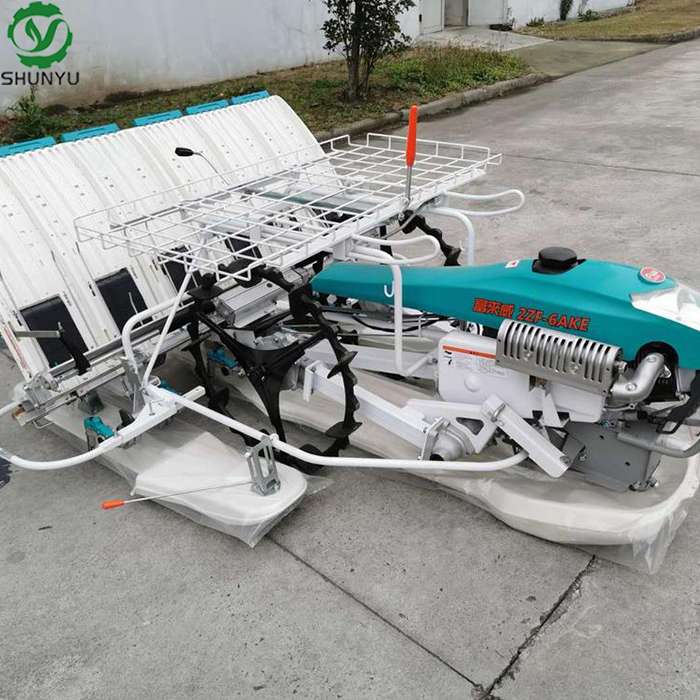
Field readiness is never plug-and-play. Preparing your land and your seedlings requires strict discipline. A walking planter demands precise environmental conditions to function properly. Ignoring these operational realities guarantees machine failure and wasted time.
Soil leveling dictates machine success. You must rotavate the field thoroughly. Puddle the soil evenly to remove deep ruts. During the actual transplanting phase, water depth must remain strictly controlled. Maintain a depth of 1-3cm. Excess water causes young seedlings to float instantly.
You must also verify your hardpan depth. The hardpan supports the machine's weight. Ensure the mud depth does not exceed the machine's clearance limits. If the mud runs deeper than 20cm, the chassis will drag. This bogs down the engine and halts your operation.
Traditional broadcast nurseries fail entirely with mechanization. You must move away from bare-root seedlings. Mechanized planting requires a mandatory transition to standardized mat-type nursery trays. These rigid trays typically measure 28cm by 58cm.
Seedling age and height parameters remain incredibly strict. The machine's claws require specific stem thicknesses. If seedlings grow too tall, the arms tangle them. If they remain too young, the mechanical grips snap the delicate stems. You must time your nursery growth precisely to match your planting days.
Routine maintenance prevents catastrophic breakdowns. Walking transplanters operate in highly abrasive environments. Mud, water, and grit constantly attack moving parts. Implement strict daily workflows to protect your investment.
Pre-shift Inspection: Grease all rotary arms thoroughly. Check the engine oil levels before starting. Wipe down and clean the seedling delivery platform to prevent tray jamming.
Operational Checks: Listen for belt slipping during the first row. Verify the planting depth manually after the first ten meters.
Post-shift Cleaning: Use a high-pressure washer on the planting mechanism immediately. Never let paddy mud dry on the claws. Dried mud hardens like concrete and accelerates rust.
Investing in machinery requires clear financial justification. You must analyze the direct costs against the tangible outcomes. However, a trustworthy analysis also requires acknowledging the real-world limitations. Mechanization solves many problems, but it introduces new operational challenges.
Direct labor savings represent your primary financial win. You eliminate the daily wages of 15 to 20 manual laborers. You must weigh these massive savings against your new fuel consumption and annual maintenance costs. Petrol and spare parts become your new baseline expenses.
Beyond labor, yield improvements dramatically boost your financial return. Mechanization guarantees uniform planting depth. It provides optimal aeration spacing across every single row. Human error frequently leads to cramped plants and inconsistent depths. Mechanized precision directly translates to heavier, healthier grain harvests.
Mechanization Outcome Matrix | ||
Metric | Manual Labor | 6-Row Walking Transplanter |
|---|---|---|
Speed/Output | Very Low (Highly variable) | 0.8 - 1.2 Acres per hour |
Spacing Consistency | Poor (Subject to fatigue) | Excellent (Mechanically locked) |
Primary Expense | Daily wage payouts | Fuel and nursery trays |
We must look at the transparent limitations. First, operator fatigue remains a genuine issue. This is still a walk-behind machine. Your operators must wade through thick, resistant mud for hours on end. It is significantly easier than hand planting, but it still demands physical stamina.
Sinking risks present another major hurdle. These machines are completely unsuitable for fields possessing a degraded or excessively deep hardpan layer. If the machine sinks to its engine block, retrieval becomes a nightmare.
Finally, prepare for the hidden costs. The mandatory shift to tray-based seedling nurseries demands upfront capital. You must buy hundreds of plastic trays. You must also purchase specialized substrate soil to ensure proper mat formation. Do not ignore these necessary prerequisite costs.
Choosing the right machine involves evaluating the manufacturer just as harshly as the equipment. You rely on this machine during a tiny seasonal window. If it breaks down and parts remain unavailable, your harvest suffers. Approach B2B equipment suppliers with strict criteria.
Spare parts availability ranks above everything else. Prioritize suppliers who explicitly guarantee 3-5 year availability for high-wear items. Planting claws, drive belts, and carburetors will inevitably fail. You need immediate replacements when they do.
Always request compliance and testing documents. Look for valid ISO certifications. Ask for documented field tests demonstrating performance across varied soil profiles. A machine tested only in sandy loam might fail miserably in heavy clay paddies.
Scrutinize the warranty terms carefully. Manufacturers often separate engine warranties from chassis warranties. The engine might carry a two-year guarantee, while the moving planting arms only get six months. Read the fine print to understand your actual coverage.
Avoid scaling too quickly. We recommend starting your mechanization journey with a single unit. Purchase one machine and standardize just one single nursery batch. Use this pilot run to train your operators. Prove the concept in your specific field conditions before attempting a farm-wide rollout. This minimizes risk while building internal expertise.
A 6-row motorized walking rice transplanter serves as a highly effective operational upgrade. It perfectly targets small-to-medium farms aiming to slash their crushing labor dependencies. It bridges the gap between exhausting manual work and expensive ride-on tractors. However, realizing its full potential requires strict discipline. The farm must willingly adapt its entire seedling preparation process. You cannot cut corners on nursery trays or field leveling.
Your actionable next step is straightforward. Before requesting a single quote, audit your local capabilities. Assess your ability to produce mat-type seedlings. Measure your field mud depths meticulously to ensure they stay under 20cm. Verifying these two metrics guarantees your new walk-behind machinery will actually perform as promised.
A: Row spacing generally remains fixed at 30cm to align with standard farming practices. However, hill spacing is typically adjustable via quick-shift gears. Operators can change the distance from 12cm up to 21cm. This allows you to easily accommodate different rice varieties and regional density requirements.
A: Yes, you absolutely do. Motorized transplanters require specialized mat-type seedlings. You must grow these in standardized plastic nursery trays. Traditional broadcast or bare-root seedlings cannot be used, as the mechanical claws require a firm soil mat to grip and plant accurately.
A: For optimal traction, the mud depth should ideally not exceed 15–20cm. This measurement represents the distance from the water surface down to the solid hardpan. If the mud runs deeper than this, the machine risks losing traction, bogging down, or sinking entirely.
A: It requires significantly more care. You must perform standard small-engine maintenance, including regular oil changes, spark plug replacements, and air filter cleaning. Additionally, it demands rigorous daily high-pressure washing and heavy lubrication of the moving planting arms to prevent severe mud abrasion and rust.


