 English
Views: 0 Author: Site Editor Publish Time: 2026-03-12 Origin: Site
In recent years, the use of agriculture drones (AG drones) has revolutionized the way farmers approach crop management. These unmanned aerial vehicles are now integral to modern farming, enabling precision farming techniques that were once unimaginable. The role of AG drones in agriculture continues to grow as they offer solutions that enhance productivity, reduce operational costs, and increase sustainability. One of the most significant advantages of AG drones is their ability to spray crops efficiently. Traditional methods of spraying can be time-consuming and labor-intensive, often resulting in wasted chemicals and uneven coverage. AG drones, on the other hand, provide a more efficient, precise, and controlled spraying process, ensuring that pesticides, fertilizers, and other treatments are applied exactly where needed. This precision not only minimizes waste but also reduces environmental impact, making AG drones a key player in the future of agriculture.
Agriculture drones, also known as AG drones, are unmanned aerial vehicles (UAVs) specifically designed to assist with various tasks in modern farming. These drones are equipped with advanced technologies that allow farmers to perform tasks such as spraying crops, monitoring plant health, and assessing soil conditions more efficiently and accurately. By using AG drones, farmers can streamline their operations, reduce costs, and improve the sustainability of their practices.
AG drones are capable of performing multiple functions that are essential for modern farming:
Crop Spraying:
One of the primary uses of agriculture drones is spraying pesticides, herbicides, and fertilizers on crops. These drones offer high precision in spraying, ensuring that chemicals are applied exactly where needed, reducing waste and minimizing environmental impact.
Crop Monitoring:
AG drones can capture aerial images and videos, allowing farmers to monitor crop health in real-time. This helps in detecting issues such as pest infestations, diseases, or nutrient deficiencies early on.
Field Mapping and Soil Analysis:
Drones can generate detailed maps of the farmland, helping farmers identify soil variability, moisture levels, and areas that may require special attention. This leads to more efficient use of resources.
AG drones are built with several key components that enable them to carry out these tasks efficiently. Each component plays a crucial role in ensuring that the drone performs at its best during agricultural operations.
The sprayer is one of the most important components of an agriculture drone. These sprayers are specifically designed to distribute pesticides, herbicides, and fertilizers evenly across the crop fields. The sprayers can be adjusted for different flow rates, allowing for precise application.
GPS technology is essential for accurate navigation. It helps the drone to follow specific flight paths and ensures that the spraying process is uniform across the entire field. GPS also aids in mapping the field and georeferencing the data collected, making it easier for farmers to track and analyze the condition of their crops.
AG drones are equipped with a variety of sensors that provide valuable data. These include:
Multispectral Sensors: Capture data from different wavelengths of light to assess plant health, detect pests, and analyze crop growth.
Thermal Sensors: Measure temperature differences in crops and soil, identifying stressed areas and moisture content.
Visual Cameras: Capture high-resolution images that help farmers monitor field conditions and detect problems early.
These sensors work together to give farmers a comprehensive understanding of their fields, enabling more informed decision-making and optimized resource management.
The spraying capacity of an agriculture drone is influenced by several factors, including drone size, battery life, field conditions, and crop type. Understanding these elements is key to optimizing drone performance and ensuring maximum efficiency during operation.
Larger drones typically feature larger spray tanks and more powerful motors, allowing them to cover more acres per flight. These drones are better suited for larger, open fields. On the other hand, smaller drones are more maneuverable, which makes them ideal for navigating smaller, more complex fields with obstacles like trees or uneven terrain. They may have smaller spray tanks, which can limit coverage but allow for greater flexibility in tight spaces.
Battery life directly impacts a drone's operational capacity. Most agriculture drones fly for around 20-30 minutes on a single charge. Drones with longer battery life can cover more ground in a single flight, improving overall efficiency. However, shorter battery life may require more frequent recharging, which can cause delays in large-scale spraying operations. Using drones with high-capacity batteries or carrying additional batteries can extend operational time and spraying capacity.
Field conditions such as uneven terrain, obstacles like trees or buildings, and weather factors like strong winds can significantly impact drone stability and spraying precision. Difficult conditions may cause the drone to fly less smoothly, leading to uneven coverage or wasted chemicals. Rough terrain might also slow the drone’s movement, requiring more time to cover the same area. These challenges highlight the importance of choosing drones that are suited to specific field types and conditions.
The type of crops being sprayed and the method of spraying (liquid vs. granular) affect the drone's efficiency. Liquid sprays, such as fertilizers and pesticides, often require more frequent refills due to their higher volume and the need for more precise application. Granular sprays, such as dry fertilizers, can cover larger areas per flight because they are distributed over a wider surface. The spraying method also varies depending on the crop type, as some crops might require more concentrated spraying, while others need more widespread coverage.
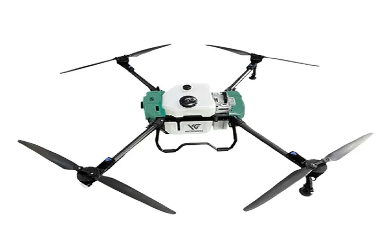
The number of acres an agriculture drone can spray depends on several factors, including drone type, battery life, tank capacity, and field conditions. On average, most AG drones can spray between 1–10 acres per flight, though high end models may reach more under ideal conditions.
Most commercial agriculture drones are designed to spray efficiently within short flight windows. A typical flight can cover:
1–3 acres for smaller models with limited tank size
5–10 acres for larger models with higher payload and longer battery life
These figures are general estimates; actual coverage can vary based on terrain, wind, crop density, and how frequently the drone needs to refill.
While specific capacity varies by brand and configuration, general patterns include:
Entry level crop sprayer drones: Smaller tanks and lighter electronics may cover 1–3 acres per flight.
Mid range professional models: Equipped with larger tanks and efficient spray systems, these can spray 3–7 acres on a typical battery cycle.
Advanced industrial drones: With high capacity tanks and multiple batteries, these models may cover 8–10+ acres before refueling, especially on flat, obstacle free land.
It’s worth noting that farmers can extend coverage by carrying spare batteries and extra liquid tanks to minimize downtime.
Method | Approx. Coverage | Efficiency | Notes |
Manual Backpack Sprayers | ~0.1–0.5 acres/hour | Low | Labor intensive; slow; uneven coverage |
Tractor Mounted Sprayers | ~15–50 acres/hour | Moderate | Good for large flat fields; soil compaction risk |
AG Drones | ~5–20 acres/hour (with multiple sorties) | High | Fast setup; precise; minimal ground impact |
Key Takeaways:
AG drones may not match tractors in sheer hourly acreage, but they excel in precision, speed of deployment, and lower operating labor.
For irregular fields, steep slopes, or sensitive crops, drones often outperform ground equipment.
AG drones offer substantial advantages in speed, precision, and sustainability, transforming farming operations by reducing resource consumption and environmental impact.
AG drones spray crops quickly and accurately, ensuring even coverage and minimizing chemical waste. Traditional methods often lead to uneven application, but drones use GPS and sensors to target areas precisely.
Faster deployment: Drones can cover 1–10 acres in 15–30 minutes.
Precision: Drones apply chemicals only where needed, reducing waste and improving crop health.
By spraying only the necessary amount of chemicals, drones minimize waste and reduce environmental impact. They prevent runoff and ensure chemicals are applied directly to the crops, safeguarding surrounding soil and water sources.
Less chemical runoff: Drones minimize spillage, helping protect the environment.
Targeted application: They optimize chemical use, supporting sustainable farming practices.
AG drones save significant time and labor costs compared to traditional methods.
Reduced labor costs: Less manual labor is required, cutting operational expenses.
Increased efficiency: Drones cover large areas quickly, allowing farmers to focus on other tasks.
Most AG drones can fly for 20-30 minutes per battery charge, covering 1-3 acres on average before recharging is required.
AG drones are versatile and can spray various crops, including corn, rice, wheat, and even orchards, adjusting to field-specific needs.
Yes, while the initial investment is high, drones reduce labor, chemical costs, and increase spraying accuracy, making them cost-effective over time.
Yes, many AG drones are equipped with dual functions: spraying and crop monitoring (through sensors and cameras for health assessments).
AG drones are transforming the agricultural spraying process by offering faster, more precise application of chemicals, reducing waste, and minimizing environmental impact. Their ability to spray 1-10 acres per flight—depending on model, battery life, and field conditions—makes them a highly efficient tool for modern farmers. By adopting AG drones, farmers can save time, reduce labor costs, and increase overall productivity. As technology continues to evolve, we can expect even greater advancements in drone capabilities, further revolutionizing the farming industry and supporting sustainable agricultural practices for the future.


