 English
Views: 0 Author: Site Editor Publish Time: 2026-03-16 Origin: Site
Agriculture drones are transforming farming by improving efficiency, precision, and sustainability. These unmanned aerial vehicles (UAVs) provide innovative solutions for tasks like crop monitoring, spraying, and planting. However, one of the most important aspects of using an agriculture drone is understanding how long it can fly on a single charge. Flight time directly impacts how effectively drones can perform tasks on large farms. In this article, we will explore the typical flight times of agriculture drones, factors that influence their duration, and strategies to maximize their operational efficiency.
One of the most frequently asked questions by farmers is how long agriculture drones can fly on a single charge. The answer depends on several factors, including the type of drone, its battery capacity, and the environmental conditions in which it is operating.
On average, most agriculture drones can fly for 20 to 30 minutes on a single battery charge. However, this duration can vary depending on the drone's size, payload, and specific use case. Smaller drones designed for lighter tasks, like crop monitoring, may have a flight time closer to the lower end of this range, while larger drones used for precision spraying or seeding may achieve flight times on the higher end.
Small Drones: Entry-level drones or compact models typically have flight times of 15-20 minutes. These drones are often used for simple tasks like field inspection and crop health monitoring.
Medium Drones: Drones in the mid-range category are equipped with more powerful batteries and can achieve flight times of 20-30 minutes, making them suitable for spraying smaller fields or performing multiple passes over the same area.
Large Drones: Larger agricultural drones, which are designed to handle heavy payloads for tasks like large-scale spraying or seeding, can typically fly for 30-45 minutes, depending on their battery size. These drones are ideal for covering larger areas but may require additional battery swaps for extended use.
Several factors influence the flight time of agriculture drones. These variables determine how much time a drone can spend in the air before needing to recharge or swap batteries. Understanding these factors is essential for farmers to make the most efficient use of their drones.
The battery life of an agriculture drone plays a critical role in determining how long it can operate before needing a recharge. Most agriculture drones use LiPo (Lithium Polymer) batteries, which are known for their light weight and high energy density. However, the total flight time is influenced by the battery’s capacity, typically measured in milliampere-hours (mAh) or watt-hours (Wh).
Higher Capacity Batteries: Larger drones or those designed for more demanding tasks can carry higher-capacity batteries, which allow for longer flight durations. However, these batteries also add weight, which can reduce flight time if not managed properly.
Battery Efficiency: The overall energy consumption of the drone is also influenced by its motors, sensors, and other onboard systems. Optimizing battery usage by using energy-efficient components can extend flight time.
The weight of the drone, including the payload it is carrying, can significantly affect flight time. For example, when a drone is used for precision spraying, it must carry a spray tank filled with liquid, which adds weight. The more weight the drone has to carry, the more energy it consumes, which can reduce its flight time.
Empty vs. Loaded Payload: Drones used for tasks such as crop monitoring without a heavy payload will have significantly longer flight times compared to drones that carry spray tanks or other equipment.
Optimal Payload Management: To maximize efficiency, farmers can carefully plan how much weight a drone is carrying, especially during tasks like spraying. Reducing the amount of liquid being sprayed or using lighter materials can help extend flight time.
Weather and environmental conditions have a significant impact on drone flight time. Drones typically perform best in calm weather conditions without strong winds or precipitation. Wind, rain, and temperature fluctuations can reduce battery efficiency and impact flight stability, which in turn shortens the overall flight duration.
Wind Resistance: Strong winds can make it harder for drones to maintain stable flight, requiring more power to remain steady. This can result in reduced flight time.
Temperature: Cold temperatures can cause the battery to lose charge more quickly, while extreme heat can cause the drone's components to overheat, both leading to shorter flight times.
Rain and Humidity: Flying in wet conditions can also reduce battery performance, so it is generally advised to avoid drone operations during or right after heavy rain.
Drones can operate in different flight modes, and some modes are more energy-efficient than others. For example, automated flight paths that are optimized for energy efficiency (such as using waypoints for consistent flight paths) may reduce the amount of power required to fly, thereby extending flight time. On the other hand, manual flying, where the operator controls the drone directly, often consumes more power as it involves continuous adjustments to speed and altitude.
Autonomous Flight: Drones that are programmed to follow pre-set routes or to operate autonomously typically use power more efficiently because they avoid unnecessary movement and adjustments.
Manual Flight: Manual flight, which requires the operator to actively control the drone, can lead to erratic movements and inefficient power use, thus shortening flight time.
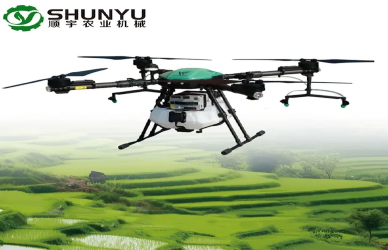
While the flight time of agriculture drones can be affected by various factors, there are ways to maximize their operational efficiency and extend flight durations.
For farmers needing to cover large areas or complete long-duration tasks like spraying or planting, carrying extra batteries is a practical solution. By swapping out depleted batteries for fresh ones, farmers can keep their drones in the air and complete their tasks without needing to stop for an extended recharge.
Battery Charging Stations: On large farms, setting up charging stations where drones can quickly swap batteries can reduce downtime and improve operational efficiency.
Many agriculture drone manufacturers offer fast-charging options that can charge batteries to 80% capacity in under an hour. This means that while one set of batteries is in use, the other can be charging, enabling a faster turnaround time between flights.
To get the most out of drone flight times, farmers can adopt strategies that reduce energy consumption. Some examples include:
Fly during optimal weather conditions to avoid high winds or rain.
Plan efficient flight paths that reduce unnecessary movement and maximize coverage.
Minimize the drone’s weight by using lighter payloads or reducing the amount of liquid being sprayed when possible.
When comparing the flight time of agriculture drones to the operation times of traditional farming equipment, there are notable differences in both efficiency and capabilities.
Traditional tractor-mounted sprayers typically operate for much longer hours on a single tank of fuel and can cover much larger areas. However, they require a significant amount of manual labor and may not be as precise in application as drones. Additionally, tractor sprayers can damage soil due to their heavy weight, which drones do not, making them more eco-friendly in some cases.
Flight Time vs. Operation Time: Drones may have shorter flight times, but they cover specific areas with higher precision and can operate without direct human intervention, making them a valuable tool for precision agriculture.
Manual labor, such as walking through fields with a backpack sprayer, requires a considerable amount of time and effort. While drones might have shorter flight durations, they save considerable time and labor by performing tasks quickly and autonomously.
You can extend flight time by using larger batteries, minimizing payload weight, flying in favorable weather conditions, and using efficient flight paths.
Drones can fly in moderate weather, but strong winds, rain, and extreme temperatures can reduce flight time and affect stability.
Yes, spraying tasks use more power due to the additional weight of liquids and the need for precision, which can shorten flight durations.
Manufacturers are focusing on improving battery efficiency, motor power, and aerodynamics to increase flight times, particularly for larger agricultural drones.
The flight time of agriculture drones typically ranges from 20 to 30 minutes, depending on factors such as battery size, payload, environmental conditions, and flight mode. While drones may not offer the extended operational time of traditional farming equipment, they bring significant advantages in terms of precision, efficiency, and labor savings. By optimizing drone operations, using spare batteries, and taking advantage of fast-charging technology, farmers can extend flight times and maximize their drones' potential.
As drone technology continues to advance, the next generation of agricultural drones may offer longer flight times, more efficient battery systems, and enhanced capabilities that will further revolutionize the agricultural industry.


