 English

Views: 0 Author: Site Editor Publish Time: 2026-11-04 Origin: Site
Unexpected equipment downtime during peak rice harvesting season carries a heavy financial burden. Track failure in deep mud halts operations entirely. You cannot afford to leave crops in the field while waiting for replacement components. Muddy paddy fields present a uniquely hostile environment. They combine high moisture, hidden abrasive debris, chemical residue, and variable soil density. This combination accelerates wear far beyond standard dry-field agricultural use. We will diagnose why current tracks fail under heavy loads. You will learn how to evaluate structural weaknesses in your equipment and identify specific criteria for sourcing durable replacement parts. Understanding these mechanical failures ensures you keep your harvesting fleet moving through the toughest conditions.
Moisture and Contaminants are the Primary Catalysts: Exposed steel cords in muddy, submerged conditions—especially when mixed with saline or chemical fertilizers—lead to rapid oxidation, structural weakening, and catastrophic snapping.
Tension Dictates Lifespan: Operating with improper tension in deep mud causes either excessive undercarriage wear (too tight) or frequent de-tracking and drive lug damage (too loose).
Load and Heat Compound Damage: Overloaded grain tanks in saturated soils, combined with friction-induced heat generated during road transport between fields, degrade the rubber compound and undercarriage prematurely.
Strategic Replacement Sourcing: Selecting the right replacement requires evaluating continuous steel cord construction, specific mud-shedding tread patterns, and verified load ratings that account for true operating weight.
Operating in paddy fields requires a specific set of performance baselines. The tracks must provide maximum flotation to prevent the heavy machine from sinking into saturated soil. They must deliver aggressive traction to push through thick sludge. Furthermore, they require continuous mud evacuation. If mud packs into the tread or the undercarriage, the machine loses traction and gains massive amounts of un-sprung weight. Meeting these success criteria demands specialized engineering. Standard agricultural tracks simply sink and spin in these conditions. You need a wider footprint to distribute the machine's weight. The ground pressure must remain low enough to keep the chassis above the mud line. When the chassis drags in the mud, forward momentum stops. The tracks then have to work twice as hard to pull the machine free, which spikes the hydraulic pressure and stresses the drive motors.
Track failure rarely happens overnight. It begins with localized impact damage. Hidden rocks or hardpan ridges strike the track, causing the outer rubber casing to fall off in chunks. This chunking directly exposes the internal steel cords to the elements. Once the rubber seal breaks, the degradation accelerates rapidly. Prolonged soaking in muddy water acts as a catalyst for structural failure. Paddy water is rarely clean. It contains decaying agricultural crop residue, saline, and harsh chemical fertilizers. This corrosive slurry attacks the exposed steel. Rust forms and expands, pushing more rubber away from the core. The internal steel cording loses its tensile strength. Eventually, the weakened cables snap under the torque of the drive sprocket, resulting in catastrophic track failure. High-quality Harvester Rubber Tracks utilize specialized bonding agents to resist this initial chunking. The vulcanization process must fuse the rubber directly to the steel cables to prevent water from wicking along the cords.
Mud is not just wet dirt. In a paddy field, mud acts as a highly abrasive grinding paste. As the track rotates, this paste forces its way between the track and the undercarriage components. It grinds against the rollers, idlers, and drive sprockets. This constant friction wears down the metal surfaces and degrades the rubber drive lugs. You will notice the drive lugs rounding off over time. Once they lose their square edge, the sprocket starts to slip.
Hidden debris poses an equally severe threat. Submerged stones, thick roots, or uneven hardpan ridges sit invisibly beneath the mud line. When a heavy harvester rolls over these obstacles, the point-load forces the object into the track. This causes severe slicing and localized impact damage. The rubber compound must possess high tear resistance to survive these invisible hazards. The constant grinding of sand and silt particles physically tears apart the molecular bonds of the rubber matrix, accelerating the wear rate exponentially compared to dry soil operations.
Debris Type | Impact on Track Structure | Visible Warning Signs |
|---|---|---|
Submerged Rocks | Punctures the outer casing, exposing steel cords. | Deep gouges, missing chunks of rubber on the tread face. |
Hardpan Ridges | Causes extreme localized flexing and internal heat buildup. | Cracking at the base of the tread lugs. |
Thick Roots/Stumps | Forces the track off the idler, causing derailment. | Torn or completely sheared internal drive lugs. |
Abrasive Sand/Silt | Grinds down the drive lugs and undercarriage metal. | Rounded drive lugs, excessive track slack, worn sprockets. |
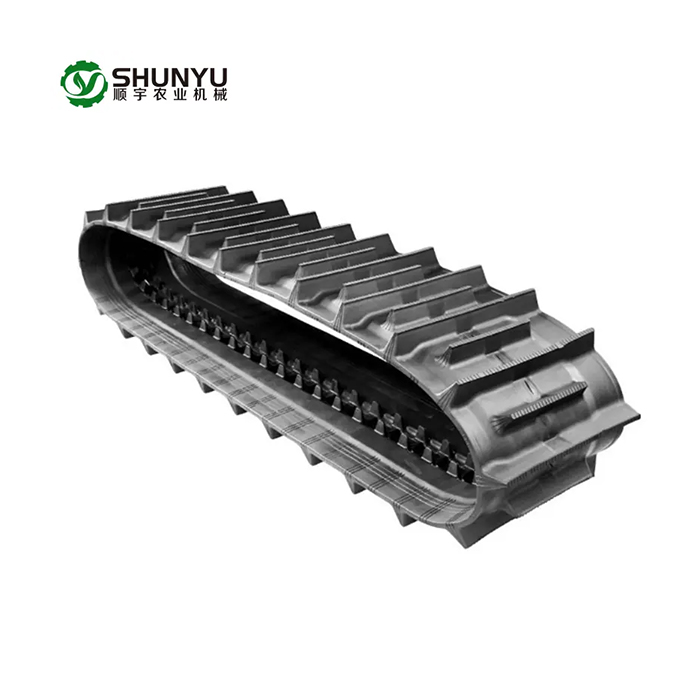
Tension dictates the operational lifespan of your tracks. Running tracks too tight places excessive strain on the entire undercarriage system. The recoil spring compresses fully, leaving no room for shock absorption. This accelerates roller wear and destroys bearings. More importantly, overtensioning stretches the internal steel cables beyond their elastic limit. Once stretched, the cables lose their structural integrity. You will notice the track constantly requiring readjustment as it elongates. The grease valve mechanism used to adjust tension will eventually max out, leaving you unable to tighten the track further.
Conversely, running tracks too loose creates immediate operational hazards. Loose tension leads to frequent derailment in deep mud. When turning, lateral forces push the loose track off the idler wheels. Furthermore, a loose track causes ratcheting. The drive sprocket slips over the internal drive lugs instead of engaging them. This slipping action tears the drive lugs completely off the track carcass, rendering it useless. You must measure the sag with a straight edge laid across the top rollers. Measure the distance from the bottom of the straight edge to the top of the track tread. Adjust the grease cylinder until this measurement matches the manufacturer's exact specification.
Weight distribution changes drastically as the harvest progresses. A full grain tank adds thousands of pounds to the machine. This weight shifts the center of gravity toward the rear of the harvester. The physics of this weight transfer severely impact track performance in saturated soils. The machine no longer floats evenly across the mud surface.
The shifted center of gravity increases the point-load on the rear bogie wheels and the rear section of the track. Instead of distributing the machine's weight evenly across the entire footprint, the rear digs into the soft mud. This uneven load causes the rear of the track to flex aggressively. The excessive flexing generates internal heat and accelerates wear on the rear undercarriage components. Operators must account for this dynamic weight shift when operating in deep mud. You should unload the grain tank more frequently in exceptionally soft fields to maintain an even weight distribution and prevent the rear from sinking.
Operator technique heavily influences track longevity. Frequent in-situ, or zero-radius, turning in thick mud applies massive shearing forces to the track. The mud acts as a suction cup against the wide rubber footprint. Forcing the machine to pivot against this resistance tears the tread lugs and places extreme lateral stress on the internal cords. You should always execute wide, sweeping turns whenever possible. Keep the machine moving forward while turning to reduce the lateral friction.
Road travel presents a different, yet equally destructive, challenge. Driving a combine harvester rubber track on hard asphalt between fields causes severe thermal degradation. Harvesters lack suspension systems, meaning the tracks absorb all road friction. This friction generates excessive heat. Rubber acts as an insulator, trapping the heat internally. The elevated temperatures soften the rubber compound. When the machine returns to the field, the softened rubber is highly susceptible to chunking and slicing. This heat also leads to the premature deterioration of undercarriage wheels and bearings. Transport the harvester on a flatbed trailer for any distance over a few miles to preserve the track compound.
Selecting the right replacement components requires mapping specific track features to their operational benefits. You must look beyond basic dimensions and evaluate the engineering designed specifically for paddy fields. Every design choice impacts flotation, traction, and durability. You cannot simply buy the cheapest option and expect it to survive a wet harvest. The engineering tolerances required for deep mud are significantly tighter than those for dry soil.
Tread design dictates how well the machine moves through mud. You must choose between high-flotation patterns and aggressive traction patterns based on your specific soil conditions. High-flotation treads feature wider, flatter lugs that keep the machine on top of the mud. Aggressive traction treads feature deeper, angled lugs designed to dig down to harder soil bases.
Self-cleaning tread designs are mandatory for rice harvesting. These patterns feature specific angles and spacing that force mud outward as the track flexes around the idler wheels. This prevents mud packing. Packed mud fills the voids between the lugs, turning the track into a smooth belt. This eliminates traction and adds massive rotational weight to the drivetrain. Look for tread patterns with a distinct V-shape or staggered lug arrangement. These designs actively push the mud out to the sides as the track rolls forward, keeping the tread face clear and maintaining maximum grip.
The internal construction of the track determines its tensile strength. Older track designs utilize overlapping steel cords. The manufacturer joins the ends of the cables with an overlapping splice. Under high-torque conditions, this splice acts as a weak point. The overlapping joint frequently separates, causing the track to snap.
Modern heavy-duty tracks utilize continuous steel cord technology. The manufacturer winds a single, continuous steel cable throughout the entire circumference of the track during the vulcanization process. This eliminates the overlapping joint entirely. Continuous cords are a mandatory specification for heavy-duty harvesting. They distribute tension evenly and prevent joint separation under extreme loads. The winding process ensures that the steel core acts as a single, unified structural element rather than a collection of spliced wires.
Feature | Continuous Steel Cord Technology | Overlapping Cord Technology |
|---|---|---|
Structural Integrity | High. Single wound cable eliminates weak points. | Low to Moderate. Splice creates a natural failure point. |
High-Torque Resistance | Excellent. Distributes load evenly across the track. | Poor. High torque frequently causes joint separation. |
Suitability for Deep Mud | Mandatory. Withstands the suction and heavy loads of paddy fields. | Not recommended. High failure rate in saturated conditions. |
Rubber manufacturing involves complex chemical trade-offs. The compound must be hard enough to resist chunking and slicing from hidden stones. However, if the rubber is too hard, it becomes brittle. Brittle rubber cracks under heavy loads and cold temperatures.
The ideal compound balances tear resistance with flexibility. It must flex around the sprockets without cracking, while maintaining a tough outer shell to deflect debris. When sourcing rice combine harvester parts, inquire about the specific vulcanization process and the ratio of natural to synthetic rubber used in the casing. Natural rubber provides the necessary flexibility, while synthetic additives increase resistance to cuts and chemical degradation. A high-quality compound will feel firm to the touch but will not show micro-cracking when bent aggressively.
Procurement decisions should never rely solely on the initial purchase price. You must evaluate the long-term operational efficiency of the component. A cheaper track that fails mid-harvest costs significantly more in lost crop yield and emergency labor than a premium track that lasts multiple seasons. Guide your purchasing logic by comparing upfront costs against the expected lifecycle value and durability in muddy conditions. Factor in the cost of downtime. If a cheap track breaks, the machine sits idle, and the harvest window closes.
The market offers both original equipment manufacturer (OEM) parts and aftermarket alternatives. Evaluating aftermarket tracks requires a strict comparison against OEM specifications. Do not assume all aftermarket tracks are inferior, but verify their construction details.
Investing in premium OEM FM WORLD harvester spare parts ensures exact fitment and verified compound quality. OEM parts undergo rigorous field testing specifically for the machine they fit. High-tier aftermarket alternatives can offer excellent value, provided they feature continuous steel cords and matched load ratings. Avoid budget aftermarket options that use overlapping cords or generic rubber compounds. They will not survive a single season in deep mud.
Never purchase a track without verifying its load rating. You must read the manufacturer's load index charts and match them to your specific harvester's true operating weight. This true weight includes the base machine, a full grain tank, and the added weight of packed mud on the undercarriage. Wet mud clinging to the chassis can add hundreds of pounds to the operational weight. Undersized tracks will fail rapidly. The internal cords will stretch, and the rubber will overheat.
Review the warranty terms carefully. A standard warranty should cover manufacturer defects, such as premature cord separation or improper vulcanization. Understand what actions void the warranty. Most manufacturers will void claims if they detect improper tensioning, damage from excessive road-travel abuse, or signs of derailment caused by operator error. Take photos of your undercarriage and tension measurements upon installation to document proper setup.
Installing new tracks does not guarantee longevity if you ignore maintenance. Post-purchase protocols are necessary to ensure the new components reach their maximum lifespan. Proper implementation mitigates the risks of early failure and protects your investment. You must train your operators on the specific requirements of rubber tracks, emphasizing the dangers of zero-radius turning and excessive road travel.
Implement a strict daily maintenance checklist. You must pressure-wash the undercarriage at the end of every shift. Remove all mud, unclean crop residue, and saline deposits. Leaving this corrosive mixture on the machine overnight accelerates the chemical degradation of the rubber and rusts the exposed metal components.
Inspect the entire track surface for deep cuts or exposed steel.
Check between the drive lugs for trapped stones or hardened mud.
Measure track sag regularly on a flat, solid surface using a straight edge.
Adjust tension strictly according to OEM recommendations to prevent excessive wear.
Grease all undercarriage fittings to push out intruding moisture and protect the bearings.
Verify that all idler wheels spin freely and show no signs of flat-spotting.
Improper storage destroys tracks faster than field work. When the harvest ends, prepare the machine for long-term inactivity. Clean the tracks thoroughly to remove all chemical residues. Store the harvester in a cool, dark environment. Direct sunlight accelerates UV degradation, causing the rubber to turn gray and crack.
Keep the tracks away from ozone-producing equipment, such as electric motors or arc welders. Ozone exposure causes rapid dry rot and deep cracking in the rubber compound. Finally, release the track tension slightly during long periods of inactivity. Block the machine up on heavy-duty stands to take the weight off the tracks entirely. This prevents the internal steel cords from stretching permanently and stops the rubber from developing flat spots while sitting idle.
Conduct a thorough visual inspection of your current tracks for exposed steel, chunking, or missing drive lugs before the harvest begins.
Measure and adjust your track tension using a straight edge according to the manufacturer's exact specifications.
Consult with a certified supplier to source specialized components engineered specifically for deep mud environments.
Implement a mandatory daily pressure-washing protocol for all undercarriage components to remove corrosive saline and chemical residues.
Block up the harvester on heavy-duty stands and release track tension during off-season storage to prevent dry rot and cord stretching.
A: In wet, muddy paddy fields, high-quality tracks typically last between 1,200 and 1,800 hours. This is significantly lower than the 2,500+ hours seen in dry agricultural use. Abrasive mud, saline water, and hidden debris accelerate wear and reduce the overall lifespan.
A: Look for visual cues such as the outer rubber falling off in chunks. Exposed internal steel cords are a critical warning sign. Deep cracking along the tread base, missing internal drive lugs, and a sudden inability to maintain proper tension also indicate imminent failure.
A: Track tension is measured by the amount of sag between the undercarriage rollers. While the general rule of thumb is 1 to 2 inches of sag, you must follow specific manufacturer guidelines. Over-tightening causes severe undercarriage wear, while loose tracks lead to derailment.
A: No. Once the internal steel cords are exposed to moisture, rust begins immediately. Rust expands and weakens the structural integrity of the cables. Structural failure becomes inevitable, and you must replace the track entirely to avoid unexpected downtime.
A: Derailment occurs when tracks run with loose tension. Mud packs into the undercarriage, altering the effective circumference of the track. When the operator executes a sharp turn, lateral forces push the loosely tensioned track completely off the idler wheels.
A: Cross-compatibility depends entirely on exact dimensional matching. You cannot assume parts are interchangeable. Before purchasing, you must accurately measure the track pitch, overall width, and total link count to ensure safe and proper fitment on different combine brands.


