 English
Views: 0 Author: Site Editor Publish Time: 2026-09-23 Origin: Site
High-moisture, deep-mud paddy environments exert extreme mechanical stress on harvester undercarriages. Track reliability directly drives harvest efficiency. Operating heavy machinery in flooded fields requires specialized equipment built to handle constant exposure to water, abrasive soil, and dense crop stubble. Since the first specialized rice harvester rubber tracks appeared in 1968, the technology has evolved to meet modern agricultural demands. Premature track degradation, pin snapping, or derailing in deep mud causes catastrophic downtime during narrow harvest windows. When a track fails in the middle of a flooded paddy, recovery is difficult and labor-intensive. This leads to immediate crop loss and inflated maintenance overhead. Selecting the right replacement components requires moving beyond basic dimensional matching. You must evaluate material composition, joint structure, and specific tread geometries designed for wetland agriculture. Understanding the structural integrity of these parts ensures your machinery remains operational when you need it most.
Material Integrity Dictates Lifespan: Optimal tracks utilize a specific ratio of premium natural to synthetic rubber to balance flexibility in mud with resistance to stubble punctures and abrasive wear.
Structural Architecture Matters: Seamless or advanced overlapping joint structures combined with continuous steel cords prevent the most common failure point: track snapping under heavy torque.
Application-Specific Geometry: Paddy fields require specialized high-lug, self-cleaning tread patterns to maximize flotation and traction while minimizing soil compaction.
Understanding component-level architecture is necessary to evaluate the structural integrity of replacement parts. When you inspect Rubber Track Parts, you are looking at a complex system engineered for harsh conditions. Every layer serves a specific purpose, from resisting punctures to transferring torque from the drive sprocket to the ground. Field mechanics know that a track is only as strong as its weakest internal bond. The manufacturing process involves precise temperature controls and chemical bonding agents to ensure the steel, iron, and rubber act as a single cohesive unit under extreme stress.
The internal construction determines how well the track handles heavy loads and constant flexing in unpredictable terrain. A failure in any of these core layers compromises the entire assembly.
Rubber Compound: The outer layer protects the internal structure from environmental damage. It requires a precise blend of premium natural and synthetic rubber. Natural rubber provides essential flexibility for bending around rollers and idlers without cracking. Synthetic rubber, such as styrene-butadiene rubber (SBR) or polybutadiene, adds high abrasion resistance and chunking resistance against sharp rocks and tough crop stubble. The vulcanization process bonds these materials under immense heat and pressure, creating a durable shield that resists tearing.
Continuous Steel Cords: This forms the internal tensile backbone of the track. High-tensile steel cables are wound continuously throughout the rubber casing. This design prevents track elongation and snapping under heavy loads. The cords are often coated with brass to ensure maximum adhesion to the surrounding rubber during the curing process. This brass coating also provides a layer of oxidation resistance. If a deep cut allows moisture to penetrate the rubber casing, the brass prevents the steel cables from rusting and snapping prematurely.
Forged Iron Cores (Metal Links): These are embedded directly within the rubber compound. They engage the drive sprocket to propel the machine forward. These cores must resist bending under extreme torque and withstand corrosion in constantly wet environments. Drop-forged iron is vastly superior to cast iron in this application, as the forging process aligns the grain structure of the metal, providing significantly higher shear strength. The spacing and profile of these cores dictate how smoothly the machine operates and how effectively torque is transferred.
Component Material | Primary Function | Failure Consequence |
|---|---|---|
Natural Rubber Blend | Provides flexibility and prevents cracking around idlers. | Dry rot, deep surface cracking, and eventual moisture penetration. |
Synthetic Rubber (SBR) | Resists abrasion, cuts, and chunking from field debris. | Rapid tread wear, exposed internal cables, and loss of traction. |
Brass-Coated Steel Cords | Maintains tensile strength and prevents track elongation. | Track snapping under heavy torque, complete loss of mobility. |
Forged Iron Cores | Engages drive sprocket and supports machine weight. | Core pull-out, sprocket damage, and track derailing. |
The external components interact directly with the terrain and the machine's undercarriage, taking the brunt of the physical abuse during harvesting operations.
Track Shoes/Lugs: The external tread dictates traction and flotation. In paddy environments, these lugs are subjected to constant friction from mud, water, and abrasive sand particles suspended in the flooded fields. The geometry of the lug determines how effectively the machine can navigate soft soil without sinking. Staggered lug patterns are often utilized to provide a smoother ride on hardpan while maintaining aggressive bite in the mud.
Track Pins: These connecting elements endure high shear forces. They link the internal structures together, allowing the track to articulate around the undercarriage. Evaluating pin metallurgy is necessary for preventing track separation. High-carbon steel is typically used to prevent snapping when the track binds in deep mud. Heat treatment processes are applied to the pins to harden the outer surface against wear while keeping the inner core ductile enough to absorb shock loads without fracturing.
How specific track features translate to operational outcomes in wetland environments determines whether you finish the harvest on schedule. Paddy fields present unique challenges that standard agricultural equipment simply cannot handle. The combination of standing water, deep mud, and hidden obstacles requires a highly specialized approach to undercarriage mechanics.
Preventing a multi-ton harvester from sinking into flooded soil requires precise ground pressure management. If the machine breaks through the hardpan, recovery operations can take days.
Evaluate track widths relative to machine weight. Common widths for rice harvesters include 300mm, 450mm, and 500mm. A wider track increases the surface area in contact with the ground, lowering the overall ground pressure measured in kilopascals (kPa). For deep mud applications, maximizing width is the most effective way to keep the machine afloat.
Distribute weight evenly across the track footprint. The undercarriage rollers must distribute the machine's weight evenly across the iron cores. If weight is concentrated too heavily on the front due to a heavy header, or on the rear due to a full grain tank, the machine will pitch downward, increasing the risk of getting stuck.
Monitor mud depth and hardpan conditions. The distance between the soft top mud and the solid hardpan below dictates how much flotation you actually need. Operators must constantly assess field conditions, as a field that supports a 450mm track in the morning may require a 500mm track after heavy afternoon rains.
Calculate the contact area accurately. Ground pressure is simply the operating weight of the machine divided by the total contact area of the tracks. Upgrading to a track that is just 50mm wider can reduce ground pressure by up to 15%, making a massive difference in marginal field conditions.
Moving through thick mud requires a tread pattern that actively expels debris with every revolution. A clogged track is a useless track.
Analyzing lug height and angle reveals how well the track evacuates mud. High-lug designs bite deep into the hardpan beneath the soft mud to find traction. The angle of the lugs is engineered to push mud outward away from the center of the track as the machine moves forward. This self-cleaning action ensures that the next lug hitting the ground has a clean surface to bite into.
Standard agricultural treads fail in rice paddies because they lack this aggressive geometry. They clog easily with sticky mud and crop residue. Once the spaces between the lugs are packed with debris, the track becomes a smooth belt, leading to a complete loss of traction and forward momentum. The machine will simply spin its tracks, digging itself deeper into the mud.
The spacing between the lugs, known as the pitch of the tread, also plays a role in mud evacuation. Wider spacing allows thick, clay-heavy mud to fall away more easily, whereas tight spacing is better suited for sandy or dry soils where clogging is less of a concern.
Smooth operation protects both the machine and the operator from cumulative stress. Excessive vibration tears machines apart over time.
Optimized iron core spacing and adequate rubber thickness dampen vibration as the track rolls over hard surfaces or compacted soil. When the drive sprocket engages the iron cores, it naturally creates a harmonic vibration. The rubber casing acts as an isolator, absorbing this energy before it travels up into the chassis.
Dampening this vibration protects sensitive internal harvester components, such as sieves, augers, and hydraulic fittings. Constant shaking causes metal fatigue, loosens bolts, and leads to premature failure of electronic sensors. By reducing vibration at the source, you extend the overall service life of the machine and reduce the frequency of structural repairs.
Reduced vibration also minimizes operator fatigue during long harvesting shifts. A smoother ride allows the operator to maintain focus, monitor header height more accurately, and operate the machine safely for extended periods.
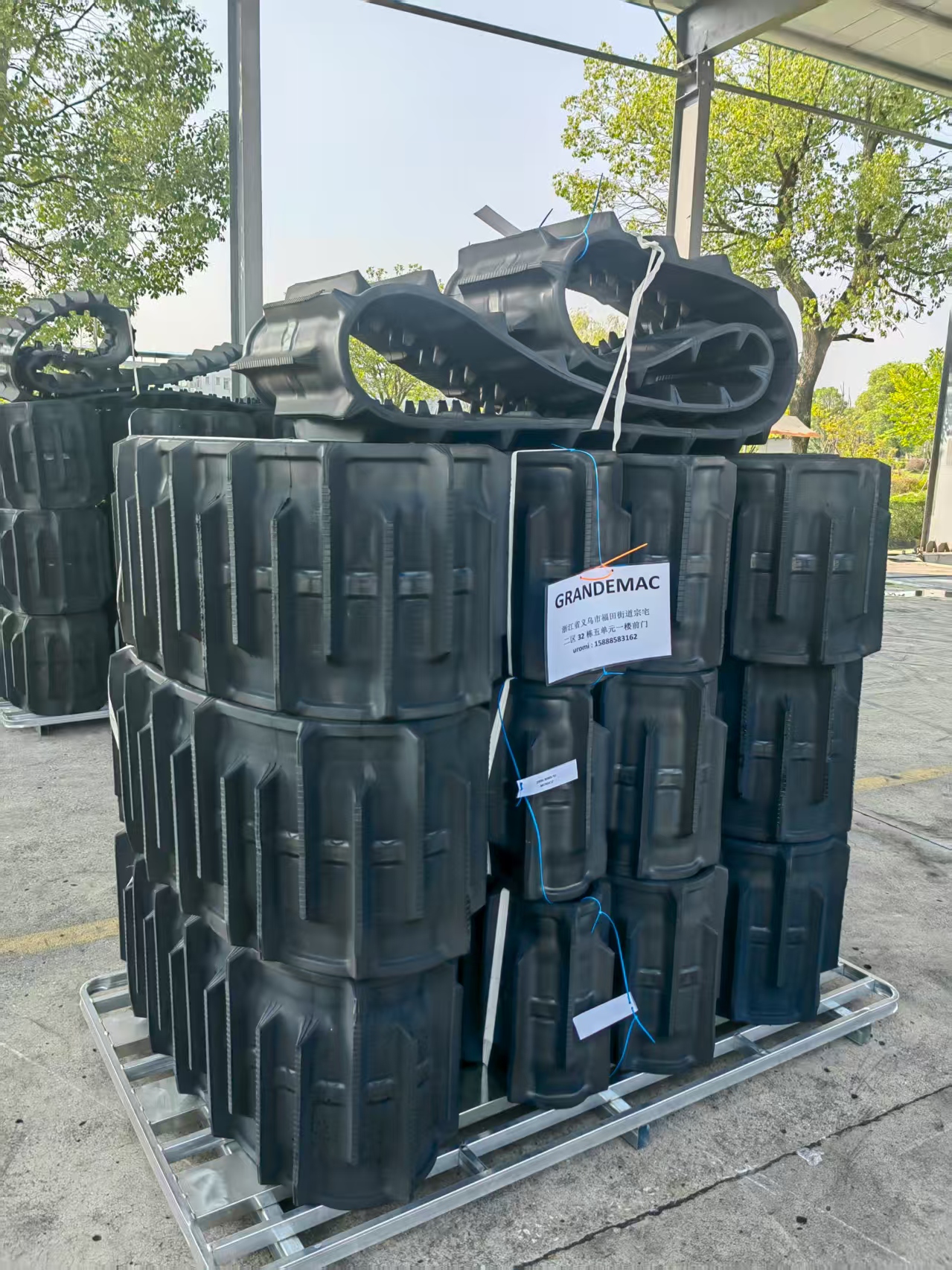
Navigating the procurement landscape for replacement components requires attention to detail. Sourcing reliable rice combine harvester parts ensures your fleet remains operational during critical harvesting windows. You must verify specifications meticulously to avoid installing incompatible components that could damage your undercarriage.
Ordering the correct size is non-negotiable for undercarriage performance and safety. A track that is slightly off-spec will cause severe mechanical issues.
The formula for track sizing is straightforward: Width (mm) × Pitch (mm) × Number of Links. For example, a 500x90x56 track is 500mm wide, has a 90mm pitch, and contains 56 internal links. You must verify all three measurements before ordering. Never assume the size based on the machine model alone, as previous owners may have modified the undercarriage.
Operating with incorrect pitch measurements carries severe risks. The pitch is the exact distance from the center of one iron core to the center of the next. If the pitch is even slightly off, the drive sprocket will not mesh correctly with the iron cores. This causes rapid sprocket wear, excessive vibration, and increases the likelihood of the track derailing under heavy loads.
Measuring pitch in the field requires precision. Use a high-quality caliper or a steel tape measure. Measure across at least five links and divide by five to get an accurate average, as worn tracks can stretch slightly, throwing off a single-link measurement.
The manufacturing method of the internal steel cords dictates the track's tensile strength and its ability to withstand sudden shock loads.
Overlapping Joints represent traditional manufacturing. The steel cords are overlapped and vulcanized together at a specific point. Premium overlapping structures offer distinct advantages in flexibility and wear resistance for specific terrains, provided the vulcanization process is tightly controlled to prevent delamination.
Seamless or Continuous Cable Technology is the industry standard for heavy-duty applications. A single, continuous steel cable is wound throughout the track, eliminating the weak point of a physical joint. This provides maximum tensile strength and significantly reduces the risk of the track snapping when subjected to sudden, high-torque loads in deep mud. When a harvester gets bogged down, the operator will naturally apply maximum torque to power out; a seamless track is built to handle this exact scenario without breaking.
Matching parts to your specific machine ensures seamless integration and reliable performance across your entire fleet.
Evaluate aftermarket components carefully for major platforms like Kubota, Yanmar, Komatsu, Volvo, and Wubota. Ensure the lug pattern matches the specific soil conditions of your region. A tread pattern designed for the sandy soils of one region may perform poorly in the heavy clay paddies of another.
Assess the reliability and integration of FM WORLD harvester spare parts for mixed-fleet operations. Standardizing your replacement parts across a diverse fleet simplifies maintenance protocols and inventory management. Mechanics can work faster when they are familiar with a consistent set of components.
Navigating direct-from-manufacturer options benefits fleet managers requiring bulk replacements. Working directly with manufacturers often provides access to custom tread patterns and heavy-duty rubber compounds tailored to specific harvesting environments. It also ensures a direct line of communication for technical support and warranty claims.
Operational protocols maximize the lifespan of newly installed combine harvester rubber track components. Proper installation and ongoing maintenance are just as important as the quality of the parts themselves. Neglecting basic maintenance will destroy even the highest-quality tracks in a matter of weeks.
Track tension must be monitored constantly, especially during the first 50 hours of operation as the new rubber breaks in and the steel cables settle.
Lift the machine off the ground using the hydraulic headers or heavy-duty jacks. Ensure the machine is completely stable before getting underneath it.
Measure the distance between the bottom center roller and the inside of the track. This measurement is known as track sag.
Adjust the tension grease cylinder by pumping in heavy-duty grease until the sag matches the manufacturer's recommended tolerance. This is typically between 15mm and 25mm depending on the machine size.
Roll the track forward one full revolution and measure again to ensure the tension has settled evenly across all the iron cores.
Monitor for over-tensioning. Over-tensioning causes premature cable snapping and excessive roller wear. It puts unnecessary stress on the hydraulic tensioning cylinder and the front idler bearings, leading to blown seals and bearing failure.
Monitor for under-tensioning. Under-tensioning leads to derailing in deep mud. When the track is too loose, mud and debris pack between the track and the idler, forcing the track off the guide rails.
Regular visual inspections prevent catastrophic failures in the field. Catching a problem early allows you to schedule maintenance during planned downtime rather than suffering a breakdown mid-harvest.
Wear Pattern | Primary Cause | Recommended Action |
|---|---|---|
Lug Tearing or Chunking | Operating on sharp rocks, concrete, or excessive high-speed roading. | Limit road travel. Inspect fields for large debris before harvesting. |
Edge Cutting | Track misalignment or large debris trapped in the undercarriage scraping the rubber. | Check idler alignment. Clean the undercarriage thoroughly after each shift. |
Exposed Internal Cables | Severe abrasion or failure of the rubber compound bonding. | Immediate replacement required. The track is structurally compromised and will snap. |
Iron Core Corrosion | Prolonged exposure to acidic paddy mud without proper cleaning. | Implement strict post-harvest washing protocols. Inspect sprocket engagement. |
Uneven Tread Wear | Bent undercarriage frame or seized rollers dragging on the track. | Inspect and replace seized rollers. Verify frame alignment. |
Star Cracking around Cores | Excessive flexing from under-tensioning or operating over large obstacles. | Correct track tension immediately. Avoid driving over large levees at high speed. |
How you store the machine during the off-season significantly impacts track longevity. Rubber degrades over time, especially when exposed to harsh environmental conditions.
Mitigate dry rot and UV degradation by storing tracks indoors or under a heavy-duty cover. Direct sunlight breaks down the chemical bonds in the rubber, causing it to become brittle and crack. Ozone exposure from electric motors or welding equipment in the shop can also accelerate rubber degradation.
Implement proper cleaning protocols. Remove corrosive mud, agricultural chemicals, and crop residue thoroughly before placing the machine in storage. Use a high-pressure washer to clean out the entire undercarriage, paying special attention to the areas around the tensioning cylinders and rollers. Packed mud holds moisture against the metal components, accelerating rust.
Relieve tension on the tracks during long-term storage. Block the harvester up on sturdy wooden blocks to take the weight off the tracks and prevent flat spots from forming in the rubber. This also protects the undercarriage bearings from static load damage. Release the grease from the tensioning cylinder to allow the track to relax completely.
Audit current undercarriage wear immediately to identify failing components before the harvest season begins.
Verify exact track measurements directly from the existing tracks rather than relying solely on the machine's manual.
Consult with a specialized agricultural parts supplier to match tread patterns to specific regional soil conditions.
Implement a strict tensioning schedule during the first 50 hours of operation to account for initial rubber stretch.
A: Measure the width of the track in millimeters. Next, measure the pitch, which is the exact distance from the center of one internal drive lug to the center of the next. Finally, count the total number of internal links or lugs around the inside of the track. These three numbers form the required size format.
A: Lifespan varies heavily based on usage, but high-quality tracks in deep mud typically last between 1,500 and 3,000 operational hours. Abrasive sandy soils, improper tensioning, and extensive travel on paved roads will significantly reduce this expected lifespan by accelerating tread wear.
A: No. Standard dry-field tracks lack the necessary lug height and self-cleaning tread patterns required for deep mud. Using them in a paddy field will result in severe clogging. The track will become completely smooth, leading to a loss of traction and causing the machine to sink.
A: Look for excessive track elongation, which makes proper tensioning impossible. You may also notice unusual clicking or grinding noises from the undercarriage, visible rust and corrosion on the iron cores, or tracks that begin to walk off the idler wheels during turns.
A: Derailing is primarily caused by under-tensioning the track. In deep mud, thick debris can pack into the undercarriage, pushing the loose track off the rollers and idlers. Worn drive sprockets or heavily damaged iron cores also increase the risk of derailing during sharp turns.
A: Wider tracks distribute the machine's weight over a much larger surface area. This lowers the ground pressure, improves flotation, and prevents heavy harvesters from sinking deep into soft, wet paddy soils, ensuring smooth forward momentum.


