 English
Views: 0 Author: Site Editor Publish Time: 2026-10-14 Origin: Site
Unexpected machinery downtime during the peak rice harvest window carries immense operational costs. Crop degradation, weather vulnerabilities, and idle labor quickly erode seasonal profits. Supply chain bottlenecks and reactive maintenance often lead to prolonged equipment grounding. The harvesting season does not wait for replacement parts to be sourced and shipped. It also does not tolerate a sub-par part failing twice. Implementing a proactive, data-driven procurement strategy is an absolute necessity. You need a reliable framework for evaluating, shortlisting, and stockpiling critical components before the harvest window opens. This guide details how to identify high-wear items, evaluate material quality, and build a resilient inventory system. You will learn how to keep your machinery running at maximum efficiency when it matters most.
Prioritize High-Friction Components: Rice crops contain high levels of silica, accelerating wear on cutting, threshing, and conveying systems at a significantly higher rate than other grains like wheat.
Strategic Stockpiling Reduces Risk: Categorize inventory into Tier 1 (on-farm essentials like belts and blades) and Tier 2 (regional supplier-dependent parts) to optimize capital and readiness.
Material Quality Outweighs Initial Cost: Evaluating the metallurgy and tolerance of aftermarket vs. OEM components is critical for preventing cascading mechanical failures.
Supplier Reliability is a Feature: Partnering with suppliers who guarantee peak-season availability and technical support directly impacts harvest profitability.
Every hour a harvester sits idle translates directly to lost revenue. Yield loss accelerates rapidly once crops reach peak maturity. When rice hits the optimal moisture content of 20 to 25 percent, it needs to come off the field immediately. Weather events can flatten unharvested rice, making recovery nearly impossible and drastically reducing the milling quality. You must weigh the daily cost of a grounded machine against standard inventory holding costs. Tying up capital in spare parts might seem inefficient initially. However, missing a tight harvest window is far more expensive. A well-planned inventory acts as an insurance policy against catastrophic delays.
The run-to-failure maintenance approach is fundamentally flawed. Reactive maintenance is incompatible with modern rice farming demands. Waiting for a component to break guarantees downtime during your busiest season. This approach also introduces the dangerous fail-twice scenario. Rushing to buy a replacement often means settling for cheap, unverified components from the nearest available source. Installing substandard parts leads to repeated breakdowns of the same system. A cheap bearing failure can destroy an entire drive shaft, turning a minor one-hour repair into a multi-day overhaul that requires pulling the machine out of the mud.
A successful procurement strategy requires strict performance metrics. You should aim for zero days lost to Tier 1 part failures. On-site inventory must cover all predictable wear items before the first field is cut. Tier 2 parts require sub-24-hour sourcing from reliable regional partners. Maximizing component lifespan is another core metric. You achieve this by selecting parts engineered specifically for harsh, wet environments. Success means your machines stay in the field cutting rice, not sitting in the shop waiting for delivery trucks.
Maintenance Approach | Inventory Strategy | Downtime Risk | Operational Impact |
|---|---|---|---|
Reactive (Run-to-Failure) | Order parts only after a breakdown occurs. | High. Machines sit idle for days waiting for shipping. | Severe yield loss, high stress, compromised grain quality. |
Proactive (Predictive) | Stock high-wear items pre-season based on acreage. | Low. Repairs happen in the field within hours. | Maximum harvest efficiency, protected crop value. |
The cutting system takes the first impact of the harvest. Rice stalks are notoriously tough and abrasive. Knife sections and knife fingers experience rapid wear. Serrations on the knife sections grind down quickly due to the high silica content in the plant stem. Smooth blades fail to slice cleanly, causing the header to pull stalks out by the roots. This pulling action leads to root clumping, massive dirt intake, and severe header jams. You must inspect knife sections daily and replace them as soon as the serrations lose their edge.
Blade guides play a critical role in cutting efficiency. They hold the knife assembly tightly against the guards. The clearance here should be minimal, typically around one to two millimeters. Worn blade guides allow the knife to flex upward. This flexing causes the system to chew the crop rather than cut it, increasing the load on the header drive belt. Replacing worn guides ensures a clean cut and prevents binding. Feeding auger blades and auger fingers manage the crop flow. They pull the cut rice into the center of the header. Worn auger fingers slip on wet stalks, causing uneven feeding. Reel teeth must also remain intact to sweep the crop effectively. Missing reel teeth leave valuable grain in the field.
Threshing rice requires aggressive mechanical action. The abrasive nature of rice stalks heavily impacts rasp bars and concaves. Threshing cylinders spin at high speeds to separate grain from the stalk. The clearance between the rasp bar and the concave is precise and dictates the quality of the grain sample. Worn rasp bars increase this clearance, reducing threshing efficiency. This leaves unthreshed grain attached to the straw, blowing straight out the back of the machine. Conversely, compensating by tightening the clearance with worn bars cracks the grain, which lowers your payout at the mill.
Rice environments demand specialized, heavy-duty threshing components. Wheat harvesting is significantly gentler on these systems. Rice machinery requires thicker steel and hardened wear surfaces. You should establish strict baseline replacement intervals. Rasp bars and concaves typically last one to two harvest seasons. This lifespan depends heavily on total acreage and mud levels. High moisture and heavy weed pressure accelerate this wear timeline. Inspect threshing components thoroughly before every season begins, using a feeler gauge to check clearances across the entire width of the cylinder.
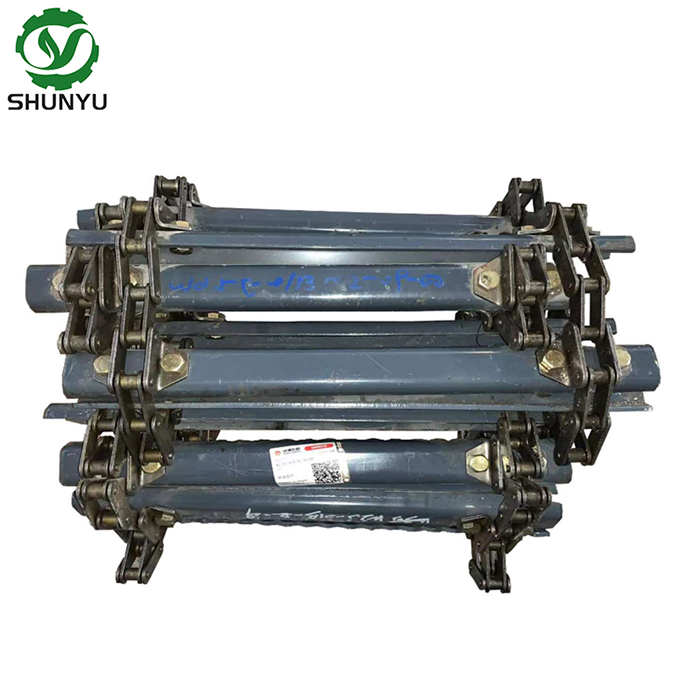
Power transmission systems endure continuous, heavy loads. The harvester conveyor chain pulls massive volumes of wet crop up the feeder house. This chain operates in a highly abrasive, muddy environment. It requires exceptional tensile strength and fatigue resistance. Elongation is the primary enemy of conveyor chains. As the chain stretches, the pitch changes, and it stops engaging the sprockets correctly. This causes jumping, erratic feeding, and a rhythmic thumping sound. A snapped chain mid-harvest causes catastrophic internal damage, often destroying the feeder house floor and bending the front drum.
Drive belts, pulleys, and tensioners transfer power across the machine. Belts suffer from heat degradation and stretching. Continuous heavy loads cause belts to slip and glaze. Glazed belts lose their grip, reducing the efficiency of driven components like the unloading auger or the chopper. Pulleys wear down in the grooves, altering the belt pitch and causing premature belt failure. Tensioners must maintain constant pressure to prevent slippage. Weak tensioner springs allow belts to jump off pulleys when a heavy slug of crop enters the machine. You must replace belts that show any signs of cracking, fraying, or sidewall wear.
Pre-harvest fluid management is non-negotiable. Harvesters operate at maximum engine load for hours on end in high ambient temperatures. You must replace hydraulic oil, engine coolant, and engine oil before the season. Degraded hydraulic oil loses its viscosity, causing sluggish header lifting and weak hydrostatic drive performance in deep mud. Heavy-duty filtration upgrades protect sensitive internal components. Dust and chaff easily bypass cheap filters, destroying engine cylinders and hydraulic pump internals. Use OEM-spec filters to ensure proper micron ratings and flow rates.
Structural wear items directly impact machine stability. Muddy paddy conditions place immense stress on the chassis. Engine damping cushions absorb massive vibrations from the threshing drum and engine block. Worn vibration mounts allow these harmonics to transfer into the frame. This causes structural cracking, loosened bolts, and premature bearing failures across the entire machine. Track and undercarriage components are vital for mobility. Seized undercarriage rollers destroy rubber tracks quickly by grinding away the internal drive lugs. Inspect track tension and roller bearings to ensure reliable traction in wet conditions.
Choosing between OEM and aftermarket parts requires careful analysis. You must compare upfront costs against lifecycle longevity. OEM parts offer exact-fit tolerances and predictable wear rates. They also typically include comprehensive warranty coverage. Premium aftermarket parts can offer similar performance at a lower price. However, budget aftermarket parts present a massive risk. They often lack the dimensional accuracy required for complex machinery, leading to installation struggles and premature failure.
Certain components demand strict OEM compliance. Hydraulic pumps, engine internals, and hydrostatic drives require exact specifications. A slight variance in a hydraulic valve causes complete system failure or erratic machine behavior. High-tier aftermarket parts often suffice for standard consumables. Standard belts, hardware, and basic bearings can be sourced aftermarket safely. You must vet the aftermarket manufacturer's quality control processes. Never compromise on parts that govern the core functionality of the machine.
Material science dictates the lifespan of agricultural components. You must evaluate the metallurgy of replacement parts carefully. Look for heat-treated steel in all cutting and threshing components. Heat treatment hardens the steel, resisting the abrasive silica in rice. Tungsten carbide coatings offer superior wear resistance for extreme friction points. These coatings significantly extend the life of knife sections, rasp bars, and auger flighting.
Moisture-induced corrosion is a constant threat in rice paddies. Specialized alloys help combat rust and structural degradation. Bearings must feature high-quality, triple-lip seals to keep mud and water out. Cheap steel bends under load and rusts quickly in damp conditions. Always ask suppliers about the Rockwell hardness rating of their cutting parts. Higher hardness ratings translate directly to fewer mid-season replacements and cleaner cuts.
Standardizing your machinery ecosystem simplifies maintenance and procurement. Mixing parts from dozens of random manufacturers creates compatibility headaches. Leveraging established brand networks ensures consistent part geometry. For example, standardizing around FM WORLD harvester spare parts streamlines your entire operation. You gain predictable wear cycles across the entire machine, allowing you to schedule preventative maintenance accurately.
Ecosystem compatibility also improves technical support access. Dealerships can diagnose issues faster when dealing with standardized components. Parts bins become more organized when you stick to one ecosystem. You avoid the frustration of slightly mismatched thread pitches, incorrect belt lengths, or mismatched hydraulic fittings. Consistent geometry means repairs happen faster in the field. This standardization directly reduces your overall downtime during the harvest window.
Preparation dictates harvest success. You must execute a structured inspection protocol six to eight weeks prior to harvest. This lead time allows you to identify and order necessary parts without paying exorbitant overnight shipping fees. Start by inspecting the entire header assembly. Check knife sections, guards, and auger fingers for wear. Test all belt and chain tensions across the machine. Look for glazing on belts and stiff links in chains.
Inspect the cutting bar assembly. Check the clearance between the knife sections and the ledger plates. Replace any bent guards.
Evaluate the threshing cylinder. Measure the gap between the rasp bars and the concave at both the front and rear. Look for missing or broken teeth.
Check all power transmission belts. Twist the belts to inspect the sidewalls and the V-groove for cracking or separation.
Test the hydraulic system. Run the machine until the oil is hot, then check the cycle times on the header lift cylinders. Inspect all hoses for abrasion.
Examine the undercarriage. Jack up the machine and spin each track roller by hand. Listen for grinding bearings and check for leaking seal oil.
Effective inventory management requires categorizing parts by urgency. You cannot stock every single component on the farm. You must balance readiness with capital efficiency. Tier 1 parts are mandatory on-site inventory. These are high-wear items that fail predictably and halt operations immediately. Tier 2 parts are larger, expensive components dependent on regional suppliers.
Inventory Category | Definition & Location | Component Examples | Sourcing Strategy |
|---|---|---|---|
Tier 1 | Mandatory on-site. Kept in field service truck or farm shop. | Knife sections, drive belts, fluid filters, chain repair links, blade guides, auger fingers. | Bulk purchase pre-season. Maintain 100% stock levels at all times. |
Tier 2 | Supplier-dependent. Kept at regional dealer or distributor. | Hydraulic motors, complete threshing drums, hydrostatic pumps, main gearboxes. | Verify 24-hour availability with vetted vendors before the season starts. |
Your suppliers are partners in your harvest success. You must evaluate them based on specific performance dimensions. Do not choose vendors based solely on the lowest unit price. Look for suppliers who offer peak-season dispatch guarantees. They must be able to ship critical parts overnight, even on weekends. Evaluate their return policies on unused Tier 1 parts. Good vendors allow you to return unopened stock post-harvest, which frees up your capital for the winter.
Technical diagnostic support is another vendor capability you must assess. Can their representatives help you troubleshoot a hydraulic fault over the phone? Do they understand the specific wear patterns of rice harvesting? A knowledgeable vendor saves you hours of diagnostic guesswork. Shortlist suppliers who demonstrate deep technical expertise, carry massive inventory volumes, and operate reliable logistics networks.
Even the highest quality parts fail if installed incorrectly. Installation errors account for a massive percentage of mid-season breakdowns. Over-tensioning belts destroys pulley bearings rapidly by placing excessive side load on the shafts. Under-tensioning causes slipping, heat buildup, and belt fires. You must require strict adherence to manufacturer torque specifications. Mechanics should use calibrated torque wrenches for all critical fasteners, especially on the threshing cylinder and chopper blades.
Tensioning guidelines are especially critical for conveying systems. A chain that is too tight will snap under heavy crop loads or destroy the top shaft bearings. A loose chain will jump sprockets and cause timing issues. Alignment calibration during installation is equally important. Misaligned pulleys will shred a brand-new drive belt in hours. Train your operators and mechanics to double-check alignment using straight edges or laser alignment tools before engaging the separator.
The agricultural parts market contains many counterfeit components. These parts mimic the appearance of OEM items but lack the proper metallurgy. Installing a counterfeit bearing on a high-speed shaft can lead to catastrophic machine fires. You must establish strict verification protocols for all incoming parts. Check serial numbers and part stamps against manufacturer databases. Inspect the weld quality on structural components, looking for porosity or lack of penetration.
Verifying material weight is a highly effective mitigation tactic. Counterfeit parts often use cheaper, less dense steel. Weighing a replacement part on a gram scale against the OEM specification quickly reveals discrepancies. Lighter parts indicate inferior materials that will bend or shatter under load. Only purchase components from authorized dealers and vetted distributors. Avoid anonymous online marketplaces offering prices that seem too good to be true.
Assuming a repair is successful without testing is dangerous. Post-installation system incompatibility often reveals itself in the field under load. A new hydraulic pump might overwhelm old, weakened hoses, causing them to burst. A new threshing belt might expose a failing tensioner spring that cannot handle the increased grip. You must mandate comprehensive pre-harvest testing protocols. Never send a repaired machine directly into the crop without validation.
Run the harvester at operational RPMs under no-load conditions. Do this in the farmyard before hitting the field. Listen carefully for unusual vibrations, harmonic noises, or belt squeal. Check for hydraulic leaks while the system is under pressure by dead-heading the steering or lift cylinders briefly. Verify that the tracks are aligned and the steering responds smoothly. Identifying tracking issues or leaks early prevents a breakdown in the middle of a muddy paddy.
Proactive procurement of critical Spare Parts for Rice Combine Harvester operations is an investment in yield protection. Waiting for machinery to break during the peak harvest window guarantees massive financial losses. You must transition from reactive repairs to predictive inventory management. Building a robust stockpile of Tier 1 components keeps your machines moving through the toughest field conditions.
Your shortlisting logic must prioritize material durability and exact-fit compatibility. Choosing rice combine harvester parts based solely on the lowest unit price is a false economy. Supplier reliability, dispatch guarantees, and technical support are far more valuable than minor cost savings. High-quality metallurgy ensures your components survive the abrasive silica of rice crops.
Conduct a comprehensive pre-season machine audit using the provided checklist to identify worn components.
Categorize your current inventory gaps into Tier 1 on-site requirements and Tier 2 supplier-dependent needs.
Request technical quotes and availability guarantees from vetted suppliers immediately.
Organize your on-site parts bins and service trucks so operators can execute field repairs instantly.
A: Abrasive rice conditions often necessitate replacement every 1-2 seasons. You should monitor specific wear indicators carefully. Measure the elongation percentage of the chain. If it stretches beyond the tensioner's limit, replace it immediately. Also, inspect the rollers for severe wear or flat spots, which cause erratic feeding and sprocket damage.
A: Reliability depends entirely on the manufacturer's metallurgical standards and quality control. Premium aftermarket parts can match OEM performance and longevity. However, budget aftermarket options risk catastrophic failure and repeated downtime. Always verify that aftermarket parts use heat-treated steel and exact-fit dimensional tolerances before installation.
A: You must keep Tier 1 field-replaceable items on site. The top priorities include knife sections, blade guides, drive belts, and auger fingers. You should also stock fuel filters, hydraulic filters, and chain repair links. Having these parts in the service truck prevents hours of unnecessary downtime.
A: Rice stalks contain high levels of silica, which acts like sandpaper on moving metal parts. This abrasive nature rapidly degrades cutting blades, augers, and threshing components. Additionally, rice is typically harvested in muddy, wet conditions. This introduces abrasive mud into the tracks, chains, and bearings, accelerating overall machine wear.
A: Inspect the weight and thickness of the blade against OEM specifications. High-quality blades use heat-treated steel or tungsten carbide coatings. Check the serrations for sharpness and uniformity. If a blade feels unusually light or bends easily under pressure, it is likely made from inferior steel and will dull quickly.


