 English

Views: 0 Author: Site Editor Publish Time: 2026-10-28 Origin: Site
Equipment failure during peak harvest windows carries a heavy operational penalty. When weather conditions dictate a tight schedule, every hour a machine sits idle in the field translates directly to significant yield degradation. Fleet managers and farmers constantly face a difficult trade-off when maintaining their equipment: wait for original equipment manufacturer (OEM) replacements to arrive or risk the inconsistent quality often found in third-party alternatives.
Sourcing reliable Aftermarket Parts for FM WORLD Harvesters requires moving beyond basic visual inspections and sales pitches. You need a rigorous technical evaluation framework. Assessing aftermarket components based on metallurgy, dimensional accuracy, and crop-specific wear factors—such as the highly abrasive nature of rice harvesting—ensures you select parts that deliver long-term operational stability rather than just immediate availability.
Material Specifications Dictate Lifespan: Hardened steel, specific alloy compositions, and advanced rubber compounding are non-negotiable for high-wear components operating in harsh conditions.
Component-Specific Scrutiny is Required: High-stress parts like the WORLD combine harvester rubber track and conveyor chains require distinct evaluation criteria compared to static structural parts.
Supplier Sourcing Models Matter: Differentiating between direct manufacturers and third-party trading companies is critical for ensuring consistent quality control and reliable export logistics.
Compatibility is a Primary Risk Factor: Exact dimensional matching and tolerance verification are critical to prevent premature wear on adjacent OEM components.
Establishing a strict baseline for replacement components is the first step in protecting your harvest capacity. The primary requirements for any aftermarket part are straightforward: it must maintain the machine's factory harvest capacity, minimize the probability of mid-season failure, and allow for seamless installation without requiring field modifications. When a part requires grinding, shimming, or forcing to fit, it introduces stress points that will inevitably fail under heavy loads.
Evaluating performance metrics requires a grounded approach. Many aftermarket suppliers market their components with claims of massive capacity increases or revolutionary efficiency. Proving these claims in real-world agricultural environments is notoriously difficult due to variable crop conditions, moisture levels, and operator habits. Instead, the true marker of a successful decision is achieving consistent, baseline OEM reliability. If a replacement part allows your machine to power through deep, wet paddies without snapping a chain or shedding a track lug, it has fulfilled its operational mandate.
Field mechanics understand that a part's true test happens during the teardown and installation phase. If a replacement auger flighting doesn't align perfectly with the mounting holes on the main shaft, the resulting vibration during operation will eventually shear the mounting bolts. Success criteria must include the ease of maintenance and the predictability of the wear pattern over hundreds of operating hours.
The replacement parts market generally falls into three categories: direct OEM replacements, standard aftermarket parts, and premium aftermarket upgrades. Each category presents distinct strategic trade-offs for fleet maintenance and machine uptime.
Direct OEM parts offer guaranteed fitment and predictable wear rates. You know exactly how many hours you will get out of a factory belt or bearing. Standard aftermarket parts provide immediate availability, often sitting on the shelf at local distributors. However, this availability often masks long-term risks. Substandard metallurgy leads to accelerated wear, which can cause secondary machine damage. For example, a low-grade belt that stretches prematurely will slip, generating heat that eventually warps and destroys the adjacent pulleys.
Premium aftermarket parts sit in the middle ground. These components are often manufactured in the same facilities as OEM parts or engineered by specialists who focus entirely on specific high-wear items. The trade-off here shifts from risking machine damage to investing time in supplier vetting and managing global shipping logistics to ensure the parts arrive before the harvest window opens.
Part Category | Fitment Reliability | Wear Resistance | Primary Operational Risk |
|---|---|---|---|
Direct OEM | Guaranteed | Baseline Standard | Supply chain delays during peak season |
Standard Aftermarket | Variable | Low to Moderate | Accelerated wear and secondary component damage |
Premium Aftermarket | High | Meets or Exceeds OEM | Requires extensive supplier vetting and testing |
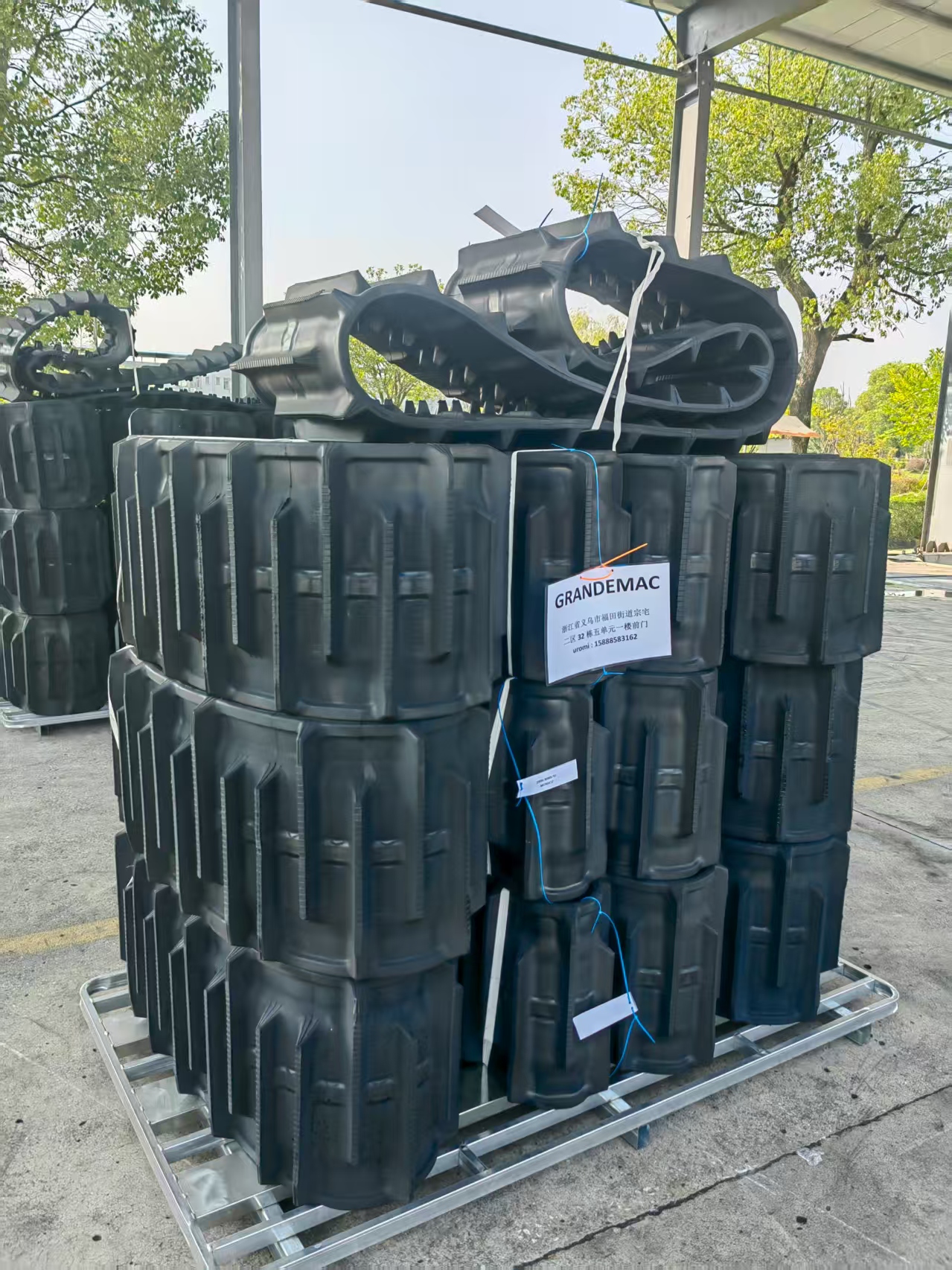
The undercarriage of a combine bears the entire weight of the machine while navigating some of the most challenging terrain in agriculture. A WORLD combine harvester rubber track must possess specific structural features to survive these conditions. Continuous steel cord construction is a mandatory specification. Tracks built with overlapping or spliced cords create inherent weak points that will snap under high torque, especially when the machine is bogged down in deep mud and the operator engages full drive power to break free.
The rubber compound itself must be highly tear-resistant. Harvesting environments are littered with sharp field debris, hidden rocks, and tough crop stubble that act like spears against the track carcass. An optimized tread pattern is also required to facilitate deep mud shedding. If the track cannot clear mud from between its lugs, the machine loses traction, turning the track into a smooth slick that spins uselessly in wet rice paddies.
When evaluating a track in the shop, measure the core thickness and inspect the lug integrity. The lugs must be molded seamlessly into the track carcass during the vulcanization process, not glued or attached as an afterthought. Use a depth gauge to verify the tread depth matches OEM specifications. Request data on the rubber's durometer rating to ensure it balances flexibility with puncture resistance. A track that is too hard will crack under the weight of the machine, while a track that is too soft will suffer rapid lug tear-out.
Conveyor chains endure immense tensile loads and constant exposure to abrasive materials. The technical requirements for a WORLD harvester conveyor chain focus heavily on tensile strength and fatigue resistance. The pins and bushings—the internal components that bear the brunt of the friction—must undergo precise case hardening. This heat treatment process creates a hardened outer shell to resist wear while leaving the inner core ductile enough to absorb shock loads without shattering when a heavy slug of damp crop enters the feeder house.
Environmental factors play a massive role in chain degradation. Rice stalks contain high levels of silica, a naturally occurring mineral that acts like sandpaper against moving metal parts. Standard carbon steel chains will elongate rapidly in these conditions. High-grade alloy steels are necessary to withstand this highly abrasive environment. Elongation is rarely the metal stretching; it is the physical wearing away of the pin and bushing material, which creates slop in the joints and lengthens the overall chain.
To evaluate a chain before installation, assess its pitch accuracy. Lay the chain flat on a clean shop floor and measure the distance across multiple links. Even a fraction of a millimeter of deviation per link will compound over the length of the chain, leading to severe sprocket misalignment. This misalignment causes the chain to ride up on the sprocket teeth, accelerating wear and drastically increasing the risk of the chain jumping off during operation. Inspect the attachment links where the flights mount to ensure the rivets are seated flush and show no signs of micro-cracking.
Crawler track rollers, idlers, and sieves require just as much scrutiny as tracks and chains. Track rollers and idlers operate constantly submerged in water and mud. Therefore, the quality of the sealed bearings is the most critical evaluation point. Standard lip seals will fail in these conditions. Look for heavy-duty labyrinth seals designed specifically for submerged agricultural applications. If the seals fail, water and abrasive grit enter the bearing cavity, destroying the internal rollers within hours and causing the roller to seize.
Flange thickness on the rollers must be measured against OEM standards using a micrometer. Thin flanges will wear down quickly against the side of the rubber track guides, eventually leading to track derailment in the field. Threshing components, such as sieves and concaves, must exhibit high abrasive wear resistance. These parts process tons of crop material daily. Look for components manufactured with reinforced edges and heavy-gauge wire to reduce the frequency of seasonal downtime caused by bent or broken sieve louvers.
The foundation of any durable replacement part is its metallurgy. Ground-engaging and crop-processing parts cannot be made from generic mild steel. Boron steel and high-carbon steel alloys are the industry standards for components requiring a balance of hardness and toughness. Boron steel, in particular, offers exceptional wear resistance after heat treatment, making it ideal for cutting blades, chopper knives, and high-friction contact points.
Heat treatment protocols dictate how the metal will behave under stress. Induction hardening is frequently used for localized wear areas, such as the teeth of a sprocket or the cutting edge of a blade. This process heats a specific area rapidly before quenching it, increasing hardness exactly where it is needed without making the entire part brittle. Tempering follows the hardening process to relieve internal stresses within the metal. When sourcing parts, always ask the supplier for their specific heat treatment protocols and request Rockwell hardness (HRC) ratings. A vague answer regarding their quenching and tempering process is a strong indicator of inferior manufacturing.
Understanding the difference between through-hardening and case-hardening is necessary for field mechanics. Through-hardened parts are hard all the way to the core, which makes them highly wear-resistant but susceptible to snapping under sudden impacts. Case-hardened parts have a tough exterior and a softer, flexible core, allowing them to bend slightly under extreme loads rather than breaking outright. Conveyor chain pins must always be case-hardened.
Poor dimensional tolerances cause cascading damage throughout a harvester. A replacement part might look identical to the naked eye, but agricultural machinery operates on tight engineering tolerances. If you install an improperly sized drive belt, it will slip under load, generate excessive heat, and eventually warp the OEM pulleys. Similarly, a misaligned track roller will constantly push against the rubber track guides, causing premature track failure and potential derailment in the field.
Mitigating these implementation risks requires strict verification processes. Never rely solely on visual matching or a supplier's verbal confirmation. Verify exact OEM part numbers and cross-reference them with the supplier's engineering drawings. When receiving a batch of FM WORLD harvester parts, utilize digital calipers and micrometers during your initial inspection. Measure the inner and outer diameters of bearings, the pitch of chains, and the mounting hole spacing on structural components. Rejecting a part in the shop is vastly preferable to dealing with a catastrophic failure in the middle of a muddy field.
Auditing a supplier's business model is a critical step in building a reliable parts pipeline. The market is populated by both direct manufacturers and third-party trading companies, each offering different advantages and distinct risks for fleet managers.
Sourcing from direct manufacturers generally provides superior quality assurance. Because they control the production line, they can implement strict metallurgy checks, monitor the heat treatment ovens, and offer direct engineering support if a part fails to perform. You have a direct line of communication to the facility shaping the steel and molding the rubber. If a batch of tracks shows premature lug wear, a direct manufacturer can adjust the rubber compound for the next production run.
Trading companies and brokers offer the convenience of a wider catalog. They can consolidate shipments of belts, chains, filters, and hardware into a single container, simplifying logistics. However, the primary risk with trading companies is batch inconsistency. They may source chains from one factory for your spring order and a completely different factory for your fall order, leading to unpredictable lifespan variations.
Ask for factory audit reports and video tours of the production floor to verify manufacturing capabilities.
Request material test certificates (MTC) for steel components to confirm alloy compositions.
Inquire about their internal quality control processes, specifically how they handle rejected batches.
Determine if they have an in-house engineering team capable of reading and modifying CAD drawings.
A supplier's confidence in their product is reflected in their warranty and quality assurance documentation. Look for suppliers holding recognized ISO certifications, which indicate standardized manufacturing and quality control processes. An ISO 9001 certification demonstrates a commitment to consistent production standards.
Request transparent data on their defect rates. A reputable supplier will acknowledge that defects happen in heavy manufacturing and will have a clear, documented process for addressing them. Review the warranty terms carefully. The warranty must cover premature failure under standard harvesting conditions, not just manufacturing defects discovered upon unboxing. If a supplier refuses to stand behind their product once it touches the soil and engages the crop, they are not a viable long-term partner for a commercial harvesting operation.
Evaluating the true value of a replacement part requires looking past the initial acquisition phase and focusing on expected operating hours. The lowest-grade part often becomes the most burdensome when you factor in the surrounding logistics and operational realities of a harvest season.
To calculate the actual operational impact, consider the global export and shipping times required to get the part to your yard. Add the installation labor required—replacing a rubber track or a main threshing concave is a labor-intensive process that pulls mechanics away from other critical maintenance tasks. Finally, factor in the projected downtime risk. If a substandard chain breaks mid-harvest, the time lost recovering the machine and clearing the jammed feeder house far exceeds any initial procurement advantages. Evaluating parts based on their ability to maximize the interval between replacements provides a much clearer picture of their true worth to your fleet.
Fleet managers overseeing multiple machines must exercise caution when integrating a new brand of aftermarket parts. Ordering a massive container of unverified components exposes the entire operation to severe risk if the parts feature a systemic manufacturing flaw or dimensional error.
The most effective mitigation strategy is ordering pilot batches. Bring in enough parts to outfit a single machine. Conduct a thorough test-fitting in the shop to ensure mounting holes align perfectly, clearances are maintained around moving parts, and hardware threads match OEM specifications. Use feeler gauges to check tolerances between pulleys and belts. Once fitted, run this single machine through standard field operations in tough conditions. Monitor the parts daily for abnormal wear patterns, excessive heat generation in bearings, or unusual vibrations. Only after the pilot batch has proven its durability over a set number of operating hours should you proceed with outfitting the rest of the fleet.
Integrating aftermarket parts often requires adjusting your standard maintenance protocols. Even premium aftermarket parts may have different break-in periods compared to their OEM equivalents, requiring mechanics to alter their inspection routines.
For example, newly installed conveyor chains and heavy-duty drive belts will experience initial stretch during the first few days of operation as the components seat themselves. Adjust your tensioning protocols to require a re-tensioning check after the first 50 hours of operation, rather than waiting for the standard 100-hour service interval. Lubrication schedules may also need adjustment. If you switch to a chain with a different bushing design or tighter clearances, ensure your mechanics are applying the correct volume and viscosity of lubricant to penetrate the joints effectively. Proactive maintenance adjustments prevent early failures and maximize the lifespan of your new components.
Utilizing aftermarket components for your harvesting equipment is a highly effective strategy for managing fleet maintenance, provided it is executed with technical rigor. Success depends entirely on moving past superficial visual comparisons and evaluating parts based on metallurgy, dimensional accuracy, and the supplier's manufacturing standards. When vetting potential partners, immediately disqualify any supplier who cannot readily provide material specifications, heat treatment details, or exact dimensional tolerances.
To secure your parts pipeline before the next harvest, take the following steps:
Audit your current fleet maintenance logs to identify which high-wear components account for the most seasonal downtime.
Initiate contact with shortlisted direct manufacturers and request their technical specification sheets and heat treatment protocols for those specific parts.
Order a small pilot batch of critical components to verify dimensional accuracy with digital calipers and micrometers in your own shop.
Establish a revised maintenance schedule that accounts for the specific break-in periods and tensioning requirements of the new aftermarket parts.
A: Premium aftermarket parts can match or exceed OEM durability if manufactured with equivalent metallurgy and strict heat treatment protocols. However, standard aftermarket alternatives built with inferior steel will fail rapidly under heavy field loads. Verification of material specs is required.
A: A high-quality rubber track should last between 1,500 and 2,000 operating hours, depending heavily on terrain. Working in highly abrasive mud or rocky paddies accelerates wear. Continuous steel cord construction is the primary factor dictating this longevity.
A: The optimal material is high-grade alloy steel featuring case-hardened pins and bushings. This specific heat treatment provides a hard exterior to resist abrasive wear from silica-rich crops like rice, while maintaining a ductile core to absorb shock loads.
A: While premium parts will not necessarily increase the factory-rated capacity of the machine, they ensure you maintain peak operational efficiency. The true benefit is realized through reduced seasonal downtime and extended intervals between major maintenance overhauls.
A: Direct manufacturers offer superior quality control, consistent batch metallurgy, and direct technical support. Trading companies are useful for consolidating diverse part types into a single shipment but require rigorous auditing to ensure consistent quality across different factory batches.
A: Verify compatibility by matching exact OEM part numbers, requesting detailed engineering drawings from the supplier, and using digital calipers to confirm pitch, inner/outer diameters, and mounting hole spacing upon receiving a pilot batch in your shop.


