 English

Views: 0 Author: Site Editor Publish Time: 2026-11-18 Origin: Site
Harvest season machinery downtime hits farmers hard, directly threatening crop yields and seasonal revenue. When a machine breaks down in a muddy field, the pressure instantly shifts to agricultural repair shops. Farmers expect same-day or next-day turnarounds because weather windows close rapidly and crops cannot wait. The main challenge repair shops face is balancing the capital tied up in bulk inventory against the constant risk of stockouts. High-wear components must be on the shelf during peak operational windows. However, overstocking the wrong parts drains cash flow and takes up valuable warehouse space. You need a systematic framework for evaluating bulk suppliers, categorizing inventory needs, navigating import logistics, and mitigating supply chain risks. This approach ensures consistent, profitable repair operations without tying up all your operating capital in stagnant parts.
Prioritizing high-wear and critical-path components (like HST systems and cutting mechanisms) in bulk orders reduces emergency freight costs and protects repair shop margins.
Evaluating suppliers requires looking beyond unit price to assess metallurgical quality, dimensional accuracy, technical documentation, and warranty support for rice combine harvester parts.
Standardizing inventory around dominant regional machinery brands (e.g., FM WORLD) streamlines procurement and increases inventory turnover rates.
Establishing split-shipment agreements and understanding landed costs (including tariffs and freight) mitigates warehousing constraints while ensuring peak-season readiness.
Delayed repairs cost more than just unbillable labor hours. They destroy client trust. When a harvester sits idle in a water-logged field, the farmer loses harvesting hours and risks crop spoilage. If your shop cannot supply replacement parts immediately, that farmer will find a competitor who can. Uptime drives success in agricultural repair. You are selling reliability just as much as you are selling mechanical labor.
To guarantee uptime, establish a strict baseline for bulk procurement. Sourced components must meet or exceed OEM operational lifespans. Harvesters operate under brutal conditions. They face heavy mud, high-torque loads, and abrasive crop dust daily. Parts failing prematurely under these conditions ruin your shop's reputation. Sourcing durable, field-tested components builds a profitable repair operation.
Consider these baseline requirements for field readiness when evaluating a new batch of parts:
Components must withstand continuous high-torque loads without structural deformation or metal fatigue.
Seals and bearings must actively block abrasive silica dust and muddy water intrusion during deep-field operation.
Metal wear parts must maintain their cutting edge or structural integrity through an entire 14-day intensive harvest cycle.
Hydraulic components must maintain consistent pressure ratings without fluid bypass when operating at maximum thermal capacity.
Holding comprehensive stock ensures you are ready for any breakdown. However, it ties up significant operating capital. You must manage the trade-off between inventory readiness and cash flow. Stocking every conceivable part is financially inefficient. Identify high-velocity parts that turn over quickly during the harvest season. This minimizes the time capital sits idle on your shelves and keeps your warehouse organized.
The ideal supplier profile helps you manage this balance. Look for manufacturing partners offering flexible Minimum Order Quantities (MOQs). They should provide predictable lead times well before the harvest season begins. Advanced suppliers offer data-driven reorder point recommendations based on regional failure rates. This helps optimize stock levels without risking critical shortages when the local harvest hits its peak.
Certain components will inevitably wear out during a standard harvest cycle. You must prioritize bulk stocking for cutting blades, threshing teeth, rubber tracks, and conveyor belts. These frontline components absorb massive physical abuse. The silica content in rice stalks acts like sandpaper on metal, while deep mud creates a suction effect that tests the tensile strength of every undercarriage component. Running out of these specific rice combine harvester parts during peak season bottlenecks your entire repair schedule.
Material specifications dictate lifespan. Cutting blades should use 65Mn or Boron steel to retain sharp edges against abrasive stalks. Standard mild steel blades will dull within days, forcing the machine to tear the crop rather than cut it, which overloads the threshing drum. Rubber tracks require reinforced Kevlar or steel-cord composites. Internal reinforcements prevent tracks from snapping when pulling a heavy, 5-ton machine through deep, suction-like mud.
Component | Recommended Material | Field Benefit |
|---|---|---|
Cutting Blades | Boron Steel / 65Mn | Maintains edge sharpness against abrasive rice stalks, reducing engine load. |
Rubber Tracks | Kevlar / Steel-Cord Composite | Prevents snapping under high-torque mud extraction and resists dry rot. |
Threshing Teeth | Heat-Treated Forged Steel | Resists impact fracturing from stones and debris hidden in the crop. |
Conveyor Belts | Multi-Ply Nylon Reinforced Rubber | Prevents stretching and slipping under heavy, wet grain loads. |
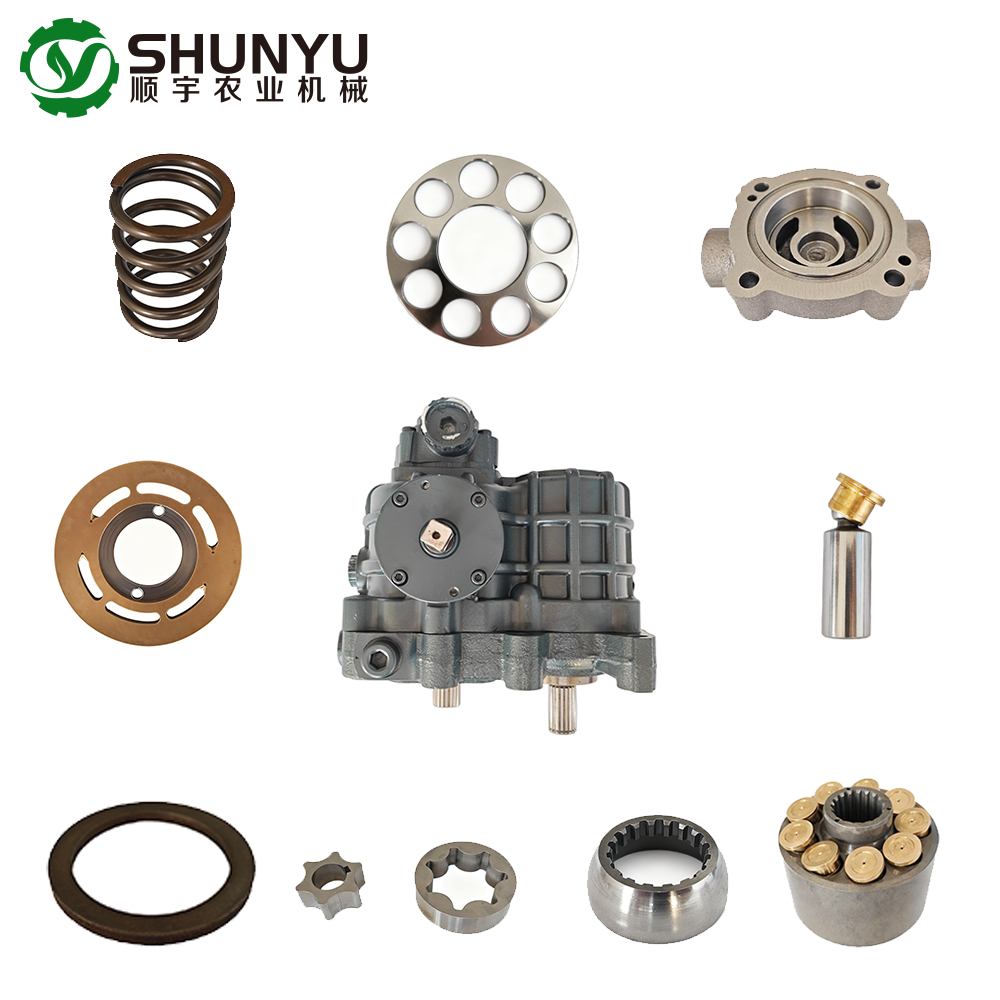
Hydrostatic Transmissions (HST) act as the beating heart of modern harvesting equipment. Procurement of harvester HST spare parts requires rigorous technical evaluation. Verify pump tolerances, seal integrity under high thermal loads, and hydraulic fluid compatibility. The swash plates and pistons inside an HST operate under microscopic tolerances. Demand dynamometer testing certificates from the manufacturer. These prove the HST components handle sustained operational pressure without bypassing fluid as the oil heats up.
A failure in the HST system causes total machine paralysis. A broken cutting blade might allow the machine to limp back to the barn. A blown hydrostatic pump leaves the harvester stranded in the field, often requiring another machine to tow it out of the mud. Because of this catastrophic failure mode, sourcing reliable, high-precision hydraulic components is non-negotiable. Quality must supersede initial acquisition cost when dealing with critical-path systems.
Stocking parts for high-market-share machines guarantees inventory movement. Focus on dominant brands in your agricultural region. This ensures bulk orders translate into rapid sales and repairs. Analyzing local machinery demographics allows you to tailor your procurement strategy to actual customer needs rather than guessing what might break.
Consider the procurement of FM WORLD harvester spare parts as a primary use case. This brand utilizes proprietary belts, specialized augers with specific pitch angles, and specific electronic sensors unique to its architecture. Evaluate the availability of these exact components. Relying on cross-compatibility assumptions is highly risky. A belt that is half an inch too long will slip under load, while a mismatched sensor will throw error codes on the CAN bus system. Always use exact OEM cross-reference numbers to prevent field-fitment failures that waste mechanic hours and frustrate clients.
Auditing a supplier's quality control processes separates reliable partners from high-risk vendors. Routinely request metallurgical reports, ISO 9001 certifications, and heat-treatment documentation for all critical metal components. These documents prove the factory maintains consistent manufacturing standards. It shows they track their steel batches and do not cut corners on raw material quality during large production runs.
Dimensional tolerance testing is equally important. Suppliers utilizing Coordinate Measuring Machines (CMM) guarantee their parts match OEM specifications down to the micron. This precision ensures drop-in replacement. When mechanics work in the field or rush to complete a repair in the shop, they do not have time to grind, shim, or modify substandard parts to make them fit. A part must bolt on perfectly the first time.
Repair shops constantly evaluate the cost-to-lifespan ratio of OEM parts versus premium aftermarket alternatives. Not every repair requires an expensive OEM component. However, choosing the wrong aftermarket part leads to catastrophic secondary failures. You need a clear framework for making these procurement decisions to protect your margins and your customers.
Component Category | Recommended Source | Justification |
|---|---|---|
Standard Bearings & Belts | High-Tier Aftermarket | Standardized dimensions; premium aftermarket brands often match or exceed OEM durability. |
Cutting Blades & Teeth | High-Tier Aftermarket | High turnover rate; aftermarket options with upgraded metallurgy offer excellent value. |
HST Internal Components | OEM or Certified Exact Match | Requires microscopic tolerances; aftermarket deviations cause fluid bypass and transmission failure. |
Proprietary Control Modules | OEM Only | Electronic handshakes and software compatibility cannot be reliably replicated by aftermarket vendors. |
Partnering with suppliers who provide comprehensive exploded-view diagrams and multilingual parts catalogs provides a massive operational advantage. Mechanics rely on these diagrams to understand complex assemblies and identify the exact hardware required for a rebuild. Clear documentation eliminates guesswork from the repair process, especially when dealing with unfamiliar sub-assemblies.
Accurate technical documentation directly impacts procurement efficiency. When parts managers visually verify a component and cross-reference its exact OEM number, the rate of incorrect bulk orders drops significantly. Shipping wrong parts back to an overseas supplier is logistically complex and wastes valuable time during the short harvest window. You need a supplier whose cataloging is as precise as their manufacturing.
Your supplier must have the capacity to handle surge orders. Severe weather events or unexpected regional breakdowns can deplete your inventory of specific parts overnight. Evaluate whether your manufacturing partner has the production elasticity to expedite emergency batches without compromising quality control standards. A supplier who cannot scale production during your busiest month is a liability.
Packaging standards are a critical aspect of logistics infrastructure. Bulk parts must be properly crated and palletized to survive rough handling at ports. Exposed metal components must be protected against corrosion during maritime or long-haul transit. Ensure your supplier utilizes VCI (Volatile Corrosion Inhibitor) packaging, desiccant bags, or heavy cosmoline coatings. Parts arriving covered in surface rust require hours of unbillable labor to clean before installation.
Analyzing the volume discount curve is required for profitable procurement. Ordering larger quantities drives down the per-unit cost. You must calculate exactly when warehousing costs negate those savings. Storing massive pallets of slow-moving parts consumes valuable floor space and ties up capital that could be deployed elsewhere in the business, such as upgrading shop tools or hiring seasonal mechanics.
Negotiate staggered deliveries with your suppliers. This strategy allows you to lock in favorable bulk pricing based on an annual commitment, but physically receive the inventory in smaller, manageable batches. Staggered shipping prevents your shop's storage capacity from being overwhelmed while ensuring a steady pipeline of necessary components throughout the year.
International bulk sourcing introduces significant logistical complexities. Accurately identify the correct HS (Harmonized System) codes for agricultural machinery parts. Using the wrong HS code results in shipments being detained by customs or subjected to unexpectedly high tariff rates. Classifying a specialized agricultural belt as a standard automotive belt can trigger delays and fines. This destroys your profit margins on that order.
Never base procurement decisions solely on the factory gate price. Calculate the True Landed Cost for every shipment. This calculation includes the initial factory price, freight forwarding charges, customs duties, port handling fees, and domestic transport to your facility. Understanding the complete landed cost allows you to accurately set retail repair margins and avoid selling parts at a loss.
Chasing the lowest possible unit price often leads to disastrous financial outcomes. The true cost of a cheap, substandard part extends far beyond its initial acquisition. When a low-quality threshing tooth shatters in the field, you must factor in the unbillable labor required for premature replacement and the severe reputational damage your shop suffers. If a cheap bearing fails inside a gearbox, your mechanics have to split the machine twice, doubling the labor cost for a single repair.
Dealing with the fallout from substandard parts requires extensive warranty claim administration. Service managers waste hours arguing with vendors over defect rates and return shipping liabilities. Investing in high-quality, durable components eliminates these hidden administrative burdens and protects your shop's long-term financial viability. Quality parts keep machines in the field and mechanics moving on to the next billable job.
Supplier contracts must include strict, clearly defined clauses regarding quality control. Define acceptable defect thresholds upfront. Establish a clear RMA (Return Merchandise Authorization) process dictating exactly how defective batches will be handled. The contract must explicitly state who bears the freight liability for returning and replacing parts that fail to meet dimensional or metallurgical specifications.
Before committing to an annual bulk contract, implement a pilot-order strategy. Order a small batch of critical components, such as HST valves or threshing drums. Install them in local machines for field testing. Monitoring these pilot parts under actual harvest conditions provides empirical data on their durability. This allows you to verify supplier claims before risking a massive capital investment on a full shipping container of parts.
Peak agricultural seasons place immense strain on global logistics. Anticipate common logistical failures such as customs delays, port congestion, and sudden raw material shortages at the factory level. Assuming a shipment will arrive exactly on time during the busiest shipping months of the year is a dangerous operational gamble that can leave your shelves empty.
To mitigate these risks, dual-source your most critical components. Never rely on a single factory for your entire supply of Rice Combine Harvester Spare Parts. Maintain a strict 15% safety stock buffer for high-wear items. Integrate procurement workflows with ERP or WMS software to enable predictive ordering based on historical seasonal data. This ensures orders are placed months before bottlenecks occur at the ports.
Take the following immediate actions to optimize your procurement pipeline before the next harvest season begins:
Audit your current warehouse inventory to identify the specific high-wear components that caused stockouts during the previous harvest.
Request updated metallurgical reports and dimensional tolerance testing certificates from your existing parts suppliers.
Order small sample batches of critical hydraulic components to conduct on-site dynamometer and field testing.
Negotiate staggered delivery schedules for your upcoming bulk orders to maintain cash flow while securing volume discounts.
A: The most frequently replaced items are cutting blades, rubber tracks, threshing teeth, and conveyor belts. These parts endure constant friction, impact, and abrasive mud. Blades require high-carbon or Boron steel to maintain their edge, while rubber tracks need Kevlar or steel-cord reinforcement to prevent snapping under heavy torque.
A: Verify quality by checking for exact dimensional tolerances using CMM reports provided by the manufacturer. Ensure the parts meet OEM pressure ratings. Request factory dynamometer testing certificates to confirm the hydraulic pumps and motors will not bypass fluid under high thermal loads.
A: Generally, no. Assuming interchangeability is highly risky. FM WORLD utilizes specific belt lengths, proprietary sensor configurations, and unique auger dimensions. Always match exact OEM part numbers using comprehensive supplier catalogs to avoid fitment failures in the field.
A: Standard lead times vary significantly. Domestic freight may take 1 to 2 weeks. International maritime freight typically requires 30 to 60 days on the water, plus customs clearance. Always place bulk orders 3 to 6 months pre-harvest to account for manufacturing schedules and port congestion.
A: Rubber tracks and belts must be stored in climate-controlled, UV-protected environments to prevent dry rot and compound degradation. Hydraulic components must remain in their original, sealed packaging to prevent dust and moisture contamination, which can destroy internal tolerances upon installation.
A: Standard industry expectations range from 6 to 12 months against manufacturing defects. High-quality suppliers will clearly outline their RMA processes. They should assume freight liability for replacing defective batches that fail to meet agreed-upon metallurgical or dimensional specifications.
A: Import duties directly impact your final margins. The specific HS code assigned to the agricultural machinery parts dictates the tariff rate applied by customs. Calculate the total landed cost—including factory price, freight, duties, and port fees—before signing any bulk purchase agreement.


